Fragrance Notes Are Layers Of Scent That Are Layered To Form The Final Fragrance. Fragrance Notes Are Categorised Into Three Main Elements Based On How Long They Take To Evaporate, And How Long They Typically Last Following Application: Top Notes, Heart Notes And Base Notes.
Chimonanthus or Wintersweet
Chimonanthus or Wintersweet offers a pungent, exotic, and intensely sweet floral profile, prized for its ability to add depth and natural richness. It features spicy undertones, reminiscent of ylang-ylang, and evokes winter elegance, providing a unique, timeless, and subtly seductive aroma in high-end fragrances.

Origin & Extraction Of Chimonanthus or Wintersweet
Chimonanthus praecox, or Wintersweet, is a unique floral ingredient primarily known in Asian culture (particularly China) for its intensely fragrant yellow flowers that bloom in the winter. Its history in traditional use is long, valued in gardening and sometimes medicine, but its incorporation into Western fine perfumery is a relatively modern and niche development. Unlike classic florals like Rose or Jasmine which have been staples for centuries, Wintersweet’s distinct, exotic, sweet, and slightly pungent profile began to draw the attention of contemporary perfumers seeking to create sophisticated, unusual floral compositions, especially those that evoke cool or winter atmospheres.
The relevance of the Wintersweet note in modern fragrance lies in its ability to offer an olfactory profile that bridges sweet, spicy, and exotic floral facets, often compared to ylang-ylang or certain white florals, but with a unique sharpness. Because of its scarcity and complex scent profile, it is generally used in high-end, artistic, or artisanal perfumery to lend a feeling of winter elegance and depth, moving beyond common floral accords to provide a sophisticated, subtly seductive, and timeless dimension to a composition's heart.
Extraction Methods of Chimonanthus (Wintersweet)
The essential oil of Chimonanthus, particularly from the leaves of Chimonanthus nitens and Chimonanthus praecox, is traditionally extracted using steam distillation or hydrodistillation. These methods involve soaking the plant material—often ground to a specific comminution degree—in water before heating it to release volatile aromatic compounds. Historical and conventional techniques typically require long extraction times, sometimes exceeding four to eight hours, and may use simple Clevenger-type apparatuses to collect the oil via phase separation.
Modern advancements have introduced more efficient and sophisticated technologies to improve yield and preserve heat-sensitive components. Supercritical CO2 extraction is now utilized for fresh wintersweet flowers, offering a low-temperature alternative that prevents the degradation of delicate aromatic molecules. This process is often followed by molecular distillation to further refine the essential oil and separate it from floral concrete and cellular water. Additionally, laboratory methods such as high-speed counter-current chromatography (HSCCC) and solvent extraction using ethanol are employed to isolate specific bioactive compounds like phenolic acids, alkaloids, and flavonoids.
The Chimonanthus or Wintersweet note, prized for its exotic, sweet, and pungent floral profile, is typically reserved for niche and artisanal perfumery where its complexity can be fully showcased. Its rarity and distinctive aroma make it an exceptional choice for creators looking to evoke sophistication and winter elegance, moving beyond common floral structures. For instance, the fragrance Wintersweet by Uttori highlights this note, blending it with musk, iris/orris, and jasmine to create a delicate yet profound scent experience.
- * * *
In modern high-end compositions, Wintersweet often functions as a unique heart note, bridging sparkling top notes and deep, sensual bases. The exotic and slightly spicy facets of Chimonanthus are beautifully utilized in perfumes such as Black Violet by ALYSONOLDOINI and Voluptuous Seduction, where it provides a subtly seductive warmth. Its use signals a departure from mainstream florals, appealing to connoisseurs who appreciate unusual, timeless, and complex bouquets.
- * * *
Beyond Western niche houses, the note holds relevance in Asian-inspired compositions, particularly those that lean into its cultural significance as a winter-blooming flower. Other notable examples featuring Chimonanthus include fragrances like Winter Sweet 寄春君 by Wuwen and Wintersweet 腊梅 by Aynoir, alongside more internationally recognized niche releases like Lale by Ys-Uzac and Passerelle by Tommi Sooni. These fragrances employ Wintersweet to offer an invigorating yet comforting floral elegance, often paired with musky or green undertones for enhanced depth and natural richness.
- Blooming occurs in the heart of winter and early spring, typically from December through March, with fragrant flowers appearing on bare, leafless stems
- Vegetative growth begins in the spring as glossy green, lance-shaped leaves emerge following the flowering period
- The foliage remains active throughout the summer months, providing a dense green backdrop in the garden
- Autumn brings a transition in interest as the leaves turn to muted shades of gold or butter-yellow before dropping
- Dormancy takes place in late fall, setting the stage for the next cycle of winter blooms that often coincide with the winter solstice
Sustainability Of Chimonanthus or Wintersweet
Sustainability of Chimonanthus (Wintersweet)
- Promoting biodiversity and supporting early-season pollinators, such as bees, by providing a vital nectar source during the winter months when most other flora are dormant
- Reducing environmental impact through low-maintenance cultivation requirements, as established plants are drought-tolerant and have low fertility needs, minimizing the use of supplemental water and synthetic fertilizers
- Encouraging natural pest management and ecological resilience, as the plant is noted for having no serious insect or disease problems and contains compounds that act as natural deterrents to foraging animals
- Supporting sustainable gardening practices by utilizing organic mulching and composting to improve soil health, water retention, and nutrient delivery without chemical runoff
- Fostering long-term botanical heritage and conservation through the cultivation of hardy, slow-growing species that provide structural stability and carbon sequestration in temperate landscapes
Trivia
In China, flowering sprigs of Wintersweet have been traditionally worn as hair decorations for Lunar New Year for over 1,000 years, and its dried flowers are used to scent linens much like lavender is used in the West.
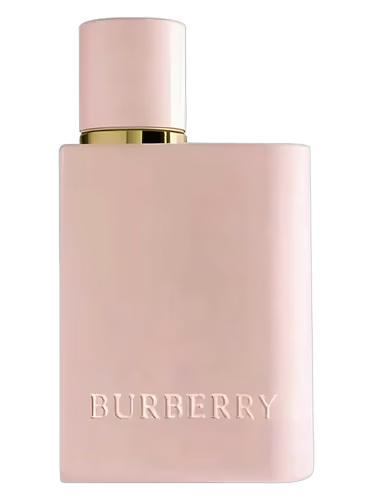
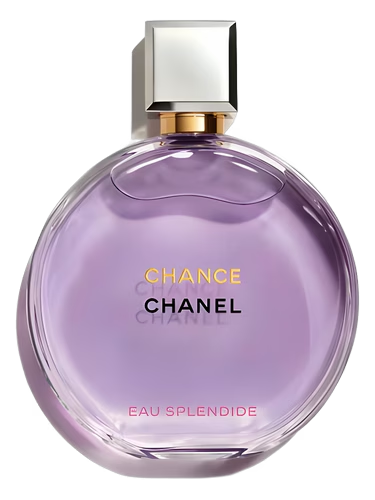
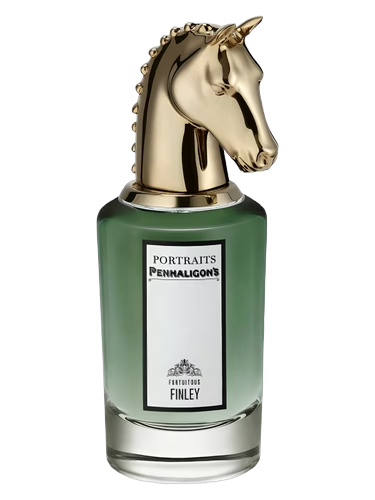
Most Popular Scents Using Chimonanthus or Wintersweet
What is Chimonanthus (Wintersweet)?
Chimonanthus praecox, or Wintersweet, is a deciduous shrub native to China prized for its intensely fragrant yellow flowers that bloom on bare stems during the winter months.What does Wintersweet smell like?
It offers a pungent, exotic, and intensely sweet floral profile with spicy undertones reminiscent of ylang-ylang, honey, or a blend of citrus and allspice.How is Wintersweet essence extracted?
The essential oil is traditionally obtained through steam distillation or hydrodistillation of the leaves and flowers, while modern methods include supercritical CO2 extraction to preserve delicate aromatic compounds.What are some top perfumes featuring Wintersweet?
Notable fragrances include State of Mind Voluptuous Seduction, Alyson Oldoini Black Violet, Uttori Wintersweet, and Ys-Uzac Lale.When is Wintersweet in season?
The plant typically blooms in the heart of winter and early spring, from December through March, providing fragrance when most other flora are dormant.