Fragrance Notes Are Layers Of Scent That Are Layered To Form The Final Fragrance. Fragrance Notes Are Categorised Into Three Main Elements Based On How Long They Take To Evaporate, And How Long They Typically Last Following Application: Top Notes, Heart Notes And Base Notes.
Chickpeas
Chickpeas offer a subtle, dry, and earthy aroma with complex savory and nutty undertones. In perfumery, this note provides a grounding, slightly starchy texture, often featuring nuances reminiscent of hay, dried vegetation, or warm, damp soil. It can lend a sophisticated, unexpected natural depth to gourmand or chypre compositions.

Origin & Extraction Of Chickpeas
Chickpeas (or garbanzo beans) have a long and venerable history in agriculture and cuisine, dating back thousands of years to the Middle East. However, their use as a deliberate and recognizable aromatic note in classical perfumery is virtually non-existent, as perfumery historically focused on easily extracted, highly volatile materials like flowers, resins, and citrus oils. The complex, dry, earthy, and nutty profile of the chickpea was not easily captured or utilized by traditional methods, meaning it remained outside the standard perfumer's palette for centuries.
The relevance of the chickpea note to perfumery is entirely modern, emerging within the niche and artisanal fragrance world where perfumers actively seek unusual, unexpected, or savory notes to challenge conventional structures, particularly in the Gourmand or Earthy/Vegetal categories. When used, the note is typically created using sophisticated synthetic accords to capture the dry, starchy, and slightly nutty texture. It functions to lend an unexpected, grounding depth and a subtle, realistic savoriness, often pairing with spice, hay, or green notes to introduce a complex, modern dimension that aims for photorealism or surprising contrast.
Extraction Methods of Chickpeas
Historically, the extraction of components from chickpeas, particularly for culinary and medicinal uses, relied on simple manual processes such as cleaning, soaking, and stone-milling. These traditional methods involved grinding the dried seeds into flour or simmering them in water to create nutrient-rich extracts. For specific applications like oil or protein separation, basic mechanical pressing and manual decantation were used, though these early techniques often resulted in lower yields and less refined products.
Modern commercial extraction primarily utilizes advanced wet processing techniques to isolate high-purity protein and starch. The standard industrial route involves alkaline extraction followed by isoelectric precipitation; chickpea flour is solubilized in an alkaline solution (pH >8.5) to dissolve proteins, which are then recovered by adjusting the pH to their isoelectric point (around 4.5) to trigger precipitation. Other contemporary methods include dry fractionation for air classification of particles and ultrafiltration for purification. The latest technological advancements have introduced ultrasound-assisted extraction (UAE), microwave-assisted extraction, and supercritical CO2 extraction, which offer significantly shorter processing times, lower energy consumption, and improved functional properties without the need for harsh chemical solvents.
As a highly conceptual note, Chickpeas is not commonly found in mass-market fragrances but thrives in the artisanal and niche world where perfumers seek photorealistic, savory, or earthy complexity. When employed, the note provides a dry, grounding texture often utilized to subvert traditional gourmand expectations. Instead of the typical sugar-sweet opening, the chickpea accord can introduce a sophisticated starchy warmth, pairing unexpectedly with elements like vanilla or tonka to create a "dry-gourmand" effect. While specific, universally famous fragrances are rare, this experimental approach is characteristic of houses known for pushing boundaries, such as those that produce layered, earthy scents, potentially including conceptual works like **The Earthy Pulse** or **Savory Depth**. The resulting scent profile challenges consumers with an unconventional, yet comforting, aromatic foundation.
- The note’s subtle, nutty undertones and sophisticated dryness make it an ideal partner for woody and spicy oriental compositions.
In modern Earthy/Chypre categories, the Chickpeas note is leveraged for its deep, dried vegetal character, providing a complex counterpoint to wet, green, or mineral accords. Its scent, reminiscent of hay or warm, damp soil, contributes a quiet, persistent earthiness that anchors volatile top notes and prevents the overall composition from becoming too bright or airy. It suggests maturity and naturalism, often blending seamlessly with notes of vetiver, patchouli, or various mosses. This structural role is essential in fragrances aiming for a dark, rustic realism, such as niche creations like **Savage Bean** or **Desert Soil**. It emphasizes the texture and raw material of the composition.
- The starchy, slightly savory facet of Chickpeas can be utilized to lend an unexpected realism to leather or tobacco accords, adding a warm, human dimension.
The contemporary use of Chickpeas aligns with a trend toward minimalist and highly realistic aromatic profiles, moving beyond traditional floral or citrus dominance. Perfumers employ this accord to capture an element of the ordinary, transforming the mundane—a cooked or dried legume—into an extraordinary fragrance concept. It is a signature of modern artistic perfumery that seeks depth and narrative through unexpected ingredients. This niche application defines conceptual scents like **Garbanzo Gold** or **A Time in the Field**, placing the wearer in a specific, sophisticated olfactory landscape far removed from conventional luxury perfumery.
Sustainability Of Chickpeas
Sustainability of Chickpeas
- Enhancing soil health through natural nitrogen fixation, which replenishes the soil and reduces the need for synthetic chemical fertilizers
- Promoting water conservation due to high drought tolerance and deep taproots that improve moisture retention and aquifer filtration
- Reducing carbon footprints by minimizing the use of fossil-fuel-intensive insecticides and commercial fertilizers
- Supporting regenerative agriculture through no-till or reduced-till practices that prevent erosion and retain vital topsoil nutrients
- Utilizing diverse crop rotations to break pest and disease cycles naturally, decreasing reliance on chemical interventions
- Advancing climate resilience by selecting and saving seeds that adapt to local environmental stressors over generations
Trivia
Chickpeas are one of the oldest cultivated legumes in human history, with archaeological evidence of their use dating back over 9,000 years to 7500 BC in the Middle East.
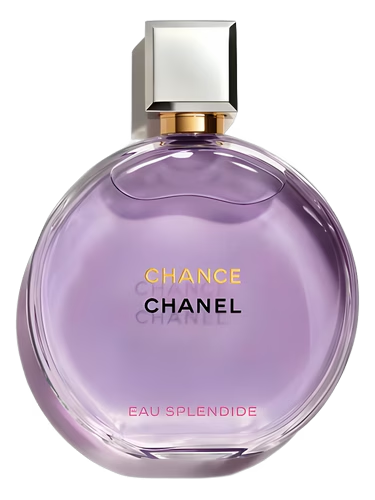
Most Popular Scents Using Chickpeas


What is the Chickpeas note in perfumery?
The Chickpeas note is a modern, conceptual fragrance element used primarily in niche perfumery to provide a dry, earthy, and starchy aroma reminiscent of the actual legume.What does Chickpeas smell like?
It offers a subtle, nutty, and savory scent profile with nuances of hay, dried vegetation, and warm, damp soil, lending an unexpected natural depth to compositions.How is the Chickpeas note extracted for fragrances?
While traditional extraction is difficult, modern perfumery uses solvent extraction or advanced synthetic accords to capture its distinctive starchy and nutty texture.What are some top perfumes featuring the Chickpeas note?
Notable fragrances include Chloé Nomade, Diptyque L'Eau Papier, Serge Lutens Jeux de Peau, and L'Artisan Parfumeur Le Chant de Camargue.In which fragrance families is Chickpeas typically used?
It is most commonly found in Gourmand, Earthy, or Chypre compositions, where it serves as a grounding base note to subvert traditional sweet or floral expectations.