Fragrance Notes Are Layers Of Scent That Are Layered To Form The Final Fragrance. Fragrance Notes Are Categorised Into Three Main Elements Based On How Long They Take To Evaporate, And How Long They Typically Last Following Application: Top Notes, Heart Notes And Base Notes.
Chia Seed
Chia Seed's profile in perfumery is often subtle and nutty, derived mainly from its oil. It offers a mild, slightly vegetal texture, making it an excellent, unobtrusive base note or carrier oil to enhance the longevity and stability of other, more potent essential oil fragrances and complex aromatic blends.

Origin & Extraction Of Chia Seed
Chia Seed is a relatively modern note in perfumery, primarily valued not for a potent aroma, but for its functional properties and subtle texture. Historically used as an ancient food staple, its introduction into fine fragrance aligns with contemporary trends favoring natural, plant-based, and wellness-oriented ingredients. Its subtle, nutty, and slightly vegetal profile is utilized to add nuance to naturalistic and gourmand compositions, often enhancing the perceived richness of the blend without adding heavy sweetness.
The main relevance of Chia Seed in perfumery often lies in the use of its oil as a stabilizing carrier. This helps to anchor more volatile top notes and extend the overall longevity and stability of the fragrance on the skin. While rarely a headline ingredient, its inclusion in modern niche and artisanal lines—where it contributes a sought-after "velvety" or "skin-like" textural impression to the dry down—signifies a commitment to sophisticated layering and clean beauty aesthetics, distinguishing these modern formulations from traditional scent structures.
Extraction Methods of Chia Seed
Historically, chia seed oil and mucilage were obtained through basic water hydration and manual pressing techniques. Traditional oil extraction involved mechanical pressing or the use of organic solvents like hexane to separate the fats from the seed meal. Mucilage, a gel-like substance, was traditionally extracted by dispersing seeds in water, followed by stirring and filtration to separate the mucilage from the seeds.
Modern commercial extraction has evolved to include more efficient and precise methods. Cold pressing remains a preferred mechanical technique for high-quality oil, often utilizing screw presses at controlled temperatures to preserve heat-sensitive omega-3 fatty acids. Advanced methods now include supercritical CO2 extraction, which uses pressurized carbon dioxide to isolate pure oil without chemical residues. Additionally, innovative techniques such as ohmic heating and ultrasound-assisted extraction are being used to ripen seeds and rupture cell walls, significantly improving oil yields and reducing processing time.
Sustainability Of Chia Seed
Sustainability of Chia Seed
- Promoting resource efficiency as a drought-resistant crop that grows robustly in arid regions with low-quality soil and requires minimal irrigation
- Reducing chemical runoff and supporting organic farming since the plant's essential oils act as a natural insect repellent, eliminating the need for synthetic pesticides
- Contributing to soil health and regenerative agriculture by serving as a crop that helps restore the land in which it is planted
- Supporting a circular economy through the upcycling of by-products, such as using chia mucilage as a biodegradable alternative to single-use plastics
- Utilizing low-temperature carbon dioxide extraction methods to produce high-quality oil with a longer shelf life and lower environmental impact compared to traditional heat-based extraction
Trivia
The Aztecs valued chia seeds so highly that they were used as a form of legal tender, with conquered nations often paying their taxes to Aztec rulers in thousands of tons of the seeds.
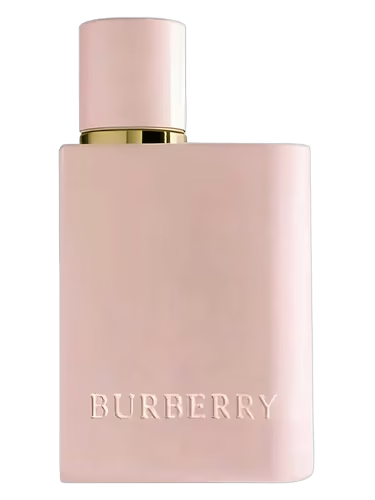
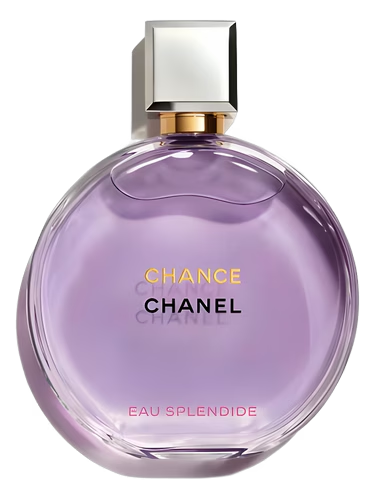
Most Popular Scents Using Chia Seed

What is Chia Seed?
Chia Seed is a modern perfumery note derived from the seeds of the Salvia hispanica plant, valued for its subtle, nutty profile and its functional use as a stabilizing carrier oil.What does Chia Seed smell like?
It offers a mild, nutty, and slightly vegetal aroma that provides a soft, velvety, or skin-like textural impression in fragrance compositions.How is Chia Seed essence extracted?
The oil is primarily obtained through cold pressing of the seeds, though advanced methods like supercritical CO2 extraction are also used to preserve its delicate properties.What are some top perfumes featuring Chia Seed?
A notable example of a fragrance utilizing the Chia Seed note is Colornoise Acai Bowl.When is Chia Seed in season?
Chia is typically harvested in late fall when seed heads ripen, though it can be cultivated year-round in tropical regions or grown indoors as microgreens at any time.