Fragrance Notes Are Layers Of Scent That Are Layered To Form The Final Fragrance. Fragrance Notes Are Categorised Into Three Main Elements Based On How Long They Take To Evaporate, And How Long They Typically Last Following Application: Top Notes, Heart Notes And Base Notes.
Chamomile
Chamomile offers a sweet, herbaceous, and slightly apple-like scent with dry hay and tea nuances. It possesses a calming, honeyed warmth and a delicate, dusty floral facet, providing a comforting, tranquil, and sophisticated green-floral depth to fragrances, often bridging herbal and soft floral accords.

Origin & Extraction Of Chamomile
Chamomile, derived from the flowering plant, has a rich history centered on its therapeutic properties long before its formal incorporation into modern perfumery. Ancient Egyptians, Romans, and Greeks valued it for its calming, medicinal qualities and its use in fragrant oils and baths. Its natural scent—a gentle, sweet, herbaceous aroma with subtle apple and hay nuances—made it a staple in traditional folk remedies and natural cosmetic waters. However, its use in structured fine perfumery remained relatively niche, as volatile oils were often used primarily for their immediate, functional benefits rather than complex olfactive profiles.
In contemporary perfumery, Chamomile has seen a sophisticated resurgence, particularly in niche and high-end fragrances where perfumers seek to evoke tranquility, comfort, and naturalistic green accords. It is often employed to bridge the gap between bright herbal top notes and soft, musky bases, adding a subtle, sophisticated depth that resists being overtly floral or sharp. This modern use highlights its delicate, honeyed warmth, allowing it to function as a calming and unique structural element in compositions across both aromatic and soft floral fragrance families.
Extraction Methods of Chamomile
The classic and most common method for extracting chamomile essential oil is steam distillation, where pressurized steam passes through the flowerheads to vaporize volatile compounds, which are then condensed into a liquid. For small-scale or laboratory use, water distillation (hydro-distillation) using a Clevenger apparatus is a traditional alternative. Historically, simple infusion and maceration techniques—steeping flowers in solvents like alcohol, glycerin, or carrier oils for several weeks—were the primary "folk methods" used to capture the plant's medicinal properties.
Modern advancements have introduced more efficient and gentle technologies to preserve sensitive metabolites. Supercritical CO2 extraction uses pressurized carbon dioxide at low temperatures to release oil without the heat damage associated with steam, resulting in an extract that more closely resembles the natural flower. Other latest methods include UV-Assisted Extraction (UAE), which uses ultraviolet technology to heat solvents and preserve phenolic compounds, and Solvent-Free Microwave Extraction (SFME), a green technology that combines microwave heating and distillation to achieve higher yields and quality in shorter timeframes.
Chamomile is a beautiful note that is used to provide a calming, herbaceous, and slightly hay-like or apple-like nuance in sophisticated compositions, often serving to enhance comfort and tranquility rather than bold florality. It is famously featured in the scent **Gucci Bloom Acqua di Fiori**, where it introduces a delicate, green freshness that complements the tuberose and jasmine heart, lending an overall clean and youthful naturalism to the fragrance. This use showcases Chamomile's ability to act as a sophisticated bridge between volatile top notes and a softer floral heart.
In niche and artisanal perfumery, Chamomile’s dry, tea-like and subtly honeyed qualities are often emphasized to create unique aromatic experiences. A notable example is **Zoologist Panda**, where the note is deployed to evoke a green, serene, and almost pastoral atmosphere. Here, Chamomile contributes to the fragrance's complex green opening, providing texture and a comforting, sun-drenched hay facet that contrasts with deeper, earthy and woody base notes, demonstrating its versatility beyond simple floral accords.
The gentle, soothing nature of Chamomile also makes it a perfect addition to scents designed for relaxation or bedtime. One classic example is its inclusion in certain versions of **L’Occitane’s Pillow Mist** or other therapeutic home fragrance products, where its traditional calming properties are harnessed to promote well-being. While perhaps not a "famous perfume" in the traditional sense, Chamomile's essential oil is widely recognized for adding a peaceful, slightly dusty sweet quality to skin and home care products, reinforcing its identity as a note of comfort and gentle warmth in the world of fragrance.
- Chamomile typically begins its growth cycle in early spring, with seeds sown indoors six weeks before the last frost or directly outdoors from mid-spring onwards once the soil has warmed
- The plant enters its primary blooming phase in early to midsummer, producing prolific daisy-like flowers through early fall if regularly deadheaded
- Harvesting of newly-opened flowers occurs throughout the summer months, with peak productivity encouraged by frequent picking until the first frosts of autumn
- As a hardy perennial, Roman chamomile prepares for dormancy in late fall and survives winter with minimal attention, while German chamomile completes its annual lifecycle by releasing seeds to self-sow for the following spring
- In mild climates, chamomile can grow year-round, though growth intensity naturally slows during mid-winter and late summer periods
Sustainability Of Chamomile
Sustainability of Chamomile
- Adopting organic farming practices by eliminating the use of synthetic pesticides, herbicides, and fertilizers to protect soil health, water quality, and biodiversity
- Implementing integrated pest management (IPM) and regenerative agricultural techniques that mimic natural ecosystems and leverage chamomile's inherent self-defense capabilities
- Protecting dwindling pollinator populations, such as bees and butterflies, by avoiding toxic insecticides that interfere with natural pollination processes
- Promoting water conservation through the use of drip irrigation, micro-sprinklers, and rainwater harvesting to deliver moisture directly to roots and reduce waste
- Enhancing soil vitality and carbon sequestration by utilizing organic compost, seaweed extracts, and beneficial microorganisms as alternatives to mineral fertilizers
- Supporting a circular economy and reducing the carbon footprint by sourcing locally and using biodegradable or recyclable packaging for finished products
- Utilizing crop rotation and intercropping strategies to prevent soil depletion, manage pests naturally, and support local wildlife corridors
Trivia
The name chamomile is derived from the Greek word kamaimelon, which literally translates to earth apple because the plant’s fragrance closely resembles the scent of ripe green and yellow apples.
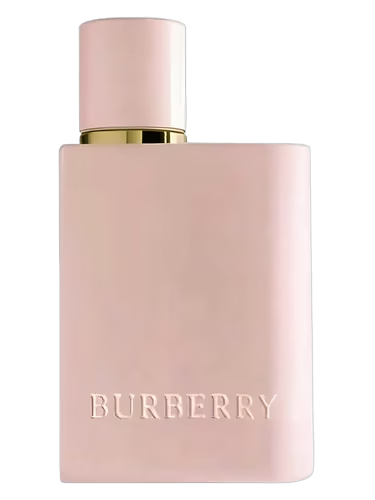
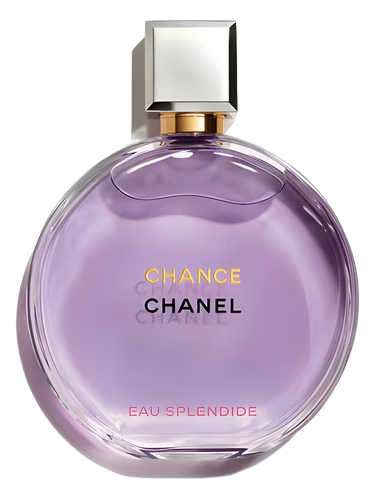
Most Popular Scents Using Chamomile

What is Chamomile?
Chamomile is a flowering plant from the Asteraceae family, valued in perfumery for its sweet, herbaceous, and apple-like scent that bridges herbal and soft floral accords.What does Chamomile smell like?
It offers a calming, honeyed warmth with nuances of dry hay and tea, featuring a delicate, dusty floral facet that provides tranquil green-floral depth.How is Chamomile essence extracted?
The oil is primarily obtained through steam distillation of the flowerheads, though modern methods like supercritical CO2 extraction are used to better preserve its natural aromatic profile.What are some top perfumes featuring Chamomile?
Notable fragrances include Gucci Mémoire d’une Odeur, Gucci Bloom Acqua di Fiori, Clinique Aromatics Elixir, and Zoologist Panda.When is Chamomile in season?
Chamomile typically blooms from early to midsummer through early fall, with peak harvesting of newly-opened flowers occurring during the warm summer months.