Fragrance Notes Are Layers Of Scent That Are Layered To Form The Final Fragrance. Fragrance Notes Are Categorised Into Three Main Elements Based On How Long They Take To Evaporate, And How Long They Typically Last Following Application: Top Notes, Heart Notes And Base Notes.
Chai Hu
Chai Hu (Bupleurum) offers a unique, complex root profile. It is warm, pleasantly musky, and distinctly woody, often possessing an earthy, slightly resinous character. The scent is grounding and dry, used in perfumery to provide depth and an aromatic, oriental structure, bridging green and woody accords. (297 characters)

Origin & Extraction Of Chai Hu
Chai Hu, derived from the root of the Bupleurum plant, has a history primarily rooted in traditional Chinese medicine (TCM), where it is known as a fundamental herb used for harmonizing and regulating internal energies. Its use as an aromatic material in TCM preparations predates its recognition in Western fine perfumery by centuries. This strong historical association with medicinal and herbal applications means that Chai Hu's complex, warm, musky, and dry woody profile was appreciated regionally long before it was integrated into contemporary global fragrance design.
The introduction of Chai Hu into fine perfumery is a modern phenomenon, reflecting the industry's continuous search for unique, nuanced materials, particularly those offering oriental or aromatic structures with greater depth and longevity. Perfumers utilize Chai Hu today not for its medical properties, but for its dry, earthy character that effectively bridges volatile green and fresher accords with richer, more persistent woody or chypre bases, offering a sophisticated, grounding counterpoint to modern compositions.
Extraction Methods of Chai Hu
Historically, Chai Hu (Bupleurum root) has been prepared for centuries using traditional water decoction, where the dried roots are simmered in boiling water to create a medicinal tea or soup. This method, still central to Traditional Chinese Medicine, allows for the extraction of key active compounds like saikosaponins. Ancient Persian and Chinese techniques also utilized simple infusion and maceration to capture the herb's bitter and camphorous properties for therapeutic use.
Modern commercial production has evolved to include sophisticated concentrated extraction processes. These latest methods often involve sealed recurrent extraction and low-heat depressurized concentration to preserve volatile and aromatic ingredients that might be lost in open boiling. Advanced techniques such as spray drying, vacuum drying, and the use of beta-cyclodextrin for inclusion of volatile oils are now standard to produce high-potency 5:1 or 10:1 concentrated granules and capsules. While a specific perfumery-grade extraction does not currently exist, these pharmaceutical methods ensure maximum bioavailability and stable dosage forms for clinical applications.
Chai Hu, or Bupleurum, is a sophisticated and dry woody note that is not widely used in mainstream perfumery but is highly valued in niche and artisanal houses for its grounding, earthy, and aromatic complexity. It typically provides a musky, slightly resinous backbone that helps transition brighter, volatile top notes into deeper, oriental or woody foundations. Its unique profile allows perfumers to create compositions that feel simultaneously green, medicinal, and richly dry, setting them apart from conventional woody fragrances.
While often a subtle supporting player, Chai Hu's influence can be seen in fragrances that seek an intellectual, dry earthiness. For example, in fragrances inspired by traditional Asian aromatics or therapeutic scents, Chai Hu contributes a distinctive, root-like warmth. It is often paired with notes like vetiver, incense, and aged woods (oud or sandalwood) to enhance depth and longevity, offering a counterpoint to sweeter florals or amber bases, ensuring the fragrance remains sophisticated and grounded.
Due to its specialized use, Chai Hu does not dominate mass-market bestsellers. However, it is an ingredient explored by niche brands aiming for olfactory realism and complexity. Specific examples are often found in lines focused on natural ingredients or unusual herbal profiles. In these compositions, the root's dry, aromatic scent prevents the overall fragrance from becoming overly sweet or heavy, providing a refined and enduring woody texture that is unique in the contemporary perfume landscape.
Sustainability Of Chai Hu
Sustainability of Chai Hu
- Classifying Chai Hu as a low-risk species to ensure long-term availability and prevent over-exploitation of wild populations
- Shifting from traditional wild harvesting to controlled cultivation to protect natural biodiversity and ecosystem stability
- Implementing organic cultivation standards that minimize the use of synthetic pesticides and fertilizers, leveraging the plant's natural resilience to pests
- Promoting regenerative agricultural practices that require minimal supplemental feeding and resource inputs, reducing the overall environmental footprint of farming
- Establishing standardized quality control and clinical safety guidelines to ensure ethical sourcing and consumer protection within the herbal industry
Trivia
Chai Hu, also known as Bupleurum, is a staple of traditional Chinese medicine that has been used for over 2,000 years to harmonize the body and "spread the liver Qi," making it one of the few fragrance notes that doubles as an ancient treatment for emotional stagnation.
Most Popular Scents Using Chai Hu
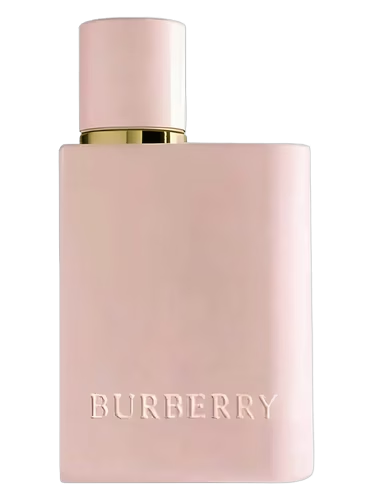
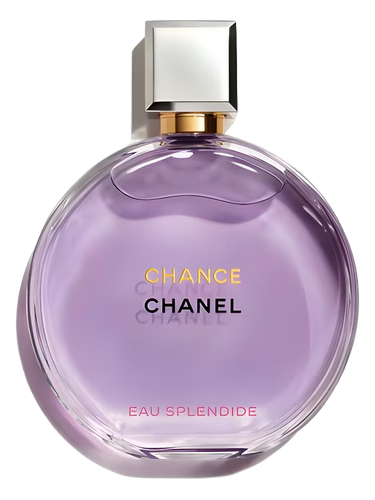
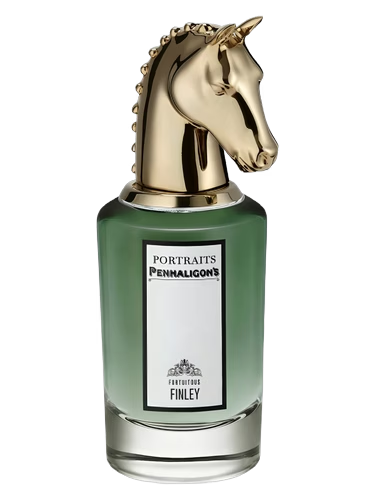
What is Chai Hu?
Chai Hu, also known as Bupleurum, is a root-derived ingredient with deep origins in traditional Chinese medicine that is used in modern niche perfumery for its grounding and aromatic complexity.What does Chai Hu smell like?
It offers a unique root profile that is warm, pleasantly musky, and distinctly woody, often possessing an earthy, dry, and slightly resinous character.How is Chai Hu essence extracted?
While historically prepared via water decoction, modern production utilizes sophisticated distillation and concentration processes to preserve its volatile aromatic components.What are some top perfumes featuring Chai Hu?
As a specialized and rare note, it is primarily featured in niche and artisanal compositions such as Auphorie Shennong.When is Chai Hu in season?
In the context of its aromatic use, Chai Hu is fundamentally linked to the transitions between spring and autumn, reflecting its traditional role as a harmonizing agent for seasonal shifts.