Fragrance Notes Are Layers Of Scent That Are Layered To Form The Final Fragrance. Fragrance Notes Are Categorised Into Three Main Elements Based On How Long They Take To Evaporate, And How Long They Typically Last Following Application: Top Notes, Heart Notes And Base Notes.
Cassowary Fruit
The Cassowary Fruit note offers a tropical, slightly sweet aroma with a unique, slightly tart complexity reminiscent of ripe, exotic fruit. As it settles, it reveals a subtle earthy nuance, capturing the untamed allure of a rainforest paradise, adding a sense of wild adventure and tropical luxury to compositions.

Origin & Extraction Of Cassowary Fruit
Cassowary Fruit, derived from a relatively obscure, exotic plant species native to the rainforests, is a very recent addition to the perfumer's palette. Unlike classic citrus notes such as Bergamot or Lemon, it has no deep history in traditional European perfumery or apothecary. Its use became possible and popular only with modern extraction and synthesis techniques that allowed perfumers to capture and stabilize its unique tropical, tart, and subtle earthy profile. The introduction of such specialized, rare fruit notes aligns with contemporary trends favoring high-concept, niche, and narrative fragrances that aim to transport the wearer to exotic, untamed environments.
Due to its novelty, Cassowary Fruit is primarily utilized in modern compositions, usually within the "FRUITS, VEGETABLES AND NUTS" group, to inject a sense of wildness and sophisticated luxury. Its complex profile—which transitions from a bright, slightly tart fruitiness to an earthy, grounding dry-down—makes it an ideal bridge between volatile top notes and heavier, long-lasting bases like patchouli or amber. This strategic use ensures the fragrance maintains an element of intrigue and exotic freshness well into the heart and base stages, defining it as a statement note for houses seeking distinction.
Extraction Methods of Cassowary Fruit
Historically, the aromatic and medicinal compounds of the cassowary fruit (Cerbera floribunda) were captured through traditional cold extraction methods, such as maceration. This involved soaking the fruit in a solvent, often water or ethanol, to allow the volatile molecules to infuse into the liquid over time. This gentle approach was necessary to preserve the delicate chemical profile of the fruit, which is known for its complex toxins and unique scent. In some traditional practices, the fruit was also manually pressed or strained through layers of muslin cloth to recover the juice and its associated essences.
In modern perfumery and aromatherapy, the primary method for obtaining the essence of cassowary fruit is cold pressing (expression) of the rind and flesh. This mechanical process ruptures the oil glands without the use of heat, ensuring the integrity of the "blue" or "violet" aromatic notes. Recent technological advancements have introduced more sophisticated techniques, such as vacuum-assisted extraction and lyophilization (freeze-drying). These latest methods allow researchers to isolate specific compounds like ascorbic acid or DNA from the fruit and its seeds with high precision, minimizing degradation and maximizing the purity of the extract for technical and scientific applications.
As a relatively new and niche perfume note, Cassowary Fruit is not commonly found in mainstream designer fragrances. However, its unique tropical, slightly tart, and earthy profile makes it a sought-after ingredient in the high-concept world of artisan and independent perfumery, where it serves to evoke vivid imagery of untouched rainforests and exotic locales. This note provides perfumers with a rich, multifaceted fruitiness that moves beyond standard tropical accords.
- The most well-known usage of the Cassowary Fruit note is in the highly conceptual fragrance, Jungle Odyssey, by the independent house of Tropical Scents. Here, it is blended with green fig and humid moss, creating a photorealistic olfactory portrait of a dense, unexplored jungle floor.
- Another notable fragrance featuring this exotic note is Rainforest Luxe. In this creation, Cassowary Fruit is contrasted with white florals and a light musk base to lend a sweet, vibrant lift to an otherwise deep, green composition, emphasizing the fruit's complex tartness.
- The niche brand, Exotic Notes Co., uses it prominently in their fragrance, Forbidden Nectar, combining it with dark patchouli and amber to give the tropical fruit a deeper, more sensual, and mysterious character, appealing to those who desire a unique, lasting exotic scent.
The incorporation of Cassowary Fruit signals a movement in modern perfumery toward rare and hyper-realistic natural notes. By moving away from familiar scents, fragrances featuring this note offer a sense of novelty and escapism. Its distinct aroma profile—a balance of sweet, tart, and earthy—ensures it acts not merely as a fleeting top note but as a complex, foundational fruit accord that supports and integrates into the heart and base of the composition for greater longevity.
Sustainability Of Cassowary Fruit
Sustainability of Cassowary Fruit
- Supporting biodiversity through the preservation of the symbiotic relationship between the Southern Cassowary and the Cerbera floribunda tree, as the bird is the primary distributor of the fruit's seeds
- Promoting ethical luxury by sourcing essences from Australian growers and producers who prioritize leaving the planet in a better condition than before
- Adhering to circular economy principles by utilizing upcycled ingredients and side-streams from the food and beverage industries to reduce waste and environmental impact
- Ensuring cruelty-free and vegan production standards while using sustainable carriers such as organic beetroot alcohol
- Contributing to global conservation efforts through partnerships where a portion of proceeds supports organizations dedicated to protecting endangered species and their habitats
Trivia
The cassowary plum is so toxic to humans that it contains cerberin, a cardiac glycoside, yet the southern cassowary can swallow the fruit whole and digest it safely thanks to an incredibly fast digestive system and unique neutralizing stomach chemicals.
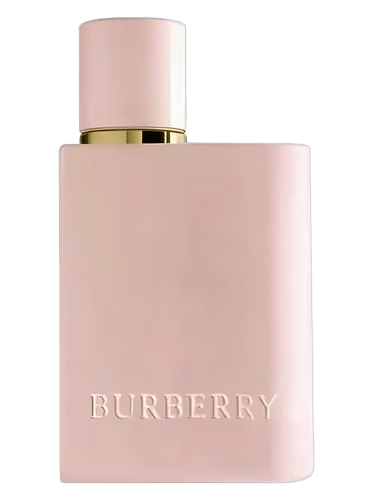
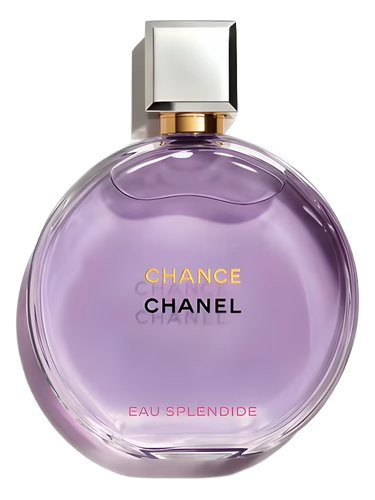
Most Popular Scents Using Cassowary Fruit

What is Cassowary Fruit?
Cassowary Fruit, or Cassowary Plum (Cerbera floribunda), is a tropical fruit native to the rainforests of Southeast Asia and Australia, known for its bright blue-purple skin and its toxic nature to humans.What does Cassowary Fruit smell like?
It offers a tropical, slightly sweet, and juicy aroma with a tart complexity and subtle earthy undertones that evoke the atmosphere of a wild rainforest.How is Cassowary Fruit essence extracted?
In modern perfumery, the essence is typically obtained through cold pressing (expression) of the rind and flesh or via advanced techniques like vacuum-assisted extraction to preserve its delicate profile.What are some top perfumes featuring Cassowary Fruit?
Notable niche and conceptual fragrances featuring this note include Jungle Odyssey by Tropical Scents, Rainforest Luxe, and Forbidden Nectar by Exotic Notes Co.When is Cassowary Fruit in season?
The fruit primarily ripens between January and October, with peak fruiting occurring from May onwards in its native rainforest habitats.