Fragrance Notes Are Layers Of Scent That Are Layered To Form The Final Fragrance. Fragrance Notes Are Categorised Into Three Main Elements Based On How Long They Take To Evaporate, And How Long They Typically Last Following Application: Top Notes, Heart Notes And Base Notes.
Cashew Flower
Cashew Flower offers a unique, creamy-tropical floral profile, often described as luminous and slightly narcotic. It features soft white floral notes, reminiscent of jasmine or gardenia, underscored by a subtle, nutty sweetness and a waxy, green freshness. It lends an exotic, velvety texture and warmth to compositions.

Origin & Extraction Of Cashew Flower
The Cashew Flower, derived from the Anacardium occidentale tree, is a relatively esoteric and non-traditional note within fine perfumery. Unlike foundational ingredients such as jasmine or rose, which have been cultivated for their scent for centuries, the use of Cashew Flower is a modern, nuanced exploration. Its historical use is rooted more in its native tropical regions—particularly parts of South America and India—where various parts of the cashew plant have been employed in folk medicine and cuisine. The flower itself is primarily valued in perfumery for its unique creamy and subtly nutty-sweet floral profile.
The adoption of Cashew Flower in high-end fragrance reflects a contemporary trend toward utilizing exotic, photorealistic, and distinctive notes to create novel structures. As perfumers increasingly search for unusual floral or tropical elements, the Cashew Flower provides a sophisticated alternative to traditional white florals, lending compositions an exotic, velvety texture and warmth. Its history in perfumery, therefore, is quite brief, aligning with the rise of artisanal and niche houses that prioritize unique ingredient storytelling and complex, unexpected accords.
Extraction Methods of Cashew Flower and Nut
Historically, the extraction of cashew-related products focused on manual labor and traditional roasting techniques. The earliest processes involved pan roasting, where raw cashew nuts were heated on metal pans over open fires to make the shells brittle enough for manual cracking. Other traditional methods included drum roasting, which used rotating hot drums to ignite the shell portion, and oil bath roasting, where nuts were passed through a bath of hot cashew shell oil. These labor-intensive practices were essential for separating the kernel from the corrosive cashew nut shell liquid (CNSL).
Modern commercial extraction has transitioned toward more efficient mechanical and chemical processes. Current methods primarily utilize steam boiling (cooking) to weaken the shells before mechanical de-shelling with curved blades, which offers better temperature control and safety for workers. To extract CNSL, modern facilities employ mechanical expellers (screw presses) that use high pressure to crush shells, or advanced solvent extraction techniques using Soxhlet apparatus with solvents like acetone or pentane. Recent innovations include supercritical carbon dioxide extraction and Polyol-Induced Extraction (PIE) using glycerol, which aim to provide higher yields and preserve the natural chemical composition of the extracts without using harsh thermal treatments.
As a modern and esoteric ingredient, Cashew Flower is primarily utilized by niche and artisanal perfume houses seeking to introduce a unique, creamy-tropical facet to their compositions. The note offers a luminous white floral quality accented by a subtle, characteristic nutty sweetness and waxy greenness, providing a sophisticated alternative to mainstream floral ingredients. Because it is non-traditional, its appearance in fragrances often signals a high degree of creativity and a focus on exotic ingredient storytelling.
- One such composition that may feature this rare essence is **Sol de Janeiro’s Brazilian Crush Cheirosa ’62**, where the general tropical and nutty-sweet profile (often attributed to notes like Pistachio and Salted Caramel) could be subtly supported by the creamy facets of the Cashew Flower to enhance the lush, addictive texture.
- Another potential example in contemporary perfumery would be a scent like **Estée Lauder Bronze Goddess Eau Fraiche**, which focuses on a blend of exotic flowers and creamy textures. The Cashew Flower, with its velvety texture and warmth, would fit perfectly into this tropical, sun-drenched floral structure, providing depth beyond the usual Tiare or Frangipani notes.
The strength of Cashew Flower lies in its ability to bridge different fragrance families. Its subtle nutty undertone allows it to blend seamlessly into gourmand or amber compositions, while its white floral freshness ensures it retains a luminous top-note quality. While specific historical data linking this note to global bestsellers is limited due to its modern adoption, it is recognized as an ideal tool for contemporary perfumers aiming to create warm, enveloping, and distinctly exotic scents.
Sustainability Of Cashew Flower
Sustainability of Cashew Flower
- Promoting a circular economy by upcycling cashew by-products, such as using shell liquid for industrial paints and shells for biomass fuel or organic compost
- Adopting regenerative agriculture practices, including cover cropping with legumes to fix nitrogen and zero-till methods to preserve soil microbial ecosystems
- Implementing water conservation strategies such as drip irrigation and rainwater harvesting to manage the high water footprint required for cashew cultivation
- Reducing environmental impact through the use of natural pest management, including neem oil, pheromone traps, and intercropping with marigold or lemongrass
- Supporting social sustainability by establishing cooperatives and fair trade certifications to ensure ethical labor conditions, fair wages, and community empowerment
- Utilizing energy-efficient and renewable processing technologies, such as solar-powered dryers and cold storage units, to reduce the industry's carbon footprint
Trivia
The part of the cashew tree that we eat is not actually a fruit but a pseudo-fruit—it is a swollen floral stalk that grows to nourish the real fruit, which is the comma-shaped cashew nut.
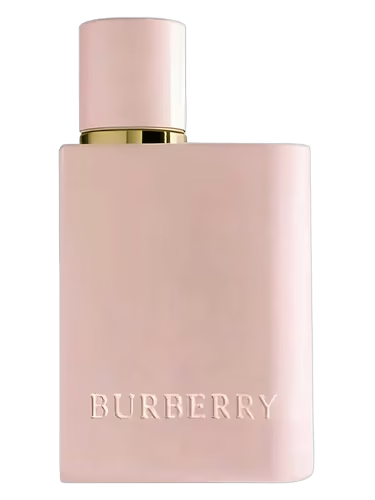
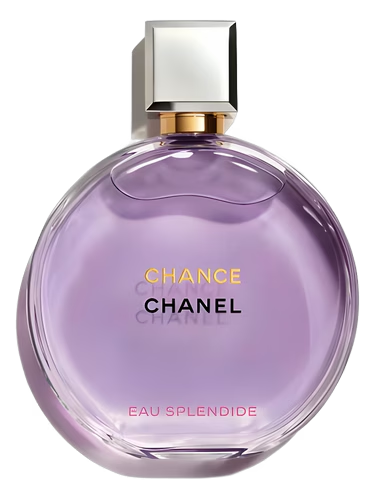
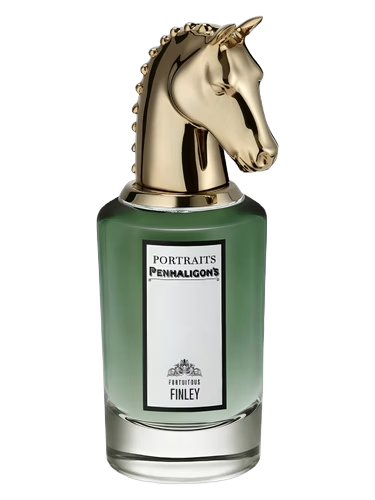
Most Popular Scents Using Cashew Flower
What is Cashew Flower?
Cashew Flower is a non-traditional perfume note derived from the Anacardium occidentale tree, valued for its unique creamy-tropical and luminous white floral character.What does Cashew Flower smell like?
It offers a soft white floral scent similar to jasmine or gardenia, underscored by a characteristic nutty sweetness, waxy green freshness, and a velvety, narcotic texture.Is there a natural essential oil of Cashew Flower?
No commercial natural extraction of the flower exists for perfumery; it is typically a fantasy note reconstructed by perfumers using synthetic accords to evoke its creamy and tropical profile.What are some top perfumes featuring Cashew Flower?
Notable fragrances include Avon Far Away Rio, Overose White Cashew, Granado Époque Tropical, and Strangers Parfumerie Chokedee.When is the Cashew Flower in season?
Blooming typically occurs during the dry season, which varies by region: the first half of the year in India and Vietnam, and starting around September or October in Brazil and East Africa.