Fragrance Notes Are Layers Of Scent That Are Layered To Form The Final Fragrance. Fragrance Notes Are Categorised Into Three Main Elements Based On How Long They Take To Evaporate, And How Long They Typically Last Following Application: Top Notes, Heart Notes And Base Notes.
Carnation
Carnation offers a complex floral profile: spicy, clove-like, and slightly peppery, often with powdery and delicate honeyed undertones. It evokes a warm, vibrant, and slightly vintage powdery richness, essential for adding a refined, sophisticated, and memorable texture to floral and oriental compositions.

Origin & Extraction Of Carnation
The carnation, or Dianthus (meaning "flower of the gods"), has a long and symbolic history, often featuring in art and cultural practices, such as symbolizing betrothal in Medieval art and adorning garlands in ancient Athenian festivals. Due to its intoxicating scent and timeless beauty, the flower's fragrant profile—characterized by its spicy, clove-like aroma—made it a natural candidate for inclusion in historical scent compositions.
In perfumery, the carnation note has played a significant role, particularly in older floral and oriental compositions, lending a warm, spicy, and sometimes powdery richness. Since the natural oil is difficult to extract, the note is often recreated as an "accord" using components like iso-eugenol (derived from clove), rose, and jasmine. This spicy-floral base became essential in creating refined and memorable textures, securing the carnation's place as a classic, sophisticated element in fine fragrance, exemplified in influential perfumes such as L'Air du Temps.
Extraction Methods of Carnation
Historically, the primary method for capturing the scent of carnations was through enfleurage, a labor-intensive process where fresh flower petals were placed on layers of purified animal or vegetable fat. The fat would absorb the aromatic molecules over several days or weeks, and the process was repeated with fresh flowers until the fat reached the desired saturation. This method was essential for delicate flowers that could not withstand the high heat of traditional steam distillation, which often causes the petals to clump and degrades their complex aromatic compounds.
In modern commercial production, solvent extraction has largely replaced enfleurage. This process involves using hydrocarbon solvents, such as petroleum ether, to dissolve the volatile oils and waxes from the petals, creating a "concrete." This concrete is then further processed with alcohol to produce carnation absolute, a highly concentrated liquid that preserves the flower's rich, honey-sweet, and spicy-floral profile. Additionally, the latest advancements include supercritical CO2 extraction, which uses carbon dioxide at low temperatures and high pressure to extract a very fine, pure, and elegant essence without the use of harsh chemical solvents or high heat.
The history of the carnation note in fine fragrance often begins with early 20th-century Oriental compositions, where its spicy, clove-like aroma provided a bridge between delicate florals and warm, rich bases. A foundational example is François Coty’s L'Origan (1905), which is frequently cited as the first perfume centered around this spicy-floral character. This pioneering use set the stage for subsequent masterpieces that utilized carnation to add complexity, warmth, and a subtle peppery texture, moving beyond simple floral bouquets into the new floriental category.
- *
The carnation note is perhaps most famously immortalized in L'Air du Temps by Nina Ricci, an iconic fragrance where the spicy floral note is crucial to the composition’s balanced warmth and sophistication. Furthermore, the early 20th century saw the note embraced by Guerlain in influential scents like L'Heure Bleue, where its powdery and complex spiciness contributes to the fragrance’s melancholy, beautiful character. These classics demonstrated the carnation's versatility, proving its ability to lend both vintage refinement and enduring elegance.
- *
In contemporary perfumery, the carnation continues to be reinterpreted, moving from its traditional, heavy oriental role to fresher, modern applications. Prada’s Infusion d'Oeillet showcases this modern approach, isolating the clove-like aspect of the carnation to provide a clean, refined, and singular spicy floral experience. This demonstrates how the timeless appeal of the carnation—its unique blend of floral delicacy and warm spice—remains a cherished tool for both niche and designer houses seeking a sophisticated and distinctive floral texture.
Sustainability Of Carnation
Sustainability of Carnation
- Adopting circular economy practices and life-cycle efficiencies in the production of carnation essential oils to minimize waste and support next-generation industry standards
- Implementing heightened sustainability mandates and tracking environmental KPIs to comply with evolving global regulatory frameworks and ESG principles
- Utilizing technological advancements, such as AI-powered quality control and smart development solutions, to improve manufacturing margins and reduce operational errors
- Prioritizing the development of sustainable, predictive applications for essential oil extraction that align with international environmental standards and cost-benefit goals
- Supporting the shift toward eco-friendly and energy-efficient processes through investment in smart firms and sustainable ventures within the floral extraction market
Trivia
The scientific name for the carnation, Dianthus, literally translates to "flower of the gods" in Greek, while its distinct clove-like scent is so chemically similar to the spice that it was historically used to flavor wines, beers, and even as a medicinal tea to relieve stress.
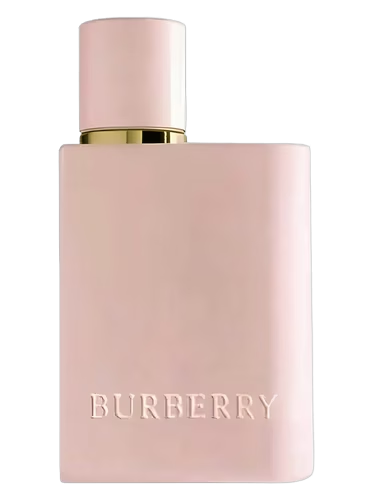
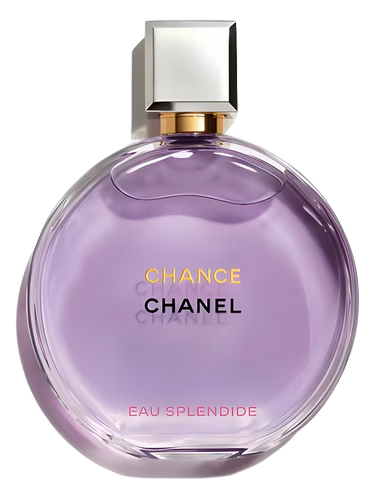
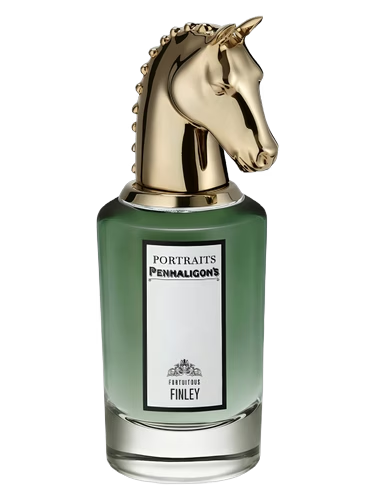
Most Popular Scents Using Carnation
What is Carnation in perfumery?
Carnation, or Dianthus, is a classic fragrance note known for its complex spicy floral profile that blends a clove-like aroma with powdery and honeyed undertones.What does Carnation smell like?
It offers a warm, vibrant scent characterized by its distinct spicy and peppery kick, often described as a "spicy rose" with a vintage, sophisticated texture.How is natural Carnation essence extracted?
While historically captured through enfleurage, modern extraction primarily uses solvents to create a concrete and then an absolute, though the note is often recreated as an accord due to low natural yields.What are some top perfumes featuring Carnation?
Iconic fragrances featuring this note include Nina Ricci L'Air du Temps, Guerlain L'Heure Bleue, Prada Infusion d'Oeillet, and Estée Lauder Cinnabar.When is Carnation in season?
The flowers primarily bloom from spring through summer, following a seasonal cycle that peaks during warmer months, though they are often available year-round through greenhouse production.