Fragrance Notes Are Layers Of Scent That Are Layered To Form The Final Fragrance. Fragrance Notes Are Categorised Into Three Main Elements Based On How Long They Take To Evaporate, And How Long They Typically Last Following Application: Top Notes, Heart Notes And Base Notes.
Cardamom Flower
Cardamom Flower offers a refined, delicate take on the classic spice. It is lightly warm, aromatic, and distinctly green, blending the seed's characteristic clean, camphoraceous spice with subtle, soft floral whispers. This profile provides an uplifting, sophisticated freshness with a hint of sweet, complex zest and woodiness.

Origin & Extraction Of Cardamom Flower
While cardamom (the spice/seed) has a long and storied history, traditionally used in ancient Egypt for embalming and widely in Asian and Arab cultures for medicine and fragrance, the specific "Cardamom Flower" note is a more modern innovation in perfumery. The aromatic seeds were introduced to Europe in the Middle Ages and quickly became valued for their warm, spicy, and amber scent, forming the heart notes of many early fragrances, particularly in Ayurvedic and traditional Middle Eastern preparations.
The Cardamom Flower note represents a contemporary perfumery trend that seeks out finer, more delicate facets of established materials. Rather than using the potent seed extract, the flower note blends the seed's characteristic clean, camphoraceous spice with soft floral and green whispers. This approach allows the warm complexity of cardamom to be utilized in an uplifting, sophisticated way, often providing aromatic freshness in modern compositions rather than acting solely as a heavy spice base.
Extraction Methods of Cardamom Flower
The primary method for extracting cardamom essence is steam distillation of the dried seeds or pods. This process involves crushing the cardamom to increase the surface area before loading it into a distillation chamber where pressurized steam vaporizes the volatile oils. Historically, extraction was performed using traditional hydro-distillation, where plant material was soaked and boiled in water for several hours to collect the aromatic hydrosol and oil. Other conventional techniques included simple solvent extraction and maceration in honey or syrups, dating back to early medicinal uses.
Modern commercial production has advanced to include high-efficiency methods such as supercritical CO2 extraction, which preserves both volatile and non-volatile compounds at lower temperatures to capture a truer, more complex scent profile. Latest developments also utilize microwave-assisted extraction (MAE) and ultrasonic-assisted extraction (UAE), which significantly reduce processing time while increasing the yield of delicate phytochemicals. Additionally, innovative techniques like encapsulation are now used to stabilize these volatile components for use in high-end perfumery and pharmaceutical applications.
While Cardamom Flower is a more delicate and modern interpretation, its use in perfumery is often inspired by fragrances that famously feature the potent cardamom spice note. These scents leverage cardamom’s warm, aromatic, and slightly camphoraceous quality to provide an invigorating lift. A leading example is the iconic Tom Ford Oud Wood Eau de Parfum Spray, where cardamom contributes a clean, spicy brightness to the deep, smoky oud and woods, creating a sophisticated and enduring signature.
- Other fragrances that center around the spicy character of cardamom include Jo Malone London Mimosa and Cardamom Cologne, which pairs the spice with soft floral notes for an unusual and comforting warmth, and Tom Ford Noir Extreme Parfum, where the spice adds intensity to the amber and dessert accords.
Cardamom’s versatility allows it to bridge fresh, clean openings with richer, more complex bases. In modern compositions, the "Cardamom Flower" note is utilized specifically for its green, aromatic freshness and subtle floral whispers, providing complexity without the heaviness of the seed oil. This approach is favored in niche and designer fragrances aiming for a refined, uplifting sophistication, perfect for creating an element of unique zest in scents like Matiere Premiere Santal Austral Extrait, which utilizes black cardamom to complement the white wood structure.
The success of the classic spice in popular perfumes has led to the development of the more nuanced Cardamom Flower note. Fragrances like Tom Ford Soleil Blanc Eau de Parfum Spray, which feature bright spice notes, and other contemporary fresh compositions, rely on delicate aromatic elements to deliver sophisticated warmth. These examples demonstrate how the aromatic nature of cardamom, whether from the flower or the seed, is essential for creating warm, distinctive, and universally appealing fragrances.
Sustainability Of Cardamom Flower
Sustainability of Cardamom Flower
- Integrating small-scale producers into agroforestry production chains that are environmentally and socially sustainable
- Promoting biodiversity and ecosystem balance by providing natural habitats for various animal and plant species through forest-based plantations
- Adopting organic farming practices and certifications to eliminate the use of synthetic pesticides and insecticides
- Implementing advanced drying technologies, such as solar and electric dryers, to reduce deforestation caused by traditional firewood-intensive curing
- Enhancing socio-economic resilience by providing fair-trade market access, technical training, and stable income for ethnic minority and mountain communities
- Supporting climate change adaptation through the development of pest and drought-resistant varieties and improved water management techniques
Trivia
Legend has it that Cleopatra, the Queen of the Nile, famously burned cardamom incense and perfumed the sails of her ships with its essence to announce her arrival and seduce Mark Antony.
Most Popular Scents Using Cardamom Flower
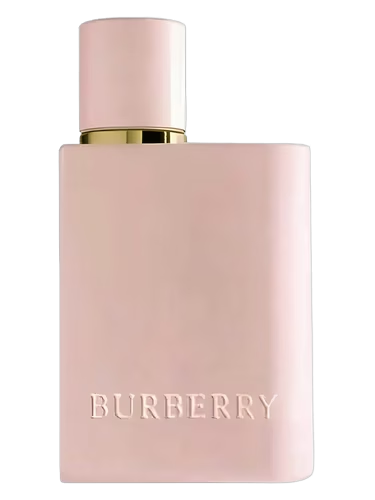
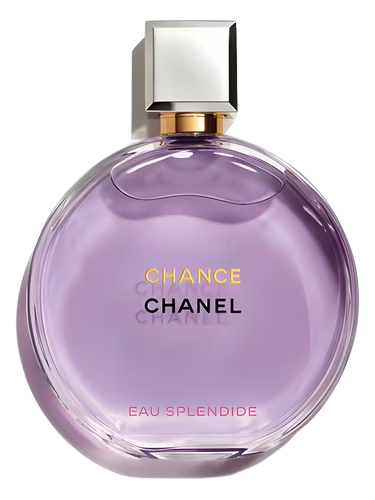
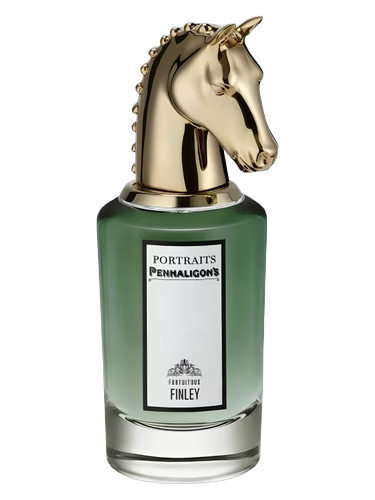
What is Cardamom Flower?
Cardamom Flower is a refined fragrance note that offers a delicate, modern take on the classic cardamom spice, blending its characteristic warmth with soft floral and green facets.What does Cardamom Flower smell like?
It features a lightly warm, aromatic, and distinctly green profile, combining clean, camphoraceous spice with subtle floral whispers and a hint of sweet zest.How is Cardamom Flower essence extracted?
The aromatic essence is primarily obtained through steam distillation of the dried seeds or pods, though modern methods like supercritical CO2 extraction are used to capture a more complex profile.What are some top perfumes featuring Cardamom Flower?
Popular fragrances include Jo Malone London Mimosa & Cardamom, Tom Ford Oud Wood, Yves Saint Laurent La Nuit de L'Homme, and Kilian Intoxicated.When is Cardamom Flower in season?
The cardamom plant typically begins its flowering cycle in early spring, with blossoms appearing throughout the summer months, particularly from March through November in tropical habitats.