Fragrance Notes Are Layers Of Scent That Are Layered To Form The Final Fragrance. Fragrance Notes Are Categorised Into Three Main Elements Based On How Long They Take To Evaporate, And How Long They Typically Last Following Application: Top Notes, Heart Notes And Base Notes.
Carambola (Star Fruit)
A fresh and sour fruity note, Carambola (Star Fruit) offers a bright, slightly tart, and watery sensation. It is reminiscent of a blend of mild citrus, pear, and plum, often with an underlying hint of greenness that adds vibrancy and crispness to fragrance compositions.

Origin & Extraction Of Carambola (Star Fruit)
Carambola, or Star Fruit, is a relatively modern addition to the perfumer's palette, gaining prominence primarily in the late 20th and early 21st centuries. Unlike classic citrus or floral notes which boast centuries of tradition, star fruit's use aligns with the rise of fruity floral and aquatic fragrance categories that sought novel, translucent, and exotic fruit profiles. Originating in Southeast Asia, the fruit itself offered perfumers a distinctive aroma—a blend of mild citrus, pear, and plum with a fresh, watery tartness—that was ideal for creating vibrant, cheerful, and contemporary top notes, especially those intended to evoke tropical or holiday themes. Its adoption reflected a shift away from heavy, traditional structures toward lighter, more transparent compositions.
Its significance in modern perfumery lies in its unique ability to provide freshness without the inherent bitterness of grapefruit or the strong acidity of lemon. Carambola is often utilized to add an aqueous, sparkling quality that bridges traditional citrus openings with more complex fruity or floral hearts. It is frequently featured in designer and seasonal summer editions, particularly by houses known for uplifting, vacation-inspired scents. This note allows for the creation of airy, clean fragrances that convey energy and optimism, securing its role as a sophisticated alternative to more conventional fruit notes in contemporary fine fragrance.
Extraction Methods of Carambola (Star Fruit)
Historically, the aromatic profile of carambola was difficult to capture through traditional means. In laboratory and traditional settings, volatile components were isolated using hydrodistillation with a Clevenger apparatus or simple maceration and solvent extraction. However, because the fruit’s delicate, watery scent often degrades under high heat, it was traditionally more common to recreate its tropical-citrusy profile in perfumery using synthetic fruity accords rather than a natural absolute or essential oil.
Modern extraction techniques have advanced to better preserve the fruit’s complex molecular structure. Recent developments include cellular extraction, which captures water-soluble phyto-compounds without the use of high heat, and headspace solid-phase micro-extraction (HS-SPME), a cold volatiles collection method used to analyze and replicate the precise aromatic signature of the living fruit. Additionally, simultaneous steam distillation and solvent extraction are utilized in industrial contexts to isolate specific volatile metabolites for food and fragrance applications.
Carambola, or Star Fruit, is a unique note utilized in modern perfumery to inject a bright, watery, and exotic freshness, often serving as a vibrant top note. Its profile—reminiscent of a blend of mild citrus, pear, and plum—adds a sophisticated, tropical transparency without being overly sweet. This quality makes it particularly attractive for light, sunny, and contemporary compositions where a refreshing, slightly tart opening is desired.
- One notable fragrance featuring this note is **Calvin Klein's Eternity Summer** (various editions), where Carambola enhances the transient, breezy, and refreshing feel of a summer limited edition. It is also prominently featured in the original formulation of **Estée Lauder's Pleasures Exotic**, contributing to the fragrance’s vibrant, juicy, and intensely tropical heart, blending seamlessly with other exotic fruit and floral notes.
The Star Fruit note is also instrumental in compositions aiming for an aquatic or "freshly sliced fruit" effect, contributing a dewy crispness. Its watery, slightly sour character provides a clean counterpoint to heavier floral or musk bases, ensuring the overall scent remains luminous and uplifting. This is evident in fragrances like **L'Eau d'Issey Pour Homme Fraîche** by Issey Miyake, where Carambola adds a zesty, aqueous sparkle to the fresh aromatic structure, embodying dynamic energy and modern cleanliness.
Sustainability Of Carambola (Star Fruit)
Sustainability of Carambola (Star Fruit)
- Adopting zero-waste philosophies by repurposing overripe fruit into culinary products and using wood from seasoned trees for smoking meats
- Implementing regenerative farming and organic practices to eliminate synthetic inputs and promote soil health
- Utilizing cover crops like sunn hemp and velvet bean to naturally fix nitrogen, suppress weeds, and improve soil organic matter
- Using cover crops and strategic planting locations to provide natural windbreaks, protecting sensitive trees from damage without artificial structures
- Applying organic mulches to insulate root systems against cool temperatures and conserve soil moisture
- Promoting biodiversity and economic resilience for farmers by diversifying tropical fruit production
Trivia
Beyond its decorative star shape, some highly acidic varieties of star fruit are so potent they can be used as a natural cleaning agent to strip rust and tarnish from metals like brass.
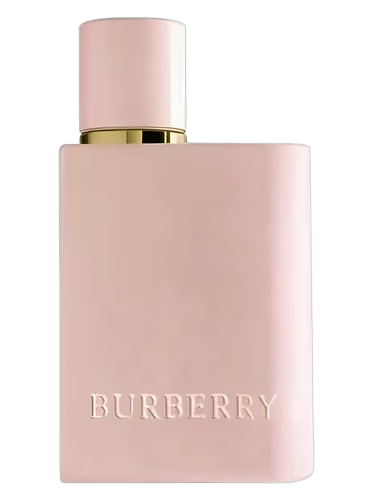
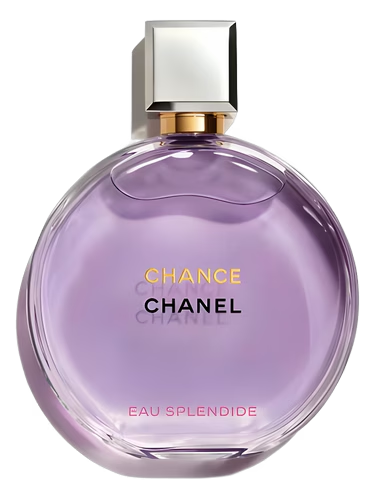
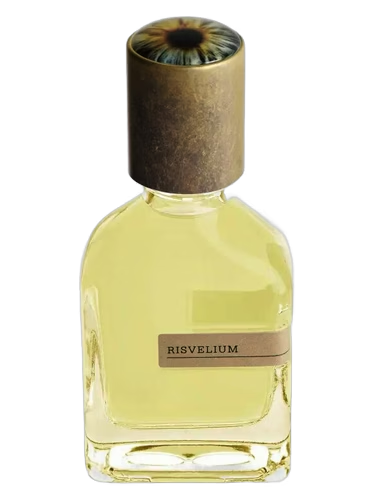
Most Popular Scents Using Carambola (Star Fruit)
What is Carambola (Star Fruit)?
Carambola is a tropical fruit native to Southeast Asia used in modern perfumery to add a translucent, watery, and exotic freshness to compositions.What does Carambola (Star Fruit) smell like?
It offers a bright, slightly tart aroma reminiscent of a blend of mild citrus, pear, and plum with a crisp, green vibrancy.How is Carambola essence extracted?
Because the delicate scent degrades under heat, it is often captured through cellular extraction or replicated using headspace technology and synthetic fruity accords.What are some top perfumes featuring Carambola?
Notable fragrances include Versace Man Eau Fraiche, Zoologist Chameleon, Calvin Klein Eternity Summer, and Estée Lauder Pleasures Exotic.When is Carambola in season?
It is a trans-seasonal tropical fruit that can bear fruit year-round, with primary harvest peaks typically occurring from late summer through winter.