Fragrance Notes Are Layers Of Scent That Are Layered To Form The Final Fragrance. Fragrance Notes Are Categorised Into Three Main Elements Based On How Long They Take To Evaporate, And How Long They Typically Last Following Application: Top Notes, Heart Notes And Base Notes.
Carambola Blossom
Carambola Blossom offers a delicate, intensely fresh, and airy profile, capturing the unique essence of star fruit with bright, tart, and slightly sour-green nuances. It provides a luminous, subtly sweet floral lift, blending zesty citrus facets with a clean, effervescent aquatic feel, perfect for a shimmering top note.

Origin & Extraction Of Carambola Blossom
The Carambola Blossom note, derived from the star fruit tree (Averrhoa carambola), is a modern and relatively specialized ingredient in perfumery. Unlike historically foundational notes such as rose or jasmine, which have centuries of documented use, Carambola Blossom only began gaining recognition and use in fine fragrance in the late 20th and early 21st centuries. Its incorporation is driven by a contemporary trend towards capturing highly specific, exotic, and 'photorealistic' floral and fruity freshness, moving beyond generic tropical accords.
In modern compositions, Carambola Blossom is valued for its unique profile, which combines a delicate, light floralcy with the bright, tart, and sour-green nuances of the star fruit itself, as noted in its Odor Profile. This characteristic makes it ideal for use in light, airy, and aquatic fragrances, particularly Eaux Fraîches and summer-themed scents, where it provides a shimmering, uplifting top note that is both exotic and clean.
Extraction Methods of Carambola Blossom
Historically, the aromatic compounds of carambola blossoms and leaves were obtained through traditional maceration and simple infusion techniques, often involving the soaking of plant material in water or local solvents to capture bioactive molecules. Early medicinal and fragrance preparations relied on shade-drying the plant parts before manual extraction to preserve their delicate chemical profiles. Traditional "folk" methods frequently utilized prolonged steeping in water or oils to produce floral waters and therapeutic tonics used in ancient medicine for treating respiratory and digestive ailments.
In modern production and laboratory research, the extraction of carambola's essence and bioactive components has evolved to include more precise techniques. Steam distillation and hydro-distillation are standard methods for capturing volatile aromatic compounds from the blossoms and leaves. Recent advancements have introduced the Soxhlet extraction process using a sequence of solvents like petroleum ether and ethanol to achieve an exhaustive phytochemical profile. Furthermore, sophisticated methods such as supercritical CO2 extraction and ultrasonic-assisted extraction are increasingly employed to isolate specific flavonoids and polyphenols without the degradation associated with high heat, ensuring a purer and more potent aromatic yield for fine perfumery and pharmaceutical applications.
The Carambola Blossom note, with its delicate, tart, and luminous profile, is a feature primarily of modern and niche fragrances seeking an exotic, aquatic freshness. Its unique blend of subtle floral sweetness and sour-green fruit nuances makes it ideal for uplifting, shimmering compositions. While not possessing the centuries of history of notes like Rose or Jasmine, its introduction reflects a contemporary movement towards capturing highly specific, 'photorealistic' tropical accords that offer a clean, effervescent lift.
- *
A fragrance that utilizes the general essence of the star fruit and its blossom is **Carambola Eau De Parfum** by Azha Perfumes, which aims to create a noticeable chypre floral experience. Although the full note breakdown may vary, the inclusion of the star fruit essence, often derived from the blossom or fruit itself, helps establish a vibrant and unusual opening that transitions into a deeper, floral heart of rose and jasmine, supported by a patchouli base.
- *
Other interpretations of this exotic ingredient can be seen in artisanal collections, such as the **Starfruit Blossom Perfume Oil Dropper** by Sand + Fog. In these applications, the delicate Carambola Blossom note is often emphasized for its sweet and lovely tropical quality, designed to convey a light, airy, and refreshing atmosphere. It is frequently employed in Eaux Fraîches and summer-themed scents where its clean, shimmering top-note characteristic excels.
Sustainability Of Carambola Blossom
Sustainability of Carambola Blossom
- Implementing regenerative and organic farming practices, such as using sunn hemp and velvet bean as cover crops to naturally enhance soil nitrogen and improve microbial interaction
- Promoting a circular economy by repurposing agricultural side-streams, including using overripe fruit for culinary products and utilizing seasoned wood from older trees for smoking meats
- Advancing zero-waste initiatives by exploring innovative technologies like microbial fuel cells to convert discarded carambola waste into bioelectricity for rural applications
- Reducing environmental impact through the use of green manure and organic fertilizers to maintain soil health and lower pH levels without synthetic chemical inputs
- Supporting socio-economic development in rural tropical regions by improving the cultivation and handling of underutilized native fruit species to enhance local food security
Trivia
Carambola leaflets are highly sensitive to light and touch, possessing the unusual ability to fold together at night or move from a flat position to a vertical droop in just 20 seconds when shaken.
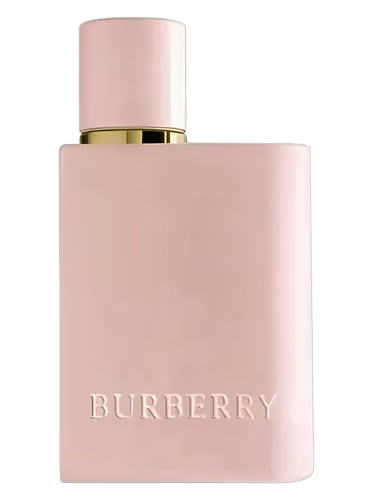
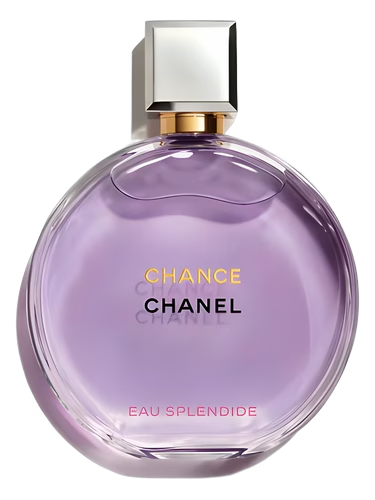
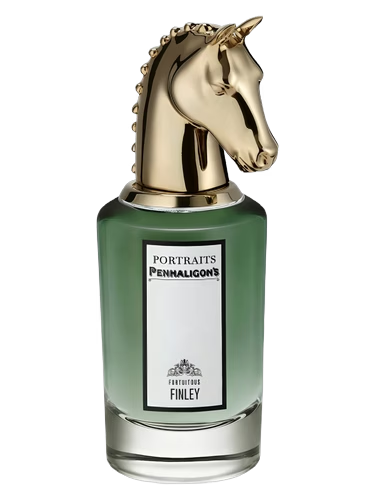
Most Popular Scents Using Carambola Blossom
What is Carambola Blossom?
Carambola Blossom is a modern fragrance note derived from the star fruit tree, prized for its delicate, intensely fresh, and exotic floral profile that began gaining popularity in fine perfumery in the late 20th century.What does Carambola Blossom smell like?
It offers a luminous and airy aroma that combines subtle floral sweetness with the bright, tart, and sour-green nuances of star fruit, often featuring a clean, effervescent, and aquatic quality.How is Carambola Blossom essence extracted?
While traditionally obtained through maceration, modern perfumery typically uses synthetic recreation to capture its crisp profile, though advanced techniques like steam distillation and supercritical CO2 extraction are used for research and niche applications.What are some top perfumes featuring Carambola Blossom?
Popular fragrances featuring this note include L'Occitane Au Brésil Flor de Carambola, Victoria's Secret Velvet Petals Luxe, Victoria's Secret Midnight Fleur, and Azha Carambola.When is Carambola Blossom in season?
In warm tropical climates, the carambola tree can bloom and bear fruit year-round, typically exhibiting major flowering flushes from April to May and again from September to October.