Fragrance Notes Are Layers Of Scent That Are Layered To Form The Final Fragrance. Fragrance Notes Are Categorised Into Three Main Elements Based On How Long They Take To Evaporate, And How Long They Typically Last Following Application: Top Notes, Heart Notes And Base Notes.
Cantaloupe
A luminous and juicy aroma, Cantaloupe in perfumery offers a fresh, watery, and intensely fruity profile. It combines the sweet, succulent flesh with hints of green, waxy rind and cucumber-like clean notes. This note is often used to impart a vibrant, tropical lift and a dewy, expansive melon quality, evoking summer freshness.

Origin & Extraction Of Cantaloupe
Cantaloupe, like many juicy fruit notes, gained prominence in perfumery primarily during the aquatic and fresh movements of the late 20th century, particularly the 1990s. Before this era, fruity notes tended to be heavier or less dominant. The advent of new aroma chemicals allowed perfumers to capture the luminous, watery, and clean essence of melon accurately and sustainably, moving beyond the traditional citrus-heavy top notes of classic colognes. This development allowed Cantaloupe to become a signature of contemporary freshness, offering a smooth, dewy sweetness that was perceived as modern and invigorating.
Today, Cantaloupe serves a dual purpose in fragrance. It remains a key ingredient in cheerful, casual summer and sport scents, reinforcing an inviting, tropical sweetness, as famously seen in certain aquatic compositions. However, in niche and artistic perfumery, it is increasingly treated with greater refinement, often paired with green, earthy, or ozonic elements. Its inherent quality to evoke sun-kissed, natural hydration ensures its continued versatility, providing a unique texture that enhances a fragrance’s luminosity and expansive freshness.
Historically, cantaloupe and similar melons have not yielded essential oils through traditional mechanical means like cold expression or steam distillation because the fruit lacks the highly concentrated oil glands found in citrus peels. While traditional methods like maceration or enfleurage—soaking plant material in fats or oils to capture scent—could be used for delicate botanicals, they were not commercially applied to cantaloupe due to its high water content and low aromatic yield. Instead, the "extraction" of melon oils historically refers to the culinary or medicinal pressing of the seeds rather than the fragrant flesh.
In modern perfumery, the scent of cantaloupe is primarily a reconstruction. Because the fruit produces no essential oil or absolute of commercial relevance, its aromatic profile is built in a laboratory using synthetic molecules and ester accords. Modern technology like Headspace analysis (GC-MS) allows chemists to identify the specific volatile compounds emitted by a ripe melon, which are then replicated. For industrial applications requiring natural melon seed oil, advanced techniques such as supercritical fluid extraction (SFE) and aqueous enzymatic extraction (AEE) are now employed to capture nutrients and lipids with higher purity and better stability than traditional solvent-based methods.
Cantaloupe and other melon notes achieved peak fame in the early-to-mid 1990s, particularly within the nascent aquatic and "clean" fragrance trends. The note provided a unique, juicy sweetness that blended seamlessly with watery elements to evoke freshness and vitality. One of the most significant early examples that featured a prominent, dewy melon accord was **L'Eau d'Issey** by Issey Miyake, launched in 1992. Although often cited for its water lily and cyclamen notes, the watery, cantaloupe-like aspect was key to its groundbreaking success and influence on subsequent fresh scents.
The melon note was further immortalized in the genre-defining scent **Escape** by Calvin Klein, also a major launch in the early 90s. In **Escape**, the cantaloupe note offered a strong, intensely juicy, and slightly tropical opening, lending the fragrance its distinctive vibrant and energetic character. This scent demonstrated how the sweet, expansive quality of cantaloupe could be used effectively in bold, complex compositions, setting it apart from lighter Eaux de Colognes. Later, scents like **Aqua di Gio** by Giorgio Armani (for women) also utilized a similar watery fruit complexity in their top notes to ensure maximum freshness and lift.
While the bold, hyper-aquatic usage of the 90s has softened, modern perfumery still features the cantaloupe note for its unique watery texture and smooth sweetness. Today, the note is often used more subtly, or paired with contrasting notes to add a sophisticated, dewy lift, as seen in various niche and designer fragrances seeking a modern twist on freshness. For example, some flankers or variations of fragrances like **Tommy Girl** utilize light melon touches to maintain a crisp, cheerful opening, proving the note's enduring relevance as a fresh, vital component.
Sustainability Of Cantaloupe
Sustainability of Cantaloupe
- Reducing the carbon footprint by minimizing diesel fuel consumption through improved farm management and reduced tillage methods
- Implementing organic farming practices such as using worm castings and dairy compost to enhance soil health and biodiversity
- Adopting water-efficient irrigation systems like drip irrigation and mulching to manage high water requirements and conserve resources
- Utilizing circular economy principles in perfumery by incorporating upcycled ingredients derived from agricultural by-products and waste
- Protecting local ecosystems by managing nitrogen fertilizer usage and adopting integrated pest management to reduce chemical runoff
- Establishing responsible sourcing and ethical labor standards to ensure socio-economic resilience for farming communities
Trivia
Cantaloupe is named after the Italian town of Cantalupo in Sabina, a former papal summer estate near Rome where seeds brought from Armenia were first planted in the Pope's gardens during the 16th century.
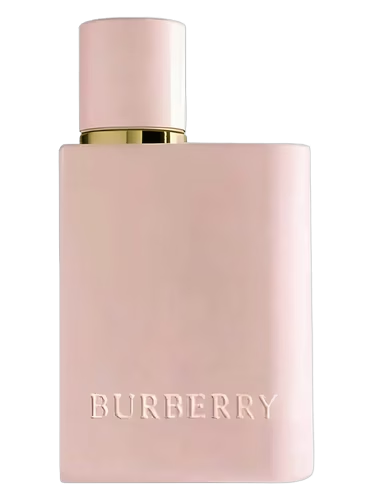
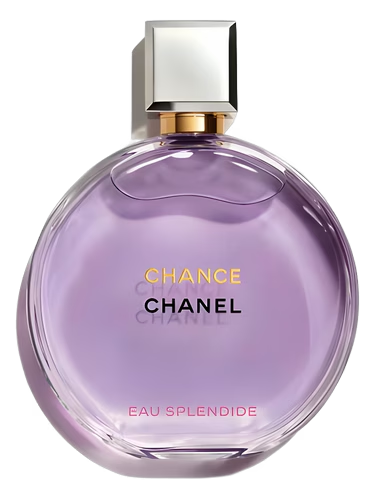
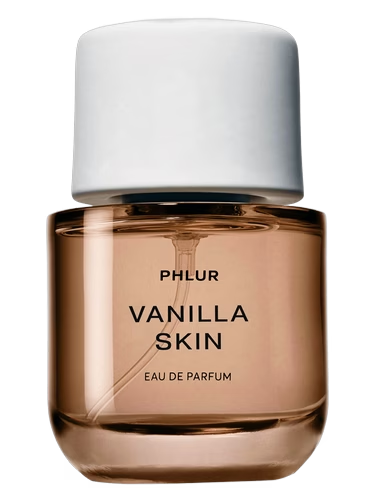
Most Popular Scents Using Cantaloupe
What is Cantaloupe?
Cantaloupe is a fruit-based fragrance note known for its luminous, juicy, and watery profile, often associated with the aquatic and fresh fragrance trends of the 1990s.What does Cantaloupe smell like?
It offers a fresh, succulent, and intensely fruity aroma that combines sweet flesh with hints of green, waxy rind and clean, cucumber-like nuances.How is Cantaloupe essence extracted?
Cantaloupe does not produce a natural essential oil; therefore, its scent is a synthetic reconstruction created in laboratories using aroma chemicals and headspace analysis.What are some top perfumes featuring Cantaloupe?
Popular fragrances featuring this note include L'Eau d'Issey, Calvin Klein Escape, Kenneth Cole Reaction, and Creed Millesime Imperial.When is Cantaloupe in season?
Cantaloupe is a warm-weather fruit with peak harvest occurring between June and August, making it a quintessential note for summer-themed fragrances.