Fragrance Notes Are Layers Of Scent That Are Layered To Form The Final Fragrance. Fragrance Notes Are Categorised Into Three Main Elements Based On How Long They Take To Evaporate, And How Long They Typically Last Following Application: Top Notes, Heart Notes And Base Notes.
Candlenut
The candlenut, or kukui nut, offers a rich, creamy, and slightly waxy nutty aroma in perfumery, often featuring mild, milky facets. It provides a smooth, warm depth, sometimes reminiscent of macadamia or almond, used to add a tropical, comforting texture to gourmand and exotic compositions.

Origin & Extraction Of Candlenut
The use of Candlenut, also known as Kukui nut, in perfumery is relatively recent compared to classical European ingredients. Historically, the Kukui nut tree was revered across Polynesia, particularly in Hawaii, where its oil was used not primarily for scent, but as a source of light (hence "candlenut") and for its emollient properties in traditional skincare and massage. This association with rich, smooth oil and tropical warmth laid the groundwork for its eventual incorporation into modern fragrance compositions.
In modern fine perfumery, Candlenut is valued for translating this cultural and textural history into a creamy, exotic, and subtly milky note. It gained popularity particularly among niche and contemporary houses seeking to create gourmand, solar, or tropical-themed scents. Its function in a composition is to provide a comforting, smooth depth and to bridge lighter floral or fruity top notes with warmer, heavier bases, distinguishing it as a sophisticated, non-cloying nut accord.
Extraction Methods of Candlenut
Historically, candlenut oil was obtained through traditional manual methods such as boiling crushed kernels in water to allow the oil to rise to the surface for collection, or using simple mechanical pressing with hydraulic-like jacks. In some cultures, the nuts were used in their whole form as "candles" due to their high oil content, or the pulp was used directly in processes like textile dyeing. Traditional solvent extraction also utilized simple maceration where ground seeds were soaked in solvents at room temperature before filtration and evaporation.
Modern commercial production primarily utilizes mechanical pressing and advanced solvent extraction techniques like Soxhlet extraction, often using n-hexane to achieve high yields. Recent developments have introduced more efficient and sustainable technologies, including Microwave-Assisted Extraction (MAE) and Supercritical Fluid Extraction (SFE) using carbon dioxide. These latest methods allow for shorter extraction times, higher purity, and the preservation of bioactive compounds like antioxidants and essential fatty acids without the risk of thermal degradation or chemical residues.
Candlenut, prized for its rich, creamy, and exotic nutty aroma, is a defining feature in several niche and designer fragrances seeking to evoke tropical warmth and comforting textures. One of the most famous fragrances to showcase this note is **Kukui** by the Pacific-inspired brand, Nest. This perfume highlights the smooth, milky facets of the candlenut, blending it with island florals and a hint of coconut to create a lush, enveloping, and uniquely tropical gourmand experience.
- **Kukui** (Nest)
- **Aloha Tiare Monoi** (Comptoir Sud Pacifique)
- **Candlenut Bloom** (Various Niche Houses)
In mainstream perfumery, while often listed under its Hawaiian name 'Kukui', the candlenut accord lends a comforting depth to compositions that require a non-traditional nuttiness, distinguishing itself from harsher notes like hazelnut or dry almond. It frequently serves as a bridge between creamy white florals, such as tuberose or gardenia, and warmer base notes like vanilla and amber, adding a distinctive subtle spice and waxy texture to the heart and drydown.
The use of Candlenut is particularly celebrated in fragrances that capture a vacation aesthetic, offering a smooth, almost macadamia-like creaminess without excessive sweetness. Its subtle presence ensures the scent remains sophisticated and comforting, contributing to the perceived luxury and richness, particularly when paired with sandalwood or light tropical woods.
Sustainability Of Candlenut
Sustainability of Candlenut
- Promoting zero-waste initiatives by repurposing candlenut shells as renewable fuel for drying ovens and utilizing pulp for organic fertilizers or animal feed
- Fostering ecological conservation through reforestation and the use of candlenut trees to reclaim and stabilize degraded marginal lands
- Supporting rural livelihoods and community empowerment by partnering with local farmer cooperatives to ensure fair pricing and market access
- Implementation of sustainable harvesting practices that allow for continuous production without cutting down trees, preserving forest resources
- Adopting organic farming and integrated landscape management to reduce chemical usage and protect local biodiversity
Trivia
The candlenut is so high in oil content that the seeds can be strung together and burned like a natural torch, providing a steady flame that was historically used as a primary source of light and to measure time in ancient Hawaii.
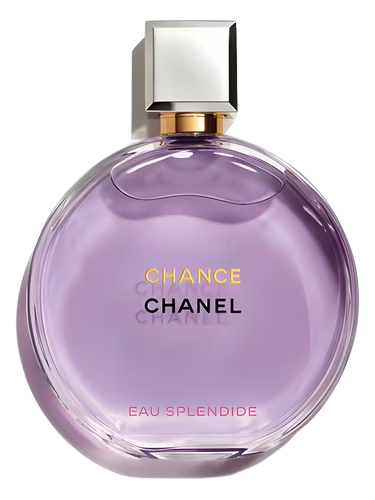
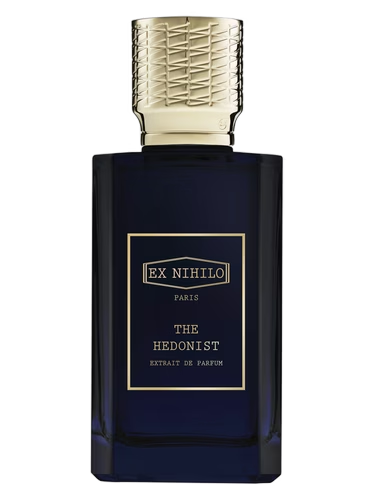
Most Popular Scents Using Candlenut

What is Candlenut?
Candlenut, also known as the Kukui nut, is the seed of the Aleurites moluccanus tree native to Southeast Asia and Polynesia, prized in perfumery for its rich, creamy, and tropical nutty aroma.What does Candlenut smell like?
It offers a warm, smooth, and slightly waxy scent profile with milky facets, often compared to the aroma of macadamia or almond with a comforting, buttery depth.How is Candlenut essence obtained for fragrances?
While the oil is traditionally extracted through mechanical pressing or solvent extraction of the kernels, candlenut-like notes in fine perfumery are often recreated synthetically to capture its specific olfactory character.What are some top perfumes featuring Candlenut?
Notable fragrances include Juara Candlenut Perfume Oil, Byredo Bal d'Afrique, Nest Kukui, and Aloha Tiare Monoi by Comptoir Sud Pacifique.Why is it called Candlenut?
It earned its name due to its exceptionally high oil content, which allowed indigenous cultures to string the nuts together and burn them like candles for light.