Fragrance Notes Are Layers Of Scent That Are Layered To Form The Final Fragrance. Fragrance Notes Are Categorised Into Three Main Elements Based On How Long They Take To Evaporate, And How Long They Typically Last Following Application: Top Notes, Heart Notes And Base Notes.
Campion Flower
Campion Flower offers a delicate, classic floral profile, often subtle by day but intensifying into the evening. It is characterized by a soft, slightly green sweetness with a luminous, airy quality, evoking natural, understated elegance. It is used to lend a gentle, sophisticated floral nuance to compositions.

Origin & Extraction Of Campion Flower
The Campion Flower note (often derived from species like White Campion or Silene) is not a traditional, foundational component of historical perfumery, unlike notes such as Rose or Jasmine. Historically, the plant was recognized more for its presence in meadows and its ability to open and intensify its soft, sweet scent in the evening, a characteristic that makes it appealing to modern perfumers. Its use gained traction in contemporary perfumery as houses sought to capture more photorealistic, delicate, and "wild" floral notes, moving beyond heavy, classic florals.
Because Campion is not traditionally distilled into an essential oil for commercial fragrance on a large scale, the note is often recreated using headspace technology or synthetic accords. This modern approach allows perfumers to capture the flower's delicate, luminous, and slightly green sweetness, lending an understated, natural elegance to compositions. It remains a relatively niche ingredient, utilized to provide sophisticated floral nuances that evoke a sense of quiet, dewy freshness rather than intense concentration.
The Campion Flower note, prized for its delicate, luminous, and slightly green sweetness, is primarily a feature of modern niche and artisanal perfumery, where creators seek to capture photorealistic "wild" floral accords. Since Campion is often recreated using headspace technology or synthetic accords rather than traditional essential oil distillation, it allows perfumers to offer a sophisticated floral nuance that stands apart from heavier, classic ingredients like Rose or Jasmine. Its subtle intensity makes it ideal for fragrances aiming for an understated, natural elegance and dewy freshness.
- The note’s unique characteristic of intensifying its soft scent into the evening makes it a complex addition to sophisticated floral compositions. While Campion Flower is not typically found in globally recognized mainstream blockbusters like those from Lattafa or Versace, it is frequently explored by houses focused on botanical accuracy and complex subtlety. These fragrances usually emphasize the note’s airy quality and slight bitterness, pairing it with light woods, musks, or other wild greens to convey a sense of a quiet meadow or forest floor.
In contemporary fragrance trends, Campion Flower is used to bridge the gap between sparkling fresh openings and soft, lasting bases. It provides a natural lift to compositions, particularly within the 'transparent' or 'green floral' sub-categories favored by many niche brands. This dedication to capturing delicate, less-common floral scents highlights the note's ability to lend a distinct character to modern releases, contrasting the ubiquitous use of more potent, commercial floral elements.
Sustainability Of Campion Flower
Sustainability of Campion Flower
- Promoting biodiversity by serving as a vital nectar source for bees, butterflies, and moths, particularly through hardy native species like Red Campion
- Enhancing ecosystem resilience by cultivating drought-tolerant and disease-resistant varieties that require minimal chemical pesticides and fertilizers
- Supporting ex situ conservation programs and botanical garden propagation to prevent the extinction of critically endangered species like the Gibraltar Campion
- Implementing habitat restoration initiatives and citizen science monitoring to track population health and protect wildflowers from urban and agricultural degradation
- Advocating for the use of local, genetically diverse seeds in meadow restoration to preserve specific adaptations and prevent the dilution of native wild populations
Trivia
In England, the white campion is sometimes known as the Grave Flower or Flower of the Dead because of its tendency to grow in graveyards and around tombstones.
Most Popular Scents Using Campion Flower
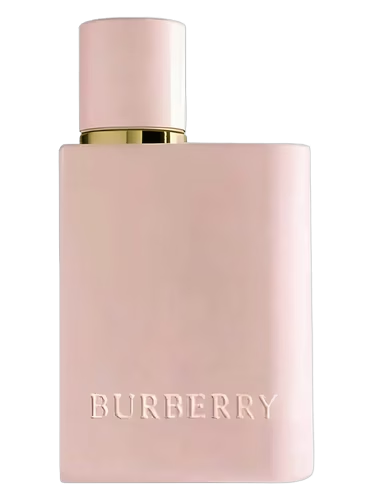
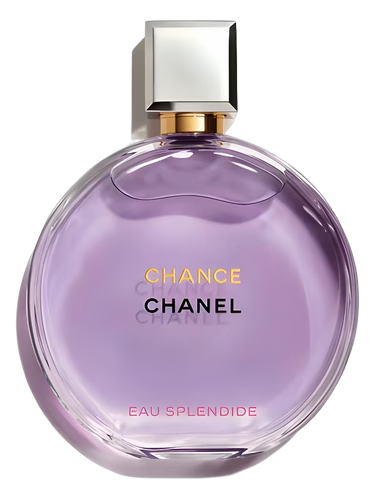
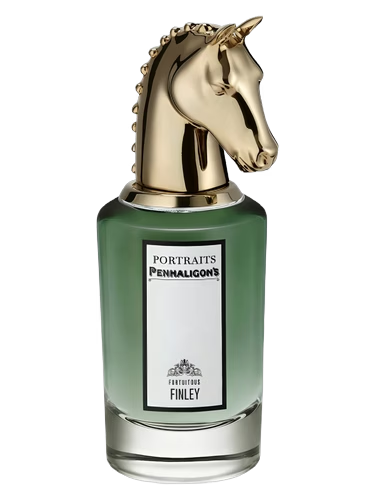
What is Campion Flower?
Campion Flower refers to a delicate floral note in perfumery, typically inspired by species like White Campion or Rose Campion, which are known for their wild meadow presence and evening fragrance.What does Campion Flower smell like?
It offers a soft, luminous floral profile with a slightly green sweetness and an airy quality, often described as having a gentle, clove-sweet or spicy-sweet undertone that intensifies at night.How is the Campion Flower note extracted?
There is no commercial essential oil extraction for Campion Flower; instead, perfumers recreate its scent using headspace technology or synthetic accords to capture its photorealistic, dewy freshness.What are some top perfumes featuring Campion Flower?
A notable fragrance featuring this note is Jo Malone London Crystal Campion Cologne, which highlights its transparent and aquatic floral facets.When is Campion Flower in season?
Campion flowers typically bloom from late spring through the summer, specifically from June to September, with some varieties beginning as early as March.Why is White Campion called the Grave Flower?
In English folklore, it earned the name Grave Flower or Flower of the Dead because it is frequently found growing in graveyards and around tombstones.