Fragrance Notes Are Layers Of Scent That Are Layered To Form The Final Fragrance. Fragrance Notes Are Categorised Into Three Main Elements Based On How Long They Take To Evaporate, And How Long They Typically Last Following Application: Top Notes, Heart Notes And Base Notes.
Calla Lily
Calla Lily offers a delicate, green, and slightly waxy floral aroma, often perceived as clean and fresh with subtle aquatic or damp earth nuances. It carries a hint of creamy sweetness, suggesting elegance and refinement, commonly used in white floral bouquets for a sophisticated, luminous lift.

Origin & Extraction Of Calla Lily
The Calla Lily (Zantedeschia aethiopica) is not a traditional source of natural essential oil, as its aroma is difficult to extract via conventional methods. Therefore, its history in perfumery is primarily modern, dating back to the development of synthetic and headspace technology. Perfumers use reconstructed accords to capture the flower's delicate, green, and slightly waxy scent profile, which is highly sought after for its luminous and refined character in white floral compositions.
As a fragrance note, Calla Lily gained popularity in the late 20th and early 21st centuries, reflecting a trend toward clean, aqueous, and photorealistic floral scents. It is typically employed to add a fresh, sophisticated, and slightly green lift to floral bouquets, often symbolizing purity and elegance. While it lacks the historical legacy of notes like Rose or Neroli, Calla Lily is a key modern element for designers aiming for a contemporary, elegant white floral signature.
Extraction Methods of Calla Lily
In perfumery, the calla lily (Zantedeschia aethiopica) is considered a silent flower, as it does not yield its fragrance through traditional mechanical pressing or steam distillation. Historically, capturing its delicate scent required the labor-intensive process of enfleurage, where fresh blossoms were placed upon layers of purified animal or vegetable fat to allow their volatile aromatic compounds to diffuse into the medium over several days.
Modern commercial production primarily utilizes solvent extraction with hydrocarbon solvents like hexane to create a concrete, which is then processed with alcohol to produce a highly concentrated absolute. For the most precise olfactive representation, contemporary perfumers often use headspace technology, which captures the fragrant molecules from the air surrounding the living flower. This "ScentTrek" or "NaturePrint" data is then used to synthetically reconstruct the calla lily's fresh, green, and slightly waxy floral profile in the laboratory.
The Calla Lily note, prized for its delicate, green, and waxy freshness, is often used in modern perfumery to introduce a sophisticated, luminous quality to white floral bouquets, moving away from the heavier tuberose or jasmine of the past. Since its scent is typically synthesized to capture the essence of the living flower, it excels at lending an aqueous, clean elegance to compositions. This note appeals to contemporary tastes that favor airy, photorealistic floral experiences over dense, narcotic ones.
One notable use of the Calla Lily accord is in fragrances that aim for a clean, elegant signature, such as **Pleasures** by Estée Lauder, which popularized the concept of "sheer" florals. While often blended with other watery or green florals, the Calla Lily component contributes to the overall sense of dewy, fresh sophistication. Its role is often supportive, enhancing the transparency and natural lift of the composition, particularly in the opening and heart notes of refined scents.
In more recent niche and designer releases, Calla Lily is embraced for its subtle creamy sweetness and aquatic undertones. For instance, the essence is often integrated into fragrances by houses like Jo Malone or L'Artisan Parfumeur to create unique floral signatures, providing a soft contrast to stronger notes. It is a key element in compositions seeking an understated luxury, ensuring the floral heart feels natural, clean, and supremely elegant without becoming overpowering, such as in certain flankers of the Issey Miyake L'Eau d'Issey line that focus on aquatic and white floral purity.
Sustainability Of Calla Lily
Sustainability of Calla Lily
- Reducing environmental impact by using natural, renewable fertilizers, herbicides, and pesticides instead of synthetic chemicals
- Implementing sensor-based irrigation monitoring to optimize water usage and protect groundwater quality
- Rotating crops and utilizing biologically enriched soil to improve soil structure, enhance biodiversity, and reduce erosion
- Focusing breeding efforts on developing disease-resistant and adaptable varieties that require fewer chemical interventions during growth
- Sourcing from suppliers committed to certified sustainable production, facility cleanliness, and worker safety standards
- Developing eco-friendly postharvest conservation technologies, such as natural essential oil solutions, to minimize toxic residues and extend shelf life
- Managing invasive potential in sensitive Mediterranean climates through responsible garden practices and the promotion of non-invasive native alternatives
Trivia
Despite their name, calla lilies are not true lilies but belong to the Araceae family, and their iconic "petal" is actually a modified leaf called a spathe that wraps around a central spike of tiny flowers.
Most Popular Scents Using Calla Lily
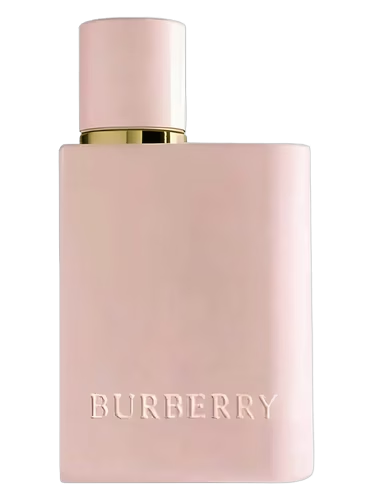
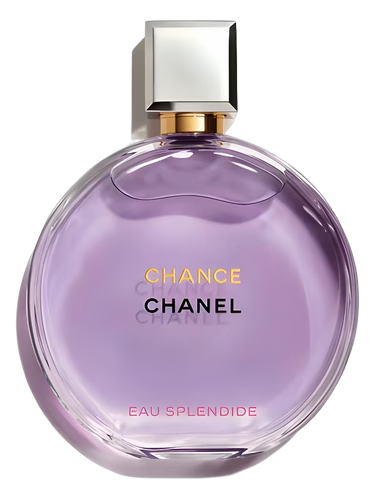
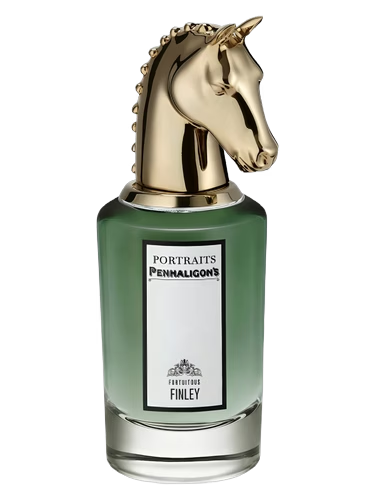
What is Calla Lily?
Calla Lily is a Southern African flower prized in modern perfumery for its delicate, green, and refined floral signature, often symbolizing purity and elegance.What does Calla Lily smell like?
It offers a delicate, green, and slightly waxy floral aroma with clean, fresh nuances, subtle aquatic undertones, and a hint of creamy sweetness.How is Calla Lily essence extracted?
As a silent flower, it yields no oil through traditional methods; its scent is captured using headspace technology and synthetically reconstructed in laboratories.What are some top perfumes featuring Calla Lily?
Notable fragrances featuring this note include Estée Lauder Pleasures, Byredo Casablanca Lily, DS&Durga Salem Gothic, and Toskovat' Last Birthday Cake.When is Calla Lily in season?
While available year-round in floral arrangements, its natural outdoor blooming period primarily occurs from late spring through late summer.