Fragrance Notes Are Layers Of Scent That Are Layered To Form The Final Fragrance. Fragrance Notes Are Categorised Into Three Main Elements Based On How Long They Take To Evaporate, And How Long They Typically Last Following Application: Top Notes, Heart Notes And Base Notes.
Cactus Blossom
An airy, fresh, and mildly exotic floral scent. It features crisp green notes of cactus stem, a subtle sweetness of the blossom, and undertones of white magnolia, sometimes accented by hints of coconut, bergamot, and a soft, clean musk or woody base.

Origin & Extraction Of Cactus Blossom
The Cactus Blossom note is a modern invention in perfumery, reflecting a trend toward unique, fresh, and photorealistic floral/green notes derived from exotic locales. Unlike traditional floral extracts like Rose or Jasmine, which have centuries of history, Cactus Blossom is a conceptual note—often a synthesized accord—designed to capture the ephemeral scent of desert-blooming flowers and the crisp, green quality of the cactus stem. Its emergence coincided with the popularization of light, aquatic, and nature-inspired fragrances in the late 20th and early 21st centuries, appealing to consumers seeking scents that evoke spaciousness and arid freshness rather than heady florals.
Because the actual cactus flower scent is often subtle and short-lived, the note in perfumery is typically constructed using elements like white magnolia, airy musks, and green chemical compounds to achieve its unique profile: fresh, mildly sweet, and distinctly vegetal. This allows perfumers to inject a sophisticated, contemporary green element that differs from traditional European herbaceous notes, making it a valuable tool for modern designer and niche houses aiming for a clean, exotic, and slightly watery floral signature.
Extraction Methods of Cactus Blossom
Historically, the aromatic compounds of delicate flowers like cactus blossoms were captured through traditional methods such as enfleurage or maceration. Enfleurage involved placing fresh petals on layers of odorless vegetable or animal fat for several days until the fat absorbed the fragrance, which was then extracted with alcohol. Maceration, another ancient technique, involved soaking the blossoms in warm carrier oils to infuse the scent into a liquid base. Because these flowers are often too fragile for the high heat of steam distillation, these cold or low-heat processes were essential for preserving their nuanced, honeyed floral notes.
Modern extraction for cactus blossom notes typically utilizes solvent extraction to create a concrete, which is further processed into an absolute. This method uses food-grade solvents like hexane to dissolve the aromatic molecules and waxes from the plant material at low temperatures, ensuring the complex scent profile is not degraded by heat. Additionally, advanced techniques such as supercritical CO2 extraction are increasingly employed; this process uses pressurized carbon dioxide as a solvent, which leaves no chemical residue and captures a highly accurate "nature-identical" representation of the fresh blossom's aroma.
The Cactus Blossom note, valued for its airy, fresh, and mildly exotic floral character, is frequently used in contemporary perfumery to evoke the spacious freshness of a desert landscape. One of the most famous fragrances to utilize this unique green-floral scent is Coach Floral Blush. In this composition, Cactus Blossom provides a distinctive, crisp opening that balances the sweet heart notes of peony and rose, giving the scent a modern, uplifting, and slightly aquatic dimension.
- A fragrance that focuses heavily on capturing the authentic desert bloom is L’eau d’Issey Pure Petale de Nectar by Issey Miyake. While often listed as having a floral-aquatic focus, the conceptual use of a desert flower note provides the necessary airy, clean, and mildly sweet core, differentiating it from traditional white florals.
In addition to designer scents, the note is often explored in niche and artisanal houses seeking unique, evocative profiles. The use of Cactus Blossom allows perfumers to inject a clean, vegetal freshness without relying on common green notes, appealing to those seeking an exotic and subtle floralcy. Its airy quality ensures that the fragrance remains light and transparent, perfect for warm weather or for adding a touch of clean, dewy freshness to a composition.
- Another noteworthy example is the original Bvlgari Omnia Crystalline series, where the Cactus Blossom accord, sometimes represented by white flowers blended with a crisp green note, lends a shimmering, mineral freshness that is central to the fragrance’s reputation as a clean, delicate scent.
The contemporary appeal of Cactus Blossom lies in its versatility; it can complement bright citrus top notes by enhancing their zest with a subtle green bitterness, or it can provide lift to a heavy woody-musk base. This sophisticated, synthesized accord offers longevity and presence, moving the fragrance beyond a simple fleeting freshness while maintaining a clean, slightly sweet floral signature that is modern and universally appealing.
Sustainability Of Cactus Blossom
Sustainability of Cactus Blossom
- Utilizing water-efficient plants that thrive in arid conditions, significantly reducing water consumption compared to traditional fragrance crops
- Promoting eco-friendly cultivation practices that eliminate the need for synthetic pesticides and toxic chemicals, protecting soil health and local biodiversity
- Supporting carbon sequestration efforts as cacti are highly effective at absorbing carbon dioxide from the atmosphere
- Encouraging circular economy principles by repurposing various plant parts for diverse applications such as biofuels, bioplastics, and sustainable vegan leather
- Advancing ethical sourcing and sustainable production methods, including hand-crafted processes and eco-friendly packaging, to minimize environmental footprint
Trivia
Cactus blossoms from the Saguaro or Prickly Pear are famous for their "brief but spectacular" appearance, often blooming for just a single day or night before withering.
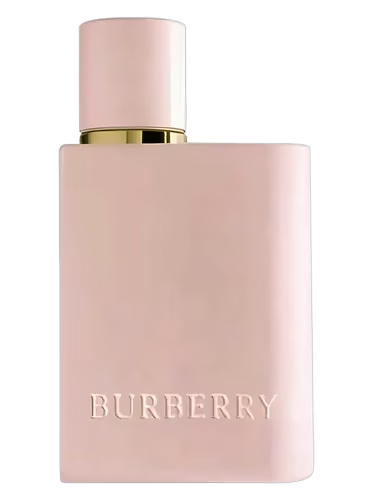
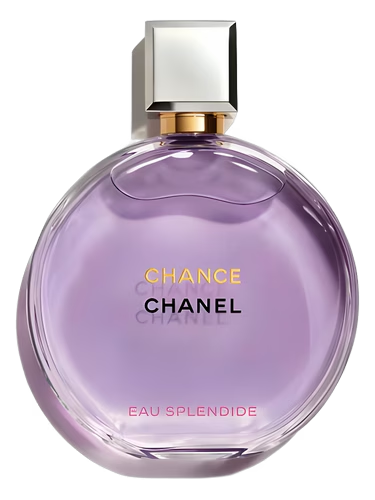
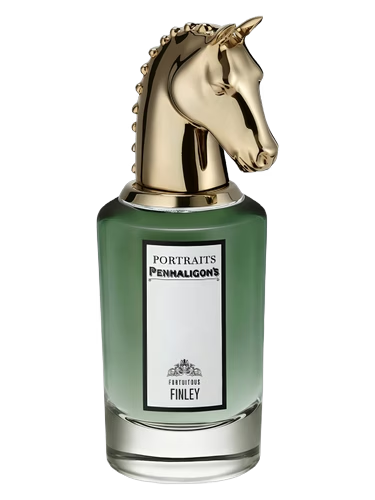
Most Popular Scents Using Cactus Blossom
What is Cactus Blossom?
Cactus Blossom is a modern, conceptual fragrance note designed to capture the airy, fresh, and slightly sweet scent of desert flowers and the crisp green quality of the cactus stem.What does Cactus Blossom smell like?
It offers a bright and exotic floral profile with crisp green facets, often featuring nuances of white magnolia, coconut, and bergamot supported by a clean musk or woody base.How is Cactus Blossom extracted?
While historically captured via enfleurage, modern perfumery typically uses synthetic accords or solvent extraction and supercritical CO2 extraction to create a "nature-identical" representation of the fragile bloom.What are some top perfumes featuring Cactus Blossom?
Famous fragrances including this note are Coach Floral Blush, L’eau d’Issey Pure Petale de Nectar, Bvlgari Omnia Crystalline, and Bath & Body Works Cactus Blossom.When is Cactus Blossom in season?
Cactus blossoms primarily bloom during the spring and summer months, typically between March and July, though some varieties like holiday cacti bloom in late autumn and winter.