Fragrance Notes Are Layers Of Scent That Are Layered To Form The Final Fragrance. Fragrance Notes Are Categorised Into Three Main Elements Based On How Long They Take To Evaporate, And How Long They Typically Last Following Application: Top Notes, Heart Notes And Base Notes.
Butomus Umbellatus
Butomus Umbellatus, or Flowering Rush, offers a light, sweet, and mildly fragrant floral scent, often subtle and clean. It lends a gentle, aquatic freshness to compositions, suggesting a delicate, slightly sweet aroma reminiscent of a wetland garden flower. This note is used to provide a tender, luminous, and naturalistic floral nuance.

Origin & Extraction Of Butomus Umbellatus
Butomus Umbellatus, commonly known as Flowering Rush, is a wetland plant whose delicate, subtly sweet, and aquatic floral scent is characteristic of natural water gardens. As a fragrance note, it does not possess the long-standing historical presence of classic perfumery ingredients like rose or jasmine. Its introduction and relevance in modern perfumery are tied directly to the emergence of the aquatic and ozonic fragrance categories in the late 20th century. Perfumers began seeking notes that could convey transparent, photorealistic freshness and naturalistic water environments, moving beyond traditional heavy florals.
The note of Butomus Umbellatus is typically synthesized or part of a complex accord, utilized primarily in contemporary compositions to add a gentle, luminous, and slightly sweet floral nuance without overwhelming the overall freshness. It is valued for its ability to enhance the feeling of clean, dewy freshness in compositions, often appearing in light floral aquatics, where it contributes an understated elegance and suggests a botanical element flourishing near water. Its role is subtle, lending support to the airy and clean characteristics of modern fresh fragrances.
Extraction Methods of Butomus Umbellatus
Historically, the extraction of Butomus umbellatus (flowering rush) for research and control has focused on manual and physical methods due to its aggressive growth and ability to spread through rhizome fragmentation. Early techniques involved simple hand digging and raking, especially during seasonal water drawdowns when plants were more accessible. However, because even minute fragments of the hardy, carbohydrate-rich rhizomes can sprout new populations, these traditional methods often inadvertently facilitated the plant's spread if not performed with extreme care.
Modern extraction and management methods have become significantly more advanced to ensure the complete removal of all reproductive structures, including small bulbils. Current practices include diver-assisted dredging (hydrovacing), where SCUBA divers manually dig up the plants while a specialized vacuum system immediately captures all loose plant material and rhizome fragments to prevent downstream colonization. Additionally, chemical extraction for control utilizes aquatic-approved herbicides like imazapyr, imazamox, and diquat, with recent research focusing on the timing of application during specific life cycle stages to maximize the reduction of root and rhizome biomass.
Butomus Umbellatus, or Flowering Rush, is a subtle aquatic floral note, primarily used in modern perfumery to enhance transparent and naturalistic fresh compositions. Because its scent is delicate, it often functions as an elegant supporting element rather than a dominant feature. It appeals most to contemporary fragrance designers seeking to evoke the tranquil purity of water gardens and dewy botanical freshness. This note is rarely disclosed explicitly but forms part of complex, clean aquatic accords in many light designer fragrances.
- A key area where Butomus Umbellatus facets might appear is within the luminous floral-aquatic genre, which gained prominence in the late 20th and early 21st centuries. While specific formulas remain proprietary, this type of subtle watery flower note is structurally important in compositions aiming for airy freshness, such as those from houses known for clean, translucent styles.
The subtle, slightly sweet, and luminous quality of Flowering Rush makes it an excellent component for high-end fresh fragrances. It contributes to the 'natural water' sensation found in many globally successful light scents, providing a delicate floral bridge between the sharp citrus top notes and the clean musk base notes. Look for it in fragrances from brands that specialize in sophisticated simplicity and natural inspiration, such as some of the lighter flankers from L’Eau d’Issey or the aquatic collections from Giorgio Armani.
- In niche perfumery, Butomus Umbellatus is utilized to add an authentic, photorealistic touch of nature. It helps differentiate abstract aquatic notes by giving them a recognizable, gentle floral root. Its use in contemporary fragrance artistry highlights a move away from traditional, heavy floral scents toward more nuanced and expansive freshness, often seen in offerings from independent, nature-focused houses.
While few major historical scents prominently feature Butomus Umbellatus (as it is a modern note), its contribution to the aquatic category is significant. It subtly reinforces the watery quality in compositions like certain light floral interpretations of Acqua di Gioia, providing that essential undercurrent of fresh, wet botanicals. Its role is essential for creating the dewy, luminous feel that defines the best contemporary fresh fragrances.
Sustainability Of Butomus Umbellatus
Sustainability of Butomus Umbellatus
- Implementing early detection and rapid response (EDRR) protocols to eradicate new populations and prevent the establishment of dense monocultures
- Promoting the Clean, Drain, and Dry initiative for all outdoor equipment to stop the human-mediated transport of hardy rhizome fragments between water bodies
- Advocating for the replacement of invasive ornamental species with native aquatic plants in water gardens to protect local wetland biodiversity
- Developing integrated management strategies that combine mechanical digging and targeted herbicide applications to reduce biomass and exhaust the propagule bank
- Establishing washing stations and sanitation instructions at water-based recreational sites to mitigate the spread caused by boating and fishing activities
Trivia
In parts of Russia, the rhizomes of the flowering rush are considered edible and have traditionally been used as a source of food.
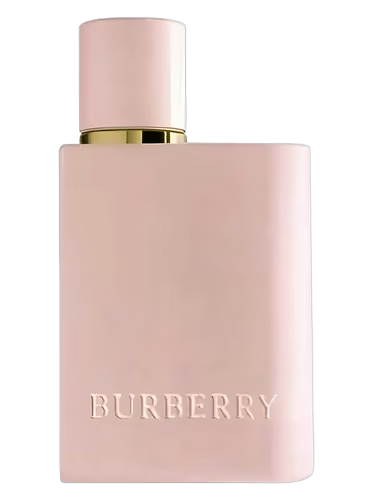
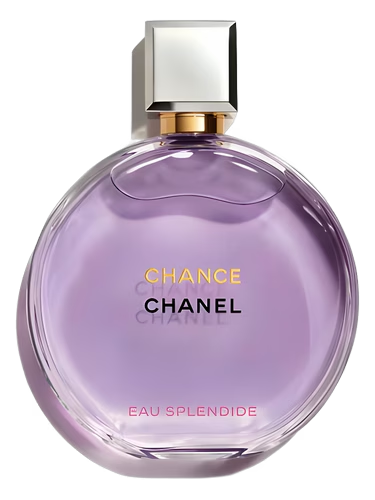
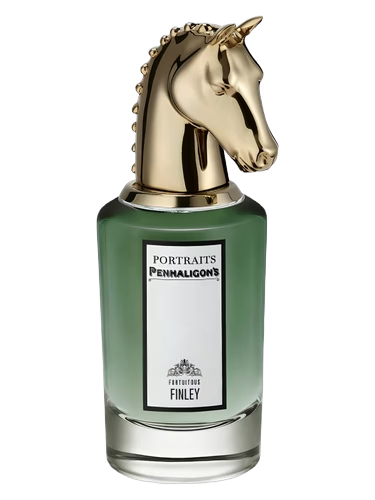
Most Popular Scents Using Butomus Umbellatus
What is Butomus Umbellatus?
Butomus Umbellatus, commonly known as Flowering Rush, is a wetland plant native to Eurasia and North Africa, used in modern perfumery for its light, sweet, and aquatic floral scent.What does Butomus Umbellatus smell like?
It offers a subtle and clean aroma reminiscent of a wetland garden flower, providing a tender, luminous, and naturalistic aquatic freshness to fragrance compositions.How is Butomus Umbellatus used in perfumery?
It is typically used in contemporary aquatic and ozonic fragrance categories as a delicate supporting element to enhance the sensation of dewy, botanical freshness.What are some perfumes featuring Butomus Umbellatus?
This note is featured in Oriflame Live In Colour and is structurally important in light, translucent styles like those found in the L’Eau d’Issey and Acqua di Gioia collections.When is Butomus Umbellatus in season?
The plant follows a seasonal cycle with new growth initiating in late winter to early spring, and its peak flowering period occurring from June through August.