Fragrance Notes Are Layers Of Scent That Are Layered To Form The Final Fragrance. Fragrance Notes Are Categorised Into Three Main Elements Based On How Long They Take To Evaporate, And How Long They Typically Last Following Application: Top Notes, Heart Notes And Base Notes.
Burning Cherry
Burning Cherry provides a rich, dark, and boozy cherry aroma with warm, fruity nuances. It carries hints of sweetness, often paired with gourmand notes like praline and a woody base from ingredients like Palo Santo and tonka bean, giving it a smoky, deep character.

Origin & Extraction Of Burning Cherry
The use of cherry notes in perfumery traditionally leaned towards bright, almond-like facets, but the concept of "Burning Cherry"—a rich, dark, and boozy interpretation—is a relatively modern phenomenon, gaining significant traction in the 21st century. Before this evolution, cherry was often synthetic and associated with simple, candy-like sweetness. The innovation was to elevate the note by pairing the fruit's sweetness and bitter almond aspects (derived from materials like benzaldehyde) with deep, smoky, and warm components such as tonka bean, resinous woods like Palo Santo, and rich vanilla. This gave cherry a sophisticated, long-lasting presence suitable for evening and gourmand fragrances.
This modern, opulent cherry trend was largely solidified by the launch of luxury and niche fragrances, notably Tom Ford's Lost Cherry. This scent set a high benchmark, showcasing the note's complexity by blending Griotte cherry liqueur with bitter almond, defining the dark, indulgent character that perfumers now refer to as "Burning Cherry." Since then, other fragrance houses have adopted and adapted this profile, often integrating notes like smoky leather, black tea, or patchouli to amplify the deep, smoldering quality, positioning the note as a luxurious, sensual, and memorable fragrance signature.
Extraction Methods of Burning Cherry
Historically, cherry extracts were often prepared through simple maceration or infusion techniques, where whole or pitted cherries were soaked in alcohol, such as vodka or ethanol, for several weeks. This traditional process allows the alcohol to naturally pull flavors and aromatic compounds from the fruit over time. For more industrial historical applications, such as tobacco flavorings, cherries were crushed into a pulp and subjected to reflux extraction with varying concentrations of ethanol at high temperatures to isolate specific aromatic fractions.
Modern extraction methods have evolved to include more advanced and cleaner techniques like supercritical fluid extraction, which utilizes carbon dioxide at specific pressures and temperatures to extract delicate, thermally unstable compounds without the use of toxic solvents. Additionally, current commercial production often utilizes ultrasonic-assisted extraction and microwave-assisted extraction to increase efficiency and preserve the fruit's antioxidant properties. For cherry seeds or by-products like pomace, cold pressing is a preferred modern mechanical technique that operates in the absence of heat and chemical solvents to produce high-quality oils with superior antioxidant potential.
The note of Burning Cherry, defined by its rich, dark, and boozy character, has been popularized by a few modern luxury fragrances. The most famous example is undoubtedly **Lost Cherry** by Tom Ford. This fragrance brought the deep, intoxicating cherry scent back into the mainstream, utilizing notes of black cherry, bitter almond, and a generous dose of boozy liqueur, often paired with a smoky undertone that hints at the "burning" profile.
- Burning Cherry is highly versatile, lending depth to gourmand structures while maintaining a bright, fruity top note.
While **Lost Cherry** set the benchmark, other houses have explored the deep cherry accord. For instance, some niche brands utilize a similar profile to create intensely cozy and indulgent compositions, pairing the dark cherry essence with resins and warm spices. These perfumes often lean heavily into the boozy quality, giving them an adult, sophisticated complexity that moves beyond simple fruity sweetness.
- The inclusion of tonka bean and vanilla in the dry down of many burning cherry fragrances further enhances the smoky, caramelized sugar effect hinted at by the "burning" descriptor.
The success of this complex note is due to its ability to bridge multiple categories—it is fruity, gourmand, woody, and slightly smoky all at once. This depth allows it to anchor potent evening scents and cold-weather perfumes. When searching for fragrances featuring this profile, look for compositions that specifically mention black cherry, liquor/rum, or smoky woods alongside the fruit.
Sustainability Of Burning Cherry
Sustainability of Burning Cherry
- Sourcing Vetiver Haiti Essence through programs that support local farming communities and ensure fair labor practices in Haiti
- Utilizing Patchouli Prisma, a concentrated patchouli extract developed using green chemistry principles to reduce waste and environmental impact
- Incorporating Palo Santo and Guaiac Wood sourced through monitored supply chains to prevent overharvesting of these slow-growing species
- Adhering to cruelty-free standards to ensure no animal testing is conducted during the development of the fragrance
- Promoting a move toward transparent ingredient labeling, allowing consumers to make informed choices about the chemical footprint of their products
Trivia
The name 48 in Lovefest Burning Cherry 48 represents the number of iterations the fragrance underwent during development before the final scent profile was perfected.
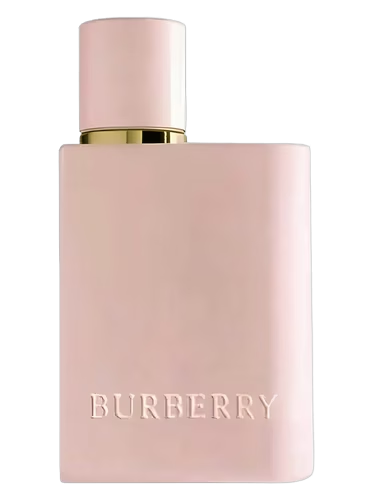
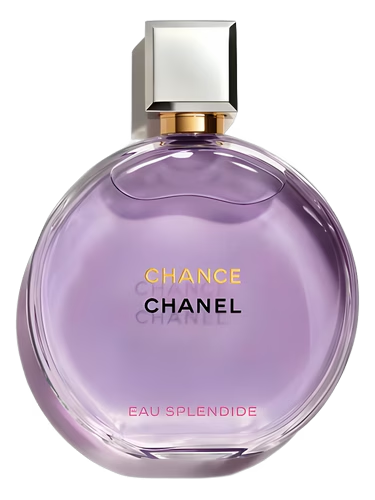
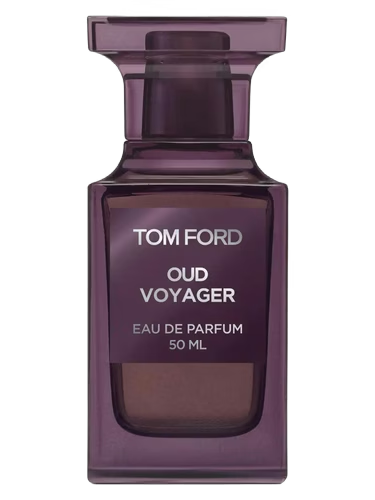
Most Popular Scents Using Burning Cherry
What is Burning Cherry?
Burning Cherry is a modern fragrance note characterized by a rich, dark, and boozy interpretation of cherry, often enhanced with smoky and woody facets.What does Burning Cherry smell like?
It offers a luscious, succulent cherry aroma with warm, fruity nuances, frequently paired with the sweetness of praline and the deep, smoldering scents of Palo Santo and tonka bean.Is Burning Cherry a natural or synthetic note?
In modern perfumery, Burning Cherry is typically a synthetic note, often utilizing materials like benzaldehyde to recreate the fruit's sweetness and bitter almond aspects.What are some top perfumes featuring Burning Cherry?
Notable fragrances include Kayali Lovefest Burning Cherry | 48, Tom Ford Lost Cherry, Tom Ford Cherry Smoke, and Room 1015 Cherry Punk.When is the best time to wear Burning Cherry fragrances?
While the cherry fruit is associated with spring and summer, the "burning" profile—with its warm, boozy, and smoky character—is particularly well-suited for evening wear and the cooler months of autumn and winter.