Fragrance Notes Are Layers Of Scent That Are Layered To Form The Final Fragrance. Fragrance Notes Are Categorised Into Three Main Elements Based On How Long They Take To Evaporate, And How Long They Typically Last Following Application: Top Notes, Heart Notes And Base Notes.
Buriti
The Buriti note is rich, tropical, and oily, offering a luminous, sweet, and slightly earthy scent with nuances of ripe apricot, pumpkin, and carrot seed. It imparts a warm, fruity-green texture, often used to lend a subtle, exotic depth to sun-drenched floral or gourmand compositions.

Origin & Extraction Of Buriti
The Buriti note, derived from the oil of the Amazonian buriti palm, is a relatively recent and non-traditional addition to the perfumer's palette. Historically, it was not a part of the classic European perfume structures, such as Eaux de Cologne or Fougères, which relied on more common citrus, floral, and woody extracts. Its emergence in fine fragrance is closely tied to the modern niche and natural perfumery movements, which emphasize unique, exotic, and sustainable ingredients from diverse global sources. The interest in Buriti specifically stems from its rich, oily texture and complex scent profile, which offers a unique blend of luminous sweetness and subtle earthiness.
In contemporary perfumery, Buriti oil is primarily valued as a supporting note, lending a warm, solar, and slightly gourmand texture to compositions. It is frequently employed in fragrances designed to evoke tropical, beach, or "solar" themes, where its apricot-like and oily-green nuances enhance the feel of sun-warmed skin and exotic locales. Its function often goes beyond simple aroma, acting as a fixative and textural modifier that helps to ground volatile top notes and provide a creamy depth, often paired with white florals, coconut, or sandalwood to maximize its radiant and sophisticated warmth.
Extraction Methods of Buriti
The primary and most traditional method for extracting buriti oil is cold pressing the fruit's pulp. This mechanical process is performed at room temperature using a hydraulic press to expel the juice, which is then decanted and filtered to produce a 100% pure, natural oil. This method is favored for its ability to preserve the oil's high nutritional value, specifically its rich concentrations of beta-carotene, vitamin E, and essential fatty acids, without the degradation caused by heat.
Modern extraction techniques have introduced more advanced and efficient alternatives to improve yield and bioactivity. Enzymatic aqueous extraction is a recent development that uses specific enzymes like cellulase, pectinase, and protease to break down the fruit's cellular structure, facilitating the release of oil with high antioxidant compounds. Additionally, supercritical carbon dioxide (SC-CO2) extraction has gained attention as a green technology; it utilizes pressurized CO2 at low temperatures to recover up to 80% of the fruit's initial carotene content while ensuring superior oil quality compared to traditional mechanical or solvent-based methods.
The Buriti note, with its luminous, sweet, and tropical character featuring nuances of apricot and earthiness, is still relatively uncommon but highly prized in niche and artisanal perfumery for adding a unique, sun-drenched texture. One of the notable fragrances to feature this oil, often called 'Moriche Palm' oil, is **Copal Azur** by Aedes de Venustas. In this fragrance, Buriti enhances the sense of tropical warmth and exotic depth, complementing the balsamic and incense notes for a rich, vibrant composition.
- **Osa** by Baruti: This artistic fragrance highlights Buriti's soft, fruity-oily texture, often pairing it with notes of resins and florals to emphasize its warm, tropical quality.
- **Buriti and Cacao** by Natura: A popular Brazilian line that centers the Buriti note, showcasing its natural, sweet, and slightly earthy scent profile, often blended with gourmand elements like cacao for a comforting yet exotic aroma.
Due to its distinctive, oily, and radiant profile, Buriti is often employed in "solar" or tropical-themed compositions to evoke the feeling of sun on skin or the atmosphere of a humid jungle. Its slightly earthy and pumpkin-like nuances provide a sophisticated contrast to brighter floral or citrus accords, giving the fragrance a rich, lasting depth. It is highly valued for imparting a warm, enduring luminosity that is difficult to achieve with conventional fruit notes.
Sustainability Of Buriti
Sustainability of Buriti
- Providing a sustainable alternative to deforestation by offering an economic incentive to keep the Amazon rainforest and Cerrado biomes intact
- Implementing responsible wild harvesting techniques, such as using climbing harnesses instead of felling trees, to ensure the long-term survival of the palms
- Establishing indigenous and local producer cooperatives that ensure fair commercial valuation and socio-economic resilience for riverside dwellers and family farmers
- Utilizing eco-friendly cold-pressing and artisanal extraction methods that avoid harmful chemical solvents and require minimal energy
- Improving supply chain sustainability through mapping technology and local processing initiatives, like freeze-drying, which reduce transportation costs and carbon emissions
- Promoting biodiversity conservation through the protection of flooded ecosystems and wetlands where the "tree of life" grows naturally
Trivia
The Buriti palm is known by indigenous Amazonian tribes as the Tree of Life because it contains a higher concentration of beta-carotene than carrot oil, making its fruit a natural source of sun protection used for centuries.
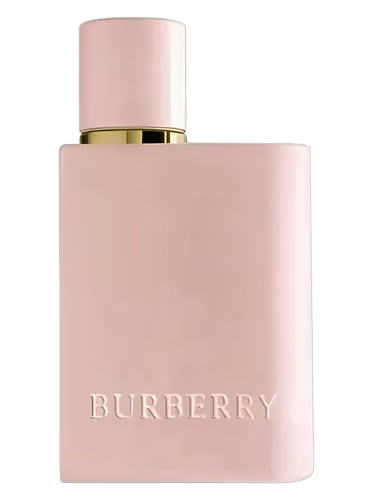
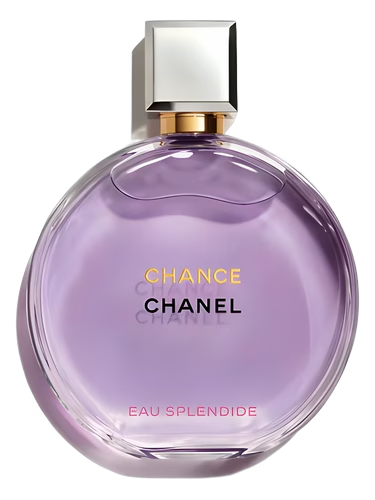
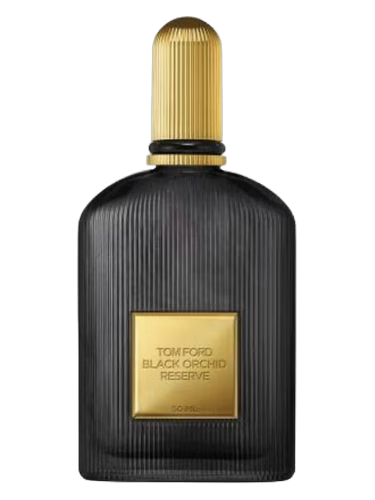
Most Popular Scents Using Buriti
What is Buriti?
Buriti is a tropical note derived from the oil of the Mauritia flexuosa palm, native to the Amazon rainforest, and is often referred to as the tree of life due to its diverse uses.What does Buriti smell like?
It offers a rich, tropical, and oily scent profile with sweet nuances of ripe apricot and mango, balanced by slightly earthy and nutty undertones.How is Buriti essence extracted?
The oil is primarily obtained through cold pressing the fruit's pulp, though modern methods like enzymatic aqueous extraction and supercritical CO2 extraction are also used to preserve its nutrients.What are some top perfumes featuring Buriti?
Notable fragrances include Aedes de Venustas Copal Azur, Baruti Osa, Natura Buriti and Cacao, and Thierry Mugler Angel.When is Buriti in season?
The palm typically blooms between December and April, with the primary fruit harvest occurring from April to August depending on its geographic location relative to the equator.