Fragrance Notes Are Layers Of Scent That Are Layered To Form The Final Fragrance. Fragrance Notes Are Categorised Into Three Main Elements Based On How Long They Take To Evaporate, And How Long They Typically Last Following Application: Top Notes, Heart Notes And Base Notes.
Bromelia
Bromelia presents a soft, long-lasting floral profile reminiscent of orange blossom. It features a sweet, fruity grape/strawberry undertone and delicate powdery floralcy, lending elegance and brightness to fragrances, often used in neroli accords for a refined, luminous effect.

Origin & Extraction Of Bromelia
The use of Bromelia as a distinct note in fine perfumery is primarily a modern phenomenon. Although the Bromeliaceae family of plants, native mostly to the tropical Americas, has existed for millennia, the specific isolation and use of its characteristic odor profile—often described as a soft, fruity floral resembling orange blossom with grape or strawberry nuances—came about with advances in fragrance chemistry and synthesis in the late 20th and early 21st centuries. Perfumers began incorporating it to achieve a sweet, luminous, and long-lasting floral effect that is less volatile than traditional citrus or white flower top notes, offering a unique bridge between fruit and flower accords.
Bromelia is not a classic natural oil but rather a synthetic accord designed to capture the elegance of exotic florals. Its relevance lies in its ability to enhance luminosity and provide a refined sweetness, often utilized to elevate delicate floral bouquets, or to provide a sophisticated, luminous twist to neroli and orange blossom compositions. This positioning marks it as a contemporary tool for perfumers seeking innovative ways to achieve bright, elegant, and exotic floral profiles in modern fragrance design.
Extraction Methods of Bromelia
Historically, the aromatic essence of bromelia was captured through traditional methods such as maceration or enfleurage. Maceration involved crushing the plant material and soaking it in warm oils or fats to absorb the fragrance, while enfleurage was a labor-intensive technique where fresh flowers were placed on layers of purified animal fat (lard or tallow) until the fat became saturated with the scent. These methods were essential for delicate tropical blooms that could not withstand the high heat of early distillation processes.
Modern extraction of bromelia compounds typically utilizes solvent extraction or advanced CO2 (supercritical) extraction. In solvent extraction, a hydrocarbon solvent like hexane is used to dissolve the volatile oils, resulting in a concrete that is further refined into an absolute. CO2 extraction is often preferred for high-quality perfumery as it operates at lower temperatures, preserving the sensitive aromatic molecules and ensuring the final extract smells more like the living plant without leaving solvent residues.
The Bromelia note, prized for its soft, long-lasting floral profile with sweet, fruity undertones reminiscent of orange blossom and grape/strawberry, is a modern addition to perfumery. While it is not tied to classic heritage scents like older citruses, it has been embraced by contemporary houses looking for a luminous and refined sweetness. This synthetic accord enhances delicate floral bouquets and provides a sophisticated twist.
- Bromelia is featured in **My Past Selves' Flowers** (Toskovat', 2023).
Niche and artisanal perfumery often utilize Bromelia to create exotic and bright compositions. Its ability to bridge fruity top notes with soft floral hearts makes it versatile. It often appears in fragrances seeking a unique floral-fruity signature that stands out from traditional white flower profiles.
- A notable example centered on the note is **Bromélia** by L'Occitane Au Brésil (2014).
In addition to focused compositions, the Bromelia accord is sometimes used subtly in formulations by major designer houses to provide lift and sweetness to a broader floral or neroli structure. While the note might not always be explicitly listed, its characteristic fruity-floral sweetness contributes to the brightness in perfumes from brands such as Lattafa, Guerlain, and Tom Ford.
Sustainability Of Bromelia
Sustainability of Bromelia
- Utilizing circular economy principles by repurposing agricultural waste, such as Aguama (Bromelia pinguin) peels, for the eco-friendly synthesis of nanoparticles used in environmental remediation
- Implementing closed-loop water management systems that capture, purify, and reuse rainwater and drain water to ensure zero wastewater discharge
- Adopting integrated pest management strategies, including the use of natural predators like insects and geckos and organic fungi like Trichoderma to reduce reliance on synthetic chemicals
- Promoting sustainable cultivation practices by transitioning toward peat-free potting mixtures using renewable substitutes like rice husks or coir
- Supporting biodiversity conservation through the maintenance of micro-ecosystems that provide essential habitats for aquatic and terrestrial species and regulate nutrient cycling
- Establishing ethical supply chains and local manufacturing processes that prioritize fair wages and social responsibility within the horticultural and textile industries
Trivia
Nerolin Bromelia is a synthetic fragrance compound that, despite its name, is not derived from the Bromeliad plant; it is actually a beta-naphthyl ether specifically engineered to mimic the scent of orange blossoms with unique strawberry and grape undertones.
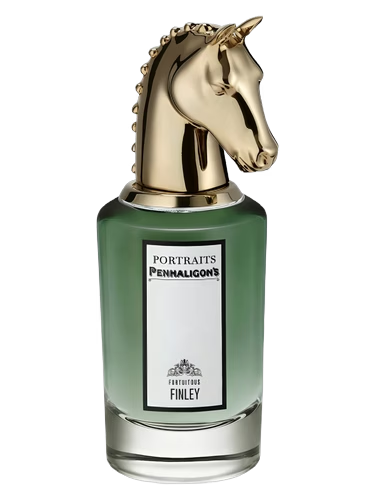
Most Popular Scents Using Bromelia


What is Bromelia in perfumery?
Bromelia is a modern synthetic fragrance accord, specifically the compound Nerolin Bromelia, designed to mimic the scent of exotic florals with a profile reminiscent of orange blossom and soft fruits.What does Bromelia smell like?
It features a soft, long-lasting floral aroma with characteristic sweet grape and strawberry undertones, complemented by a delicate powdery floralcy and a refined, luminous quality.How is Bromelia essence produced?
While historical methods involved maceration or enfleurage of tropical plants, modern Bromelia is a synthetic beta-naphthyl ether created in a laboratory to provide a more stable and tenacious floral effect.What are some top perfumes featuring Bromelia?
Notable fragrances include L'Occitane au Brésil Bromélia, Toskovat' My Past Selves' Flowers, and various compositions from brands like Lattafa, Guerlain, and Tom Ford.Is Bromelia a natural or synthetic ingredient?
In contemporary fine fragrance, it is almost exclusively a synthetic material valued for its exceptional longevity and ability to bridge fruity top notes with soft floral hearts without the volatility of natural citrus oils.