Fragrance Notes Are Layers Of Scent That Are Layered To Form The Final Fragrance. Fragrance Notes Are Categorised Into Three Main Elements Based On How Long They Take To Evaporate, And How Long They Typically Last Following Application: Top Notes, Heart Notes And Base Notes.
Brazil Nut
A creamy, edible, and slightly oily note with hints of sweetness and wood. It conveys a rich, tropical nuttiness, adding depth and a velvety texture to gourmand and oriental compositions, often lending a comforting and warm facet to a fragrance.

Origin & Extraction Of Brazil Nut
The Brazil Nut note, while not as ubiquitous as traditional gourmand notes, is occasionally featured in niche and designer fragrances to impart a unique, creamy, and tropical nuttiness. Its presence signals a warm, comforting, and sometimes exotic depth, often complementing vanilla, caramel, or creamy wood accords. The use of this note was notably popularized in mass-market bath and body products, such as The Body Shop's Brazil Nut Body Care Line, which helped inspire its adoption in casual, comforting fragrances.
In fragrance composition, the Brazil Nut note acts as an excellent textural element. Its slightly oily, velvety quality is invaluable for softening potentially harsh edges and lending a sense of luxuriousness and density. It typically appears in the heart or base notes, providing an inviting, sweet, and subtle backdrop that supports more prominent gourmand or woody elements. This note is often successful in cooler weather fragrances, suggesting cozy indulgence and exotic depth.
Extraction Methods of Brazil Nut
The primary and traditional method for extracting Brazil nut oil is cold pressing, a mechanical process that preserves the seed's bioactive compounds, unsaturated fatty acids, and minerals without using heat or chemicals. Historically, this method has been favored for culinary and cosmetic purposes to ensure a high-quality, pure oil, though it typically yields only 30-40% of the available oil. To improve efficiency, traditional industrial practices often follow this with a second extraction using apolar organic solvents like hexane, frequently at elevated temperatures.
Modern commercial extraction and research have shifted toward "green" and more efficient technologies to eliminate toxic solvent residues and improve yields. These latest methods include Pressurized Liquid Extraction (PLE) using sustainable solvents like ethanol or isopropyl alcohol, which can recover over 90% of the oil in a significantly shorter timeframe. Other advanced techniques include supercritical and subcritical fluid extraction (SFE) using carbon dioxide or n-propane, as well as ultrasound-assisted extraction, which provide rapid, eco-friendly alternatives while maintaining the oil's rich antioxidant and phenolic profile.
The Brazil Nut note, with its creamy, tropical, and warm character, is a prominent feature in fragrances that seek a rich, comforting gourmand feel. One of the most recognized uses is in the Sol de Janeiro Brazilian Bum Bum Cream, and its accompanying fragrance, where the note complements a blend of caramel, pistachio, and vanilla. This composition popularized the dense, edible nuttiness of the Brazil Nut, making it synonymous with sun-drenched, indulgent scent profiles.
While often used in mass-market products, the note has also found a place in niche and designer compositions looking to add depth and an unexpected velvety texture. When deployed subtly, Brazil Nut can bridge sweet gourmand notes with heavier oriental bases, providing a soft, slightly oily sweetness that prevents the composition from becoming overly dry or sharp. This imparts a sophisticated, buttery warmth perfect for late fall and winter fragrances.
In modern perfumery, the Brazil Nut accord functions as a contemporary twist on classic nutty notes like almond or hazelnut. Its tropical origin lends a unique exotic facet, allowing it to pair beautifully with white florals, coconut, and tiare, as seen in various limited edition summer releases. Fragrances leveraging this note often aim for a feeling of self-care and opulence, emphasizing its smooth, rich, and naturally sweet characteristics.
Sustainability Of Brazil Nut
Sustainability of Brazil Nut
- Promoting forest conservation through "conservation-through-use," as Brazil nut trees require healthy, undisturbed rainforest ecosystems and specialized pollinators to produce fruit
- Providing a viable economic alternative to deforestation-linked activities like cattle ranching, illegal logging, and gold mining for over 60,000 families across the Amazon
- Implementing certification standards, such as the Forest Stewardship Council (FSC), to ensure responsible resource management and increase access to premium international markets
- Establishing producer cooperatives and associations to improve supply chain transparency, provide fair pricing, and reduce dependence on informal middlemen
- Investing in climate-resilient agricultural training and technical assistance for small-scale enterprises to strengthen local food systems and biodiversity protection
- Advancing research into by-product utilization and circular economy models to generate additional income while closing the production cycle
Trivia
The Brazil nut tree is one of the largest and longest-lived species in the Amazon rainforest, and despite its name, the "nut" is botanically a seed extracted from a large, woody fruit that closely resembles a coconut.
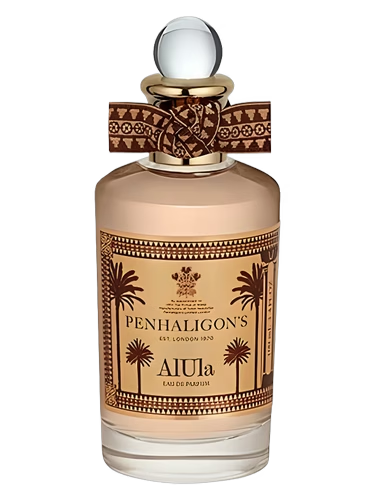
Most Popular Scents Using Brazil Nut


What is Brazil Nut?
The Brazil nut is a seed from a large, woody fruit produced by one of the largest and longest-lived trees native to the Amazon rainforest.What does Brazil Nut smell like?
It offers a creamy, edible, and slightly oily aroma with hints of sweetness and wood, providing a rich, tropical nuttiness and velvety texture to fragrances.How is Brazil Nut essence extracted?
The oil is primarily obtained through cold pressing the seeds, a mechanical process that preserves the aromatic and bioactive compounds without heat or chemicals.What are some top perfumes featuring Brazil Nut?
Notable fragrances include Sol de Janeiro Cheirosa 62, Natura Frescor de Castanha, The Body Shop Brazil Nut, and Sol de Janeiro Cheirosa 71.When is Brazil Nut in season?
The trees typically bloom from October to December, with the harvest occurring during the Amazonian rainy season, specifically between December and March.