Fragrance Notes Are Layers Of Scent That Are Layered To Form The Final Fragrance. Fragrance Notes Are Categorised Into Three Main Elements Based On How Long They Take To Evaporate, And How Long They Typically Last Following Application: Top Notes, Heart Notes And Base Notes.
Blueberry
Blueberry offers a charming and multifaceted aroma in perfumery, characterized by a fresh, juicy sweetness balanced with subtle tartness. The scent opens with a bright berry burst, sometimes featuring citrus-lime and crisp green nuances. It evolves into a sweet, rounded essence with creamy, sometimes peachy, undertones, often enhanced by soft floral or blackcurrant hints. The base provides warmth and depth with smooth musk, amber, or subtle vanilla accords, ensuring a natural, lively, and comforting profile.

Origin & Extraction Of Blueberry
The use of blueberry in perfumery is a relatively modern phenomenon, as classical perfumery traditionally focused on florals, resins, and citruses. Blueberries, native primarily to North America, entered the global flavor and fragrance lexicon more significantly with the rise of fruity-gourmand scent trends in the late 20th and early 21st centuries. Perfumers began utilizing this note, often through synthetic reconstruction, to capture its unique balance of fresh, juicy sweetness and subtle tartness. It offered an appealing alternative to common red berries, lending a sense of youthful vibrancy and comforting indulgence to compositions.
In contemporary fragrance, blueberry has cemented its role primarily in the gourmand and fruity-floral categories. It is valued for its versatility, acting as a bright top or mid-note that provides a textural, "purple" juiciness. This complexity allows it to blend effectively with rich bases like musk, amber, and vanilla, or contrast with sharper citrus notes. Its use often signals a modern, sophisticated approach to fruit scents, moving beyond simple freshness to convey a complex, delectable, and slightly earthy dimension, ensuring its continued relevance in niche and designer releases seeking unique character.
Extraction Methods of Blueberry
Historically, blueberry essence and pigments were obtained through simple solvent extraction, primarily involving the maceration of crushed berries in edible alcohol or vegetable glycerin. Traditional methods dating back to early food and medicinal practices used several days of soaking at room temperature to allow the alcohol to draw out nutrients and aromatic compounds. For seed extraction, a physical process of pulse-blending the fruit with water and repeatedly decanting the pulp was employed to isolate the clean seeds.
Modern extraction techniques have evolved to maximize the yield of sensitive compounds like anthocyanins while reducing processing time and environmental impact. Ultrasound-assisted extraction (UAE) and microwave-assisted extraction (MAE) are now widely used to break down cell walls efficiently using acoustic cavitation or electromagnetic irradiation. Advanced methods also include supercritical fluid extraction (SFE) and subcritical water extraction (SWE), which utilize high pressure and controlled temperatures to isolate pure fractions without the need for toxic organic solvents. Additionally, alcohol precipitation and enzyme-assisted extraction are employed to refine extracts for use as natural colorants and functional ingredients in the fragrance and food industries.
The use of blueberry in perfumery is often centered around modern gourmand and fruity compositions, aiming to capture its fresh, juicy sweetness and subtle tartness. While it is not a traditional cornerstone note like rose or jasmine, it has gained prominence in contemporary fragrance development, particularly for adding a vibrant, youthful, and sometimes creamy dimension. A notable example showcasing the blueberry note is **La Petite Robe Noire Eau de Parfum Intense** by Guerlain, where the berry acts as a sparkling counterpoint to the central gourmand notes of cotton candy and vanilla.
- The blueberry note is often paired with other dark berries, patchouli, or sweet notes like caramel and sugar, enhancing its rich, dessert-like quality.
In niche and artisanal perfumery, blueberry offers versatility. It can be utilized to lend an unexpected twist to traditional accords or provide a hyper-realistic fruit impression. For instance, **Eau de Bleu** might feature the note prominently, presenting a fresh, dewy, and slightly tart interpretation that contrasts sharply with the heavier, sweeter usage seen in mainstream designer scents. Its complexity allows perfumers to explore both light, airy compositions and deep, brooding fruity chypres.
- Some interpretations focus on the green, leafy nuances of the berry bush rather than just the fruit, creating a more complex, natural accord.
Another popular fragrance known to feature the blueberry note is **Blackberry & Bay** by Jo Malone London, where, although blackberry is the focus, the overall berry accord often includes the rounder, deeper sweetness of blueberry to give the composition more depth and a rich, dark fruit quality. When used effectively, the blueberry note adds a playful yet sophisticated layer, providing a luminous opening that transitions smoothly into richer floral or woody heart and base notes.
- Blueberry frequently acts as a bridge between zesty top notes and warmer, long-lasting oriental or musky bases.
Sustainability Of Blueberry
Sustainability of Blueberry
- Adopting precision irrigation and water balance models to reduce water consumption by up to 50% while maintaining fruit quality
- Utilizing organic farming practices and integrated pest management (IPM) to minimize the use of synthetic pesticides and agrochemicals
- Implementing soilless substrate cultivation in containers to optimize nutrient delivery and precisely manage water resources
- Protecting biodiversity by managing naturally occurring wild blueberry barrens which require minimal soil disturbance and fewer chemical inputs
- Reducing carbon emissions by shifting from air to sea freight for exports and installing solar energy systems at farm facilities
- Promoting circular economy principles through closed-loop packaging recycling and repurposing organic waste as soil amendments or compost
- Investing in climate adaptation research to develop heat-tolerant cultivars and efficient overhead cooling systems to mitigate heat stress
Trivia
Despite being a popular fragrance note, no natural blueberry essential oil exists; the scent is a "fantasy note" created entirely in labs using synthetic accords to mimic the fruit's aroma.
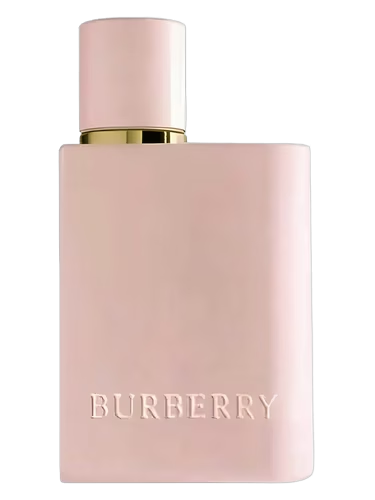
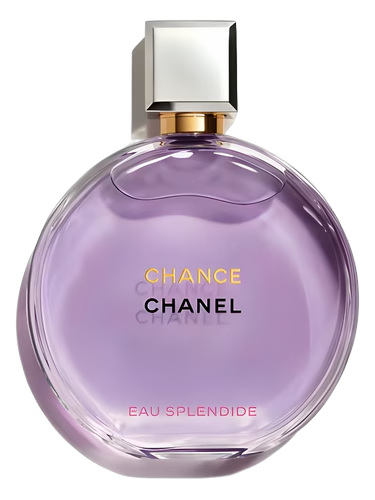
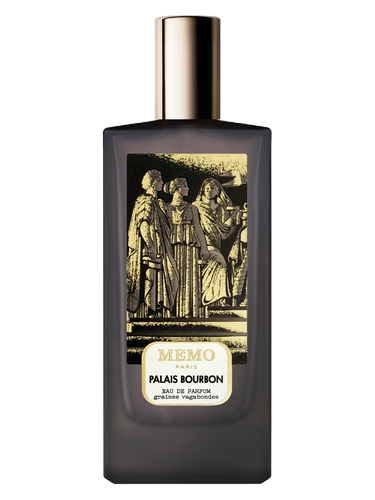
Most Popular Scents Using Blueberry
What is Blueberry in perfumery?
Blueberry is a modern fragrance note used primarily in gourmand and fruity compositions to provide a fresh, juicy sweetness and vibrant character.What does Blueberry smell like?
It offers a charming aroma of sweet berries balanced with subtle tartness, often featuring creamy, peachy undertones and a bright, "purple" juiciness.Is there a natural blueberry essential oil?
No, natural blueberry essential oil does not exist; the scent is a "fantasy note" created by perfumers using synthetic accords to mimic the fruit's aroma.What are some top perfumes featuring Blueberry?
Notable fragrances include Vilhelm Parfumerie Poets of Berlin, Guerlain La Petite Robe Noire Intense, and Lalique Amethyst.When is Blueberry in season?
Blueberries are primarily in season from late spring to late summer, typically spanning from May through August in North America.