Fragrance Notes Are Layers Of Scent That Are Layered To Form The Final Fragrance. Fragrance Notes Are Categorised Into Three Main Elements Based On How Long They Take To Evaporate, And How Long They Typically Last Following Application: Top Notes, Heart Notes And Base Notes.
Bluebell
Bluebell offers a luminous, highly delicate floral profile, capturing the essence of a spring woodland. It possesses a clear, sweet, and green aroma with fresh, aqueous nuances. This graceful note is prized for its ethereal quality, lending soft, airy brightness and natural freshness to compositions.

Origin & Extraction Of Bluebell
The bluebell note, capturing the delicate, sweet, green, and aqueous scent of the spring flower, does not possess a long, classical history in perfumery like notes derived from rose or bitter orange. This is primarily because the natural bluebell (Hyacinthoides non-scripta) is endangered and its delicate scent cannot be extracted into an essential oil. Therefore, the note used in fragrance is an imaginative, reconstructed accord, relying heavily on synthetic molecules and other floral essences to recreate its ethereal quality and capture the essence of a spring woodland.
The prominence of the bluebell note in modern perfumery is linked to contemporary trends that favor transparent, airy, and "naturalistic" floral compositions. A key moment in its history was the 1978 launch of Penhaligon's Bluebell, which helped popularize the unique floral-green profile. Since then, perfumers have continued to refine the synthetic accord to achieve the delicate balance of green freshness, sweetness, and light aquatic nuances, making it a cherished, sophisticated note in modern and niche fragrance houses today.
Extraction Methods of Bluebell
Historically, the extraction of bluebell essence was rarely pursued for commercial perfumery because the flower’s delicate scent is notoriously difficult to capture through traditional methods like enfleurage or steam distillation. Instead, the plant was primarily processed for its medicinal and utilitarian properties, such as extracting its sticky bulb mucilage for use as bookbinding glue or starch for ruffs. Traditional apothecary methods involved simple maceration and methanolic extraction of dried and ground bulbs, leaves, or flowers to study their chemical profiles and antitrypanosomal activities.
In modern fragrance production, the bluebell note is almost exclusively a "fantasy note" recreated in laboratories using synthetic molecules, as the flower yields very little natural oil and many species are protected by law. However, for scientific and pharmaceutical research, advanced techniques such as automated flash chromatography, high-resolution mass spectrometry (ESI-MS), and freeze-drying are utilized to isolate specific compounds like saponins and flavonoids. These latest methods allow for precise chemical dereplication and the capture of delicate aromatic molecules that were previously unattainable through conventional means.
The bluebell note, since it cannot be naturally extracted, is a sophisticated, reconstructed accord that gained widespread fame through its iconic early use. The quintessential example is Penhaligon's Bluebell (1978). This fragrance helped define the note's profile in fine perfumery, offering a delicate, clean, and green floral scent that evokes the atmosphere of an English woodland, establishing the bluebell as a cherished, ethereal scent.
- Penhaligon's Bluebell is often credited with popularizing the bluebell note, combining the delicate floral scent with notes like hyacinth, lily-of-the-valley, and cyclamen.
In contemporary perfumery, the bluebell note is celebrated for its sheer and luminous freshness, appealing to a modern audience seeking airy floral compositions. Jo Malone London Wild Bluebell is a globally recognized modern interpretation, focusing on the dewy, sweet, and aquatic aspects of the flower. It blends the bluebell accord with lily of the valley, eglantine, and a luscious twist of persimmon, resulting in an uplifting and transparent scent perfect for everyday wear.
- Other interpretations, such as those from more accessible lines like Yardley Bluebell, continue the tradition of offering a straightforward, refreshing, and true-to-life bluebell experience, making the sophisticated scent available to a wider market.
The versatility of the bluebell note allows it to bridge classic floral structures with modern aquatic freshness. While fragrances like Penhaligon's Bluebell lean into a classic floral green structure, newer releases continue to explore the note's potential to add a sophisticated, transparent, and lightly sweet dimension to compositions, cementing its status as a staple for light, spring-themed fragrances.
Sustainability Of Bluebell
Sustainability of Bluebell
- Protecting native biodiversity by utilizing synthetic reconstructions and headspace technology instead of wild harvesting delicate flowers
- Adhering to legal protections such as the Wildlife and Countryside Act which prohibits the uprooting of wild bluebells to preserve ancient woodland ecosystems
- Implementing conservation-first sourcing models that prioritize lab-created accords over natural extractions to prevent habitat trampling and resource depletion
- Supporting the survival of early-season pollinators like bees by promoting the preservation and maintenance of natural bluebell colonies
- Adopting eco-friendly packaging standards including the use of recyclable glass, metal-free pumps, and vegetable-based inks in bluebell-themed fragrance products
Trivia
Because bluebells are too delicate for commercial extraction, no natural bluebell essential oil exists for perfumery; every bluebell note in a fragrance is a synthetic reconstruction.
Most Popular Scents Using Bluebell
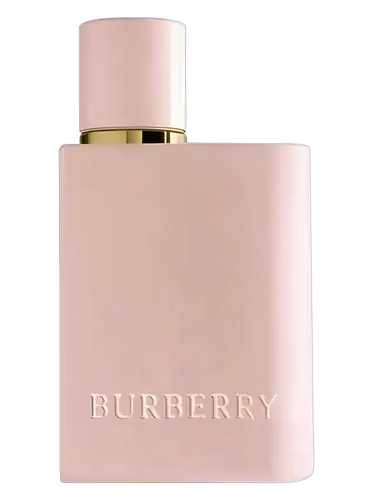
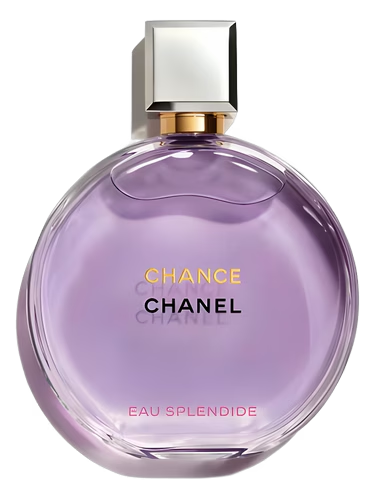
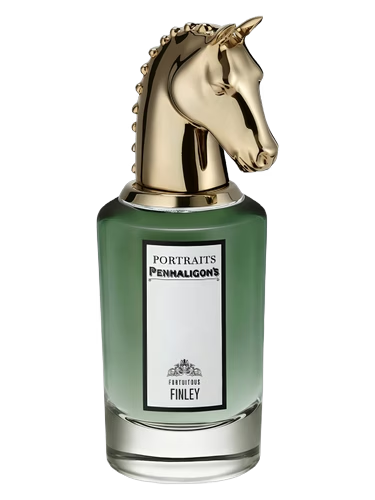
What is Bluebell?
Bluebell is a delicate spring wildflower native to Western Europe, celebrated for its nodding bell-shaped blooms that carpet ancient woodlands.What does Bluebell smell like?
It offers a luminous, ethereal floral profile characterized by dewy sweetness, crisp green leaves, and soft aqueous nuances.Is natural Bluebell oil used in perfumery?
No, natural bluebells cannot be commercially extracted due to their delicate nature and protected status; the note is a synthetic reconstruction.What are some top perfumes featuring Bluebell?
Famous fragrances featuring this note include Penhaligon's Bluebell, Jo Malone London Wild Bluebell, and Yardley English Bluebell.When is Bluebell in season?
Bluebells are spring ephemerals that typically bloom from late March through early May, reaching their peak flowering in mid-to-late April.How is the Bluebell note created?
Perfumers craft the note using synthetic "fantasy accords," often blending hyacinth-type bases with green aldehydes and ozonic molecules to mimic its fresh scent.