Fragrance Notes Are Layers Of Scent That Are Layered To Form The Final Fragrance. Fragrance Notes Are Categorised Into Three Main Elements Based On How Long They Take To Evaporate, And How Long They Typically Last Following Application: Top Notes, Heart Notes And Base Notes.
Blood Orange
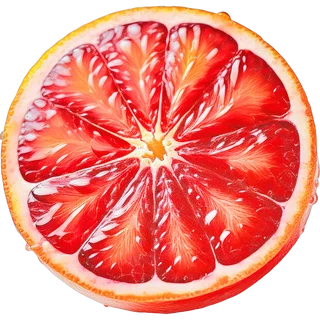
Blood Orange offers a vibrant, juicy, and intensely sweet citrus aroma, distinct from regular orange with its slightly raspberry-like undertones. It's refreshing, uplifting, and provides a sparkling, succulent top note in fragrances, often used to inject warmth and vitality into compositions.
Origin & Extraction Of Blood Orange
While the history of citrus notes in perfumery is dominated by classics like Bergamot and Bitter Orange, which were foundational to the 18th-century Eau de Cologne, Blood Orange is a relatively modern and specialized addition. Originating from a hybrid of pomelo and tangerine, the fruit itself has a long history, but its distinctive, sweeter, and more vibrant aroma was not widely isolated and celebrated in fine fragrance until the late 20th and early 21st centuries. Perfumers began adopting it to provide a sunnier, more immediately uplifting opening note compared to the sharper, more traditional citruses.
Blood Orange is prized for its unique olfactory profile—intensely juicy and sweet, with subtle raspberry or cherry-like undertones—which offers greater complexity and warmth than standard sweet orange. Its introduction allowed fragrances to transition smoothly from a bright top note into fruity, gourmand, or oriental hearts. In contemporary perfumery, it is often utilized to add a dynamic, cheerful vitality, modernizing classic structures and appealing to a broader audience who seek scents that are both exhilarating and comforting.
Extraction Methods of Blood Orange
The primary method for extracting blood orange essential oil is cold expression, a process that involves mechanically pressing or rasping the fruit's peel to release the volatile oils stored in the flavedo. Historically, this was a labor-intensive manual process known as the sponge method, where the rinds were pressed against sponges to collect the oil, or the "ecuelle a piquer" method, which used a bowl lined with needles to prick the fruit.
In modern commercial production, high-speed mechanical peelers and centrifugal separators are used to efficiently isolate the oil from the resulting emulsion. Recent advancements include molecular distillation to create "folded" oils with enhanced intensity and the use of supercritical carbon dioxide (scCO2) extraction, which operates at lower temperatures to produce a highly pure extract that more accurately captures the fruit's complex, berry-like aromatic profile without thermal degradation.
Blood Orange has seen increasing use in modern perfumery for its juicy, vibrant, and uplifting sweetness, offering a rounder, warmer top note than traditional lemon or grapefruit. A prime example of its excellent deployment is in **Terre d'Hermès** by Hermès. The Blood Orange note provides the initial, unmistakable burst of zesty vitality that is central to the fragrance's sophisticated character, immediately drawing the wearer in before settling into its mineral and woody base.
- **Acqua di Parma Blu Mediterraneo Arancia di Capri**
- **Atelier Cologne Orange Sanguine**
Another popular application is in sweet-floral or gourmand compositions, where its raspberry-like undertones shine. This is evident in scents such as **Dolce & Gabbana's Dolce Garden** and **Jo Malone's Orange Bitters**, where the Blood Orange provides a bright, succulent counterpoint to heavier, creamy, or resinous notes, ensuring the opening is cheerful and immediately appealing.
The note is also used in niche and contemporary scents to add an exotic, complex layer. For instance, in **Byredo's Pulp**, the Blood Orange contributes to the unique, overripe, and intensely fruity accord, demonstrating its ability to be pushed beyond a simple "fresh" note into something more conceptual and textural. Its duality—being both intensely sweet and slightly tart—makes it a versatile and modern ingredient.
Sustainability Of Blood Orange
Sustainability of Blood Orange
- Utilizing circular economy principles by processing side-streams, such as using leftover peel and pulp from juice production for essential oil extraction and animal feed
- Implementing advanced irrigation systems and soil management techniques in primary growing regions like Sicily to optimize water usage and maintain soil health
- Supporting local farming communities through established cooperatives that ensure fair pricing and long-term economic stability for citrus growers
- Adhering to strict agricultural standards and certifications to minimize the use of synthetic pesticides and protect local biodiversity
- Reducing the carbon footprint of transport by concentrating production and processing facilities within the same geographic regions
Trivia
The distinct crimson color of blood orange flesh is caused by anthocyanins, a family of pigments common in flowers but rare in citrus fruits, which only develop when temperatures are low at night during the Mediterranean fall and winter.
Most Popular Scents Using Blood Orange


What is blood orange?
Blood orange is a natural hybrid of pomelo and tangerine, primarily grown in the Mediterranean, known for its deep crimson flesh and vibrant aromatic profile.What does blood orange smell like?
It offers a zesty and intensely sweet citrus aroma with unique berry-like or raspberry undertones, providing more warmth and complexity than standard sweet orange.How is blood orange essence extracted?
The essential oil is typically obtained through cold expression of the fruit's peel, with modern techniques like molecular distillation and scCO2 extraction used to enhance its berry-like intensity.What are some top perfumes featuring blood orange?
Popular fragrances highlighting this note include Atelier Cologne Orange Sanguine, Terre d'Hermès, Givenchy L'Interdit Eau de Parfum Rouge, and Jo Malone Orange Bitters.When is blood orange in season?
Blood oranges are considered winter jewels, with their peak season occurring between December and May when the contrast between warm days and chilly nights develops their signature color and flavor.