Fragrance Notes Are Layers Of Scent That Are Layered To Form The Final Fragrance. Fragrance Notes Are Categorised Into Three Main Elements Based On How Long They Take To Evaporate, And How Long They Typically Last Following Application: Top Notes, Heart Notes And Base Notes.
Blackthorn
The Blackthorn note, or sloe, offers a dark, slightly tart fruitiness reminiscent of plum or bitter almond, often with a subtle woody and dry undertone. It provides a dense, inky depth, commonly used to enrich gourmand or chypre compositions, adding a sophisticated, brooding fruit nuance.

Origin & Extraction Of Blackthorn
Blackthorn, derived from the sloe fruit, is not a note with centuries of documented use as a standalone essential oil in classical perfumery like citrus or rose. Historically, the dark, wine-like, and slightly bitter fruitiness of sloe was often approximated using various deep fruit and almond accords. Its natural inclusion in fragrance accelerated with the rise of modern chemistry and the niche perfume movement, which allowed perfumers to capture its distinct, brooding character.
In contemporary perfumery, Blackthorn is highly valued for the sophisticated depth it provides, moving beyond simple fruit notes. It serves as a unique element in modern chypre and gourmand compositions, often bridging volatile top notes with heavy bases like amber or patchouli. Its inclusion in fragrances by houses known for unconventional or intense creations, such as Serge Lutens, solidified its role as a specialized note used to evoke autumnal, liquor-like, or intense fruity-leathery accords, giving a signature scent a mysterious and mature fruit profile.
Extraction Methods of Blackthorn
Historically, blackthorn fruit (sloes) and flowers were processed through simple traditional methods such as maceration in alcohol (standard for sloe gin), infusion in water, or boiling to create syrups and dyes. These conventional solid-liquid extraction techniques rely on long soaking periods or heat to release bioactive compounds, often using water or ethanol as solvents.
Modern extraction has evolved toward more efficient "green" technologies to maximize the recovery of phenolic compounds and antioxidants while reducing solvent use. Current advanced methods include ultrasound-assisted extraction (UAE) using natural deep eutectic solvents (NADES), microwave-assisted extraction (MAE), and pressurized liquid extraction (PLE), which uses high temperature and pressure to improve penetration. Additionally, innovative techniques like ammonium oxalate extraction are used to isolate specific phenolic polysaccharide-protein complexes from the fruit.
The dark, tart fruitiness of Blackthorn (sloe) is often utilized to lend a sophisticated, brooding depth to fragrances, particularly within the modern Gourmand and Chypre categories. While Blackthorn itself might not be a common centerpiece, it is frequently blended into rich accords to enhance notes like plum, cherry, and bitter almond, giving them an inky, mature complexity. Its subtle woody undertones help ground brighter notes and provide structure in opulent, evening-appropriate scents.
One notable example of a fragrance featuring a prominent blackthorn/sloe impression is **Sloane Ranger** by D.S. & Durga, where the tart, slightly bitter berry is paired with green and leather notes to evoke the English countryside. Another perfume where this dark fruit nuance adds a unique complexity is **Fougère Royale** by Houbigant (in its modern interpretation), which utilizes a dark, fermented fruit accord to give a contemporary twist to the classic structure, often perceived as having a blackthorn element.
In contemporary niche perfumery, Blackthorn’s dense, wine-like character can be found supporting powerful compositions. It provides a dry, deep counterpoint to sweeter elements, distinguishing the scent from more conventional fruity offerings. This sophisticated nuance helps popular fragrances like **Plum Japonais** (though centered on plum, it carries the same dark, tart fruit profile) achieve their rich, luxurious, and slightly mysterious aura.
Sustainability Of Blackthorn
Sustainability of Blackthorn
- Utilizing natural and traditional evaporation methods powered by sun and wind to significantly reduce energy consumption in salt production
- Promoting a circular economy by using blackthorn twigs that last up to 10 years and can be repurposed as mineral-rich fertilizer or fuel at the end of their life cycle
- Enhancing agricultural biodiversity and soil health by using blackthorn as a natural windbreak and organic soil amendment to increase carbon sequestration
- Reducing environmental impact through the use of 100% sustainably sourced, plastic-free, and biodegradable packaging
- Adopting low-emission and battery-powered equipment for landscape management to reduce noise and chemical pollution in local communities
Trivia
The fruit of the blackthorn, known as the sloe, is famously used to make sloe gin, but its sharp, astringent berries were historically used by the British to make a cheap, imitation port wine known as "British Port."
Most Popular Scents Using Blackthorn
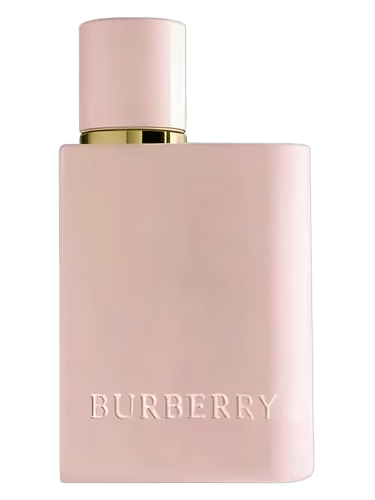
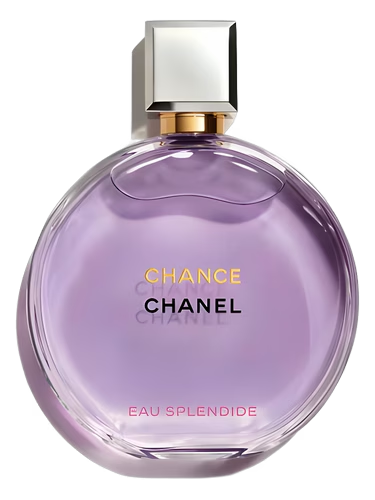
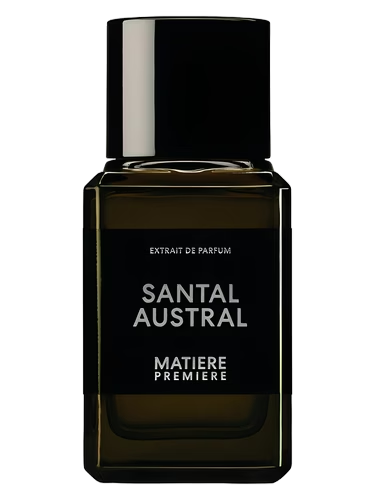
What is Blackthorn?
Blackthorn, also known as sloe, is a deciduous shrub native to Europe and Western Asia whose dark, tart berries are used in perfumery to add a sophisticated, brooding depth.What does Blackthorn smell like?
It offers a dark, slightly tart fruitiness reminiscent of plum or bitter almond, featuring an inky depth with subtle woody and dry undertones.How is Blackthorn essence extracted?
The aromatic compounds are traditionally obtained through maceration or infusion, while modern methods include solvent extraction and ultrasound-assisted techniques to capture its rich character.What are some top perfumes featuring Blackthorn?
Notable fragrances include D.S. & Durga Sloane Ranger, Houbigant Fougère Royale, and Ffern Spring 26.When is Blackthorn in season?
The plant produces white blossoms in early spring (February to May), while the sloe berries develop in summer and ripen to a deep purple-black between September and December.