Fragrance Notes Are Layers Of Scent That Are Layered To Form The Final Fragrance. Fragrance Notes Are Categorised Into Three Main Elements Based On How Long They Take To Evaporate, And How Long They Typically Last Following Application: Top Notes, Heart Notes And Base Notes.
Black Walnut
Black Walnut offers a deep, nutty aroma with distinct woody and subtle smoky undertones. It has a natural, grounding, and earthy character, often considered more refined and slightly masculine than sweeter nut notes. It adds depth and a unique, complex sophistication, making it popular for autumn and winter scents, blending well with woods, spices, and amber.

Origin & Extraction Of Black Walnut
Black Walnut has historically been utilized less frequently than traditional woods and spices in classic European perfumery, but its rich, earthy aroma has gained prominence in contemporary and niche fragrance design. The scent profile—deeply nutty, woody, and subtly smoky—lends itself particularly well to modern formulations that seek to evoke natural, rustic, or autumnal atmospheres. While earlier perfumes may have used walnut accords, Black Walnut as a distinct, marketed note has seen increased usage since the early 2000s, often serving as a sophisticated alternative to sweeter gourmand nuts or conventional base notes like cedar.
Its relevance in modern perfumery lies in its ability to provide textural depth and a grounding element without the heavy sweetness of other nuts. Black Walnut is highly valued in masculine and unisex compositions for its dry, complex sophistication, bridging spicy top notes (like black pepper or nutmeg) with warm, tenacious base notes (such as amber, patchouli, and Virginia cedar). This versatility allows perfumers to create structured, long-lasting fragrances that are both comforting and distinctly refined.
Extraction Methods of Black Walnut
Historically, walnut oil was obtained through labor-intensive manual processes starting with the removal of the green hull using simple tools like hammers, rocks, or even by driving vehicles over burlap bags. The nuts were then dried, cracked by hand or with heavy-duty nutcrackers, and the meat was ground into a meal. Traditional extraction often involved simmering this nut meal in water for nearly an hour before using a manual mechanical press to squeeze out the oil. In some cultures, hulls were also macerated in a mixture of alcohol and deionized water for several weeks to create medicinal extracts.
Modern commercial extraction primarily utilizes mechanical cold pressing, which operates at temperatures below 60°C to preserve delicate nutrients and aromatic compounds, though this results in a lower yield compared to hot pressing. To maximize efficiency, advanced industrial methods now employ supercritical carbon dioxide (scCO2) extraction, where pressurized CO2 acts as a solvent to penetrate the nut powder at specific temperatures and pressures. Other contemporary techniques include ultrasonic-assisted extraction and the use of bio-based solvents like ethyl acetate or ethanol to replace traditional petroleum-based solvents, improving both the sustainability and purity of the resulting oil.
Black Walnut, with its deep, nutty, and woody profile, lends a sophisticated grounding element to many modern and niche fragrances, particularly those marketed as masculine or autumnal. A well-known example that utilizes this note is Banana Republic Black Walnut Eau de Toilette, which combines the walnut scent with strong notes of cognac and tobacco for a rich, robust, and decidedly masculine fragrance launched in 2006.
- Banana Republic Black Walnut Eau de Toilette
The note is also popular within the independent and niche perfumery world for adding a unique, earthy dimension to conceptual scents. Some contemporary examples noted for using black walnut include:
- Gingerbread by Pineward Perfumes
- Gristmill by Pineward Perfumes
- Black Walnut by American Perfumer
While often used for depth and warmth, black walnut can also bridge transitional notes, complementing spices and woods. Its natural, slightly smoky character provides an ideal counterpoint to sweeter, more gourmand notes, ensuring the fragrance remains refined and sophisticated, appealing to those seeking an aromatic, complex experience.
Sustainability Of Black Walnut
Sustainability of Black Walnut
- Utilizing entirely wild and all-natural trees that grow without the need for chemicals, pesticides, or intensive commercial orchard management
- Promoting a zero-waste circular economy by repurposing the outside black hulls as natural fertilizer or dyes
- Ensuring long-term resource availability through the natural reproduction of trees that remain productive for over 50 years
- Reducing environmental impact by hand-harvesting wild-grown nuts in fields and pastures, requiring minimal industrial intervention
- Repurposing the hard, biodegradable shells for eco-friendly industrial uses such as abrasive cleaning, filtration media, and turf field products
Trivia
The green hulls of the black walnut emit a surprising sharp, citrus-like aroma when crushed, a scent profile so distinct that it is often compared to a mix of citrus and pine rather than the expected nutty fragrance.
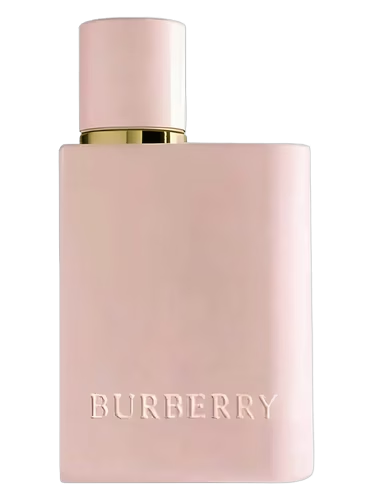
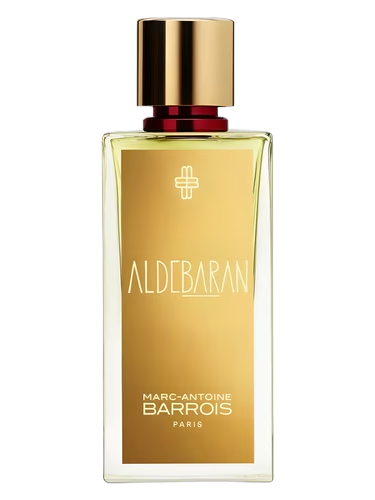
Most Popular Scents Using Black Walnut

What is Black Walnut?
Black Walnut is a large tree native to North America whose nuts and hulls are used in perfumery to provide a deep, earthy, and sophisticated grounding element.What does Black Walnut smell like?
It offers a rich, nutty, and woody aroma with subtle smoky undertones, often described as more refined and less sweet than other gourmand nut notes.How is Black Walnut essence extracted?
In modern perfumery, the oil is primarily obtained through mechanical cold pressing of the nut or via advanced supercritical carbon dioxide (scCO2) extraction to preserve its complex aromatic profile.What are some top perfumes featuring Black Walnut?
Notable fragrances include Banana Republic Black Walnut, American Perfumer Black Walnut, and Osmofolia Black Walnut.When is Black Walnut in season?
The fruit reaches full maturity in early fall, with the primary harvest window in North America typically spanning from late September through October.