Fragrance Notes Are Layers Of Scent That Are Layered To Form The Final Fragrance. Fragrance Notes Are Categorised Into Three Main Elements Based On How Long They Take To Evaporate, And How Long They Typically Last Following Application: Top Notes, Heart Notes And Base Notes.
Black Currant
Black Currant (Cassis) is characterized by a rich, fruity, slightly tart, and vibrant aroma, often described with green and sulfurous undertones from the buds. It is a versatile top to middle note, adding a distinctive juicy sweetness and depth to various fragrance compositions, particularly fruity and chypre scents.

Origin & Extraction Of Black Currant
Black Currant, particularly the extract from its buds (known as Cassis), has been a significant note in perfumery since the mid-20th century, though its use became truly prominent with the rise of fruity-chypre and modern gourmand fragrances. Initially, the note was challenging to utilize due to its complex aroma, which contains a sulfurous, catty nuance (known as 'skatole') alongside the sweet, tart, and green facets. This complexity meant early perfumers used it judiciously to add depth, especially in floral compositions, lending a distinct, vibrant green facet to classics like Jean Patou’s Joy (1930) and later, in compositions where its green-leafy freshness was desired.
The note solidified its contemporary status in the late 20th and early 21st century when technology allowed perfumers to refine the extract, emphasizing its juicy, vibrant fruitiness over the green aspects. Black Currant became foundational to the "new chypre" structure, exemplified by its prominent use in fragrances like the influential *Giorgio Armani Sì* line. In modern perfumery, it is celebrated for its versatility, serving as a bright, complex top note that provides distinctive longevity, moving beyond traditional citrus notes to introduce a sophisticated, juicy sweetness and depth across feminine, masculine, and niche scent categories.
Extraction Methods of Black Currant
Historically, the aromatic compounds of black currant were primarily obtained from the buds through solvent extraction using petroleum ether to produce a concrete, which was then processed into an absolute. This traditional method was favored for capturing the distinctive "catty," green, and fruity profile required for fine perfumery. Hydrodistillation has also been a long-standing traditional technique, particularly for isolating essential oils from dormant buds for medicinal and analytical purposes.
Modern extraction has shifted toward more precise and environmentally friendly technologies. Supercritical fluid extraction (scCO2) is now considered the premier method for producing high-quality black currant extracts, as it operates at low temperatures without oxygen, preventing the degradation of delicate thermolabile components. Additionally, advanced mechanical harvesting and processing of by-products like seeds have enabled the large-scale extraction of black currant oil using cold pressing and refined solvent techniques to meet the demands of the fragrance and skincare industries.
Black Currant, or cassis, is perhaps most famously utilized in the groundbreaking chypre compositions of the 20th century, where it provided a juicy, slightly dark fruit counterpoint to classic oakmoss and patchouli bases. The most iconic usage is in **Giorgio Armani Sì**, where the syrupy black currant nectar forms the core of the fragrance, providing a distinctly modern, sweet, yet sophisticated character that set a trend for contemporary fruity-chypre scents.
The note is also crucial in many high-end and niche fragrances, often deployed to add a photorealistic tartness or a vibrant green, slightly metallic lift in the opening. For instance, **L'Artisan Parfumeur Mûre et Musc** uses black currant buds to capture a fresh, natural hedgerow scent, while **Memo Paris Marfa** features the note to provide a sparkling, juicy contrast to its creamy white floral heart, demonstrating the note's versatility beyond traditional classifications.
In modern perfumery, black currant continues to be a favorite for adding complexity, bridging sharp top notes with richer floral or woody hearts. Its use in fragrances like **Jo Malone London Blackberry & Bay** showcases its ability to create a fresh, almost herbaceous fruit accord. Similarly, its prominence in the opening of **Lancôme Trésor Midnight Rose** demonstrates how it can enhance a rose accord, lending it a dark, velvety, and irresistibly vibrant depth.
- Blooming typically occurs in the spring, with modern varieties bred to flower later to avoid frost damage
- Fruit ripening and harvest occur during the summer months, typically spanning from June to August depending on the climate and variety
- Peak harvest in cooler regions like the Northeast US and UK often falls between July and August, while warmer regions may see earlier ripening in late spring
- The plant enters a dormant season from late fall through early spring, typically between October and April, which is also the ideal time for planting and propagation
- Dormancy requires a specific chilling period of 800 to 1600 hours below 44 degrees F to ensure successful bud break and high-quality fruit production in the following season
Sustainability Of Black Currant
Sustainability of Black Currant
- Promoting biodiversity by implementing conservation plans that include managing hedgerows, creating rough grass margins, and sowing wildflower mixes to support native bee and pollinator populations
- Utilizing circular economy principles by repurposing agricultural waste, such as young shoots and cuttings, into concentrated aromatic extracts and functional ingredients for beverages
- Adopting low-impact farming techniques including mechanical weeding instead of herbicides, manual pruning, and the use of disease-resistant varieties to reduce the need for chemical interventions
- Implementing water-efficient practices by utilizing the deep-rooting nature of currant bushes, which require less irrigation than many other fruit crops
- Improving packaging sustainability through the use of 100% recycled plastic bottles and redesigned sleeves to enhance recyclability and reduce waste
- Supporting local ecosystems and land conservation by reviving defunct fields for currant farming, which keeps land green and prevents development while providing shelter for wildlife through nest boxes and tree planting
Trivia
Black currant absolute is uniquely known for its animalic profile that can mimic the scent of cat urine, a characteristic derived from specialized glandular hairs that cover about 30% of the plant.
Most Popular Scents Using Black Currant


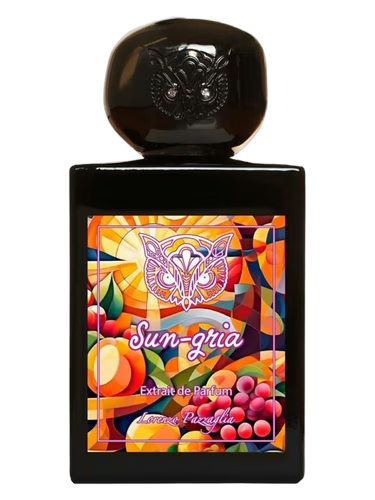
What is Black Currant in perfumery?
Black Currant, also known as Cassis, is a fragrance note derived from the buds, leaves, and berries of the Ribes nigrum plant, valued for its complex fruity-green profile.What does Black Currant smell like?
It offers a rich, tart, and juicy berry aroma balanced by sharp, green, and slightly woody nuances, with a characteristic animalic or "catty" undertone that adds depth.How is Black Currant essence extracted?
The most common method is solvent extraction of the buds to produce an absolute (bourgeons de cassis), though modern techniques like supercritical CO2 extraction are also used to capture its delicate scent.What are some top perfumes featuring Black Currant?
Notable fragrances include Giorgio Armani Sì, Diptyque L'Ombre Dans L'Eau, Valentino Donna Born In Roma, and Guerlain Chamade.When is Black Currant in season?
The plant typically blooms in spring, while the fruit is harvested during the summer months, and the aromatic buds are traditionally collected between late November and February.