Fragrance Notes Are Layers Of Scent That Are Layered To Form The Final Fragrance. Fragrance Notes Are Categorised Into Three Main Elements Based On How Long They Take To Evaporate, And How Long They Typically Last Following Application: Top Notes, Heart Notes And Base Notes.
Berries
Berries offer a complex, vibrant profile in perfumery, ranging from the sweet and juicy depth of blackcurrant and raspberry to the tart, sparkling zest of wild berries. They impart a luscious, mouth-watering quality, often used in top and heart notes to create cheerful, fruity accords that can be sparkling, dark, or jammy, providing a youthful and bright opening to a fragrance.

Origin & Extraction Of Berries
Berry notes, celebrated for their versatility in offering both tart freshness and deep sweetness, have been vital in perfumery, particularly in the influential fruity chypre category. In classic compositions, rich, dark berries like blackcurrant (cassis) were used to introduce a distinct green sharpness that provided an elegant contrast to the traditional base notes of oakmoss and patchouli. This combination helped define modern luxury fragrances, establishing a complex and enduring scent profile.
In contemporary perfumery, the focus shifted, and berries—especially red varieties such as raspberry and strawberry—are often utilized to create vibrant, youthful, and gourmand-leaning scents. These modern applications prioritize the lush, juicy, and sweet aspects of the fruit, moving away from heavier chypre structures towards lighter pairings with florals and musks. Additionally, notes like blackcurrant and red currant frequently serve as bridge notes, linking volatile citrus top notes to more substantial floral and woody hearts, ensuring the fruity impression lasts longer in the fragrance's development.
Extraction Methods of Berries
Historically, berry extracts were produced through simple maceration or solvent extraction, where fruits were crushed and soaked in alcohol (like vodka or ethanol) for extended periods to draw out flavors and pigments. Traditional steam distillation was also employed to capture volatile aromatic compounds, although it often resulted in a sharp, less nuanced flavor profile. In medicinal and culinary contexts, berries were frequently preserved through sugar saturation or simmered into syrups to extract juice while removing seeds and pulp.
Modern extraction has evolved to focus on preserving delicate bioactive compounds like anthocyanins while improving efficiency. Advanced techniques now include supercritical fluid extraction (SFE) using CO2, which offers superior selectivity for oils and carotenoids, and accelerated solvent extraction (ASE) that utilizes high pressure and temperature for rapid results. Other green technologies, such as ultrasound-assisted extraction (UAE) and microwave-assisted extraction (MAE), are used to increase yields with lower solvent consumption. Cutting-edge methods also incorporate wet milling, column chromatography for high-purity isolation, and vacuum drying to stabilize the resulting extracts for use in perfumery, nutraceuticals, and cosmetics.
The use of berry notes has been fundamental in modern perfumery, especially within the Fruity-Floral genre. Perhaps the most iconic example is **La Petite Robe Noire** by Guerlain, which features a prominent black cherry and red berry blend that gives the fragrance its signature dark, juicy, and playful quality. Another classic application is found in **Baby Doll** by Yves Saint Laurent, where wild red berries provide a sparkling, youthful, and slightly tart opening, setting a cheerful tone for the entire composition.
- Berries are frequently used to add a vibrant lift to top and heart notes, lending a cheerful and youthful dimension to fragrances across various styles.
In niche and avant-garde perfumery, berry notes take on darker, more complex roles. For example, **Amethyst** by Lalique harnesses blackcurrant and blackberry to create a scent that is both intensely dark and slightly jammy, balanced by woody and musky elements. This contrasts sharply with the brighter, sparkling berries often used in mass-market fragrances, showcasing the ingredient's versatility when utilized to convey depth and mystery rather than just sweetness.
- Raspberry, specifically, has been popularized in gourmand scents, notably giving an effervescent, wine-like sweetness to fragrances like **Hot Couture** by Givenchy or adding a sharp, sophisticated edge to leather notes in high-end creations.
Modern perfumery continues to innovate with specific berry types to achieve unique accords. Consider **Acqua di Parma Fico di Amalfi**, which uses blackcurrant buds to inject a green, slightly tart, and vibrant facet into its Mediterranean composition, complementing the central fig note. Whether utilized as a bright, sparkling top note (like in some Escada summer editions) or a deep, dark heart note, the berries category remains a critical tool for adding richness, vibrancy, and a mouth-watering texture to celebrated scents like **Miss Dior Cherie** (2005 version, known for its candied strawberry/cherry/berry accord) and many contemporary releases.
- Strawberries are the first to ripen in spring, typically peaking from April through June depending on the region's climate
- Blueberries and raspberries take center stage during the early summer months of June and July
- Blackberries reach their harvest peak in mid-to-late summer, generally spanning July and August
- Cranberries signal the end of the fresh berry season as they arrive in late summer and early fall, usually between August and September
- While many varieties are now available year-round due to global trade, local peak seasons offer the most exceptional flavor and freshness
Sustainability Of Berries
Sustainability of Berries
- Implementing ethical sourcing practices that prioritize fair treatment, decent wages, and safe working conditions for farm workers
- Adopting regenerative agriculture techniques, such as cover cropping, reduced tillage, and composting, to restore soil health and enhance biodiversity
- Transitioning to circular packaging solutions, including the use of post-consumer recycled PET and the development of 100% recycle-ready or compostable clamshells
- Optimizing resource conservation through automated drip irrigation systems, soil moisture detectors, and low-flow plumbing to significantly reduce water usage
- Reducing carbon footprints by integrating renewable energy sources like solar power and utilizing energy-efficient cooling systems and LED lighting
- Promoting zero-waste initiatives and achieving certifications that validate high standards of social and environmental performance, such as B Corp and Fair Trade
- Protecting vital ecosystems and pollinators by dedicating land to permanent habitats and achieving "Bee Better" certifications
Trivia
There are over 400 different species of berries in existence, and in Greek mythology, raspberries were said to be white until a nymph pricked her finger and stained the fruit red with her blood.
Most Popular Scents Using Berries
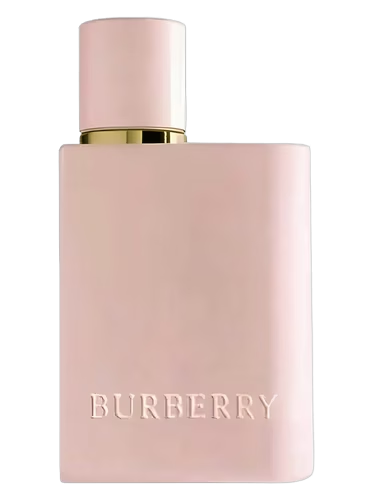
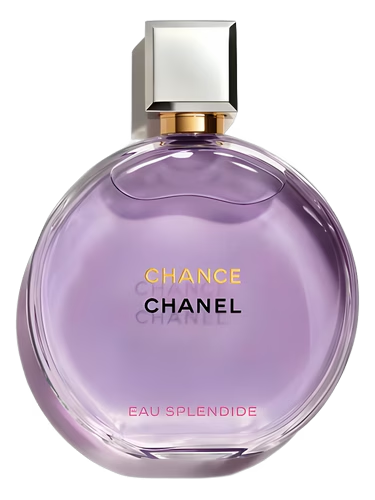
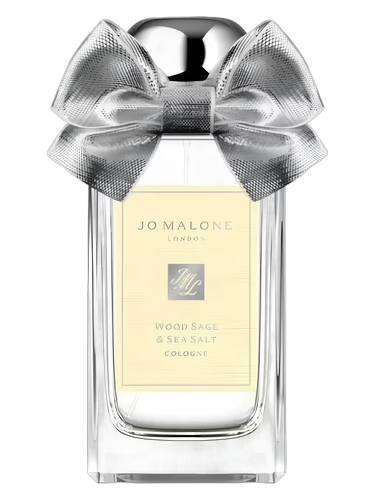
What are berry notes in perfumery?
Berry notes encompass a vibrant range of scents from sweet and juicy blackcurrant and raspberry to tart, sparkling wild berries, often used to add a cheerful, mouth-watering quality to a fragrance.What do berries smell like in perfumes?
They offer a multifaceted profile that can be jammy, dark, and deep or bright, fresh, and zesty, typically balancing intense fruity sweetness with a refreshing tartness.How are berry essences extracted for fragrances?
While historically obtained through maceration or distillation, modern perfumery primarily uses advanced CO2 extraction and synthetic recreation to capture the delicate, volatile aromatic compounds of the fruit.What are some top perfumes featuring berry notes?
Popular fragrances include Burberry Her, Jo Malone London Blackberry & Bay, Guerlain La Petite Robe Noire, and Diptyque L'Ombre Dans L'Eau.Are berry scents considered youthful or mature?
While often associated with youthful and playful fruity-floral compositions, berry notes also play sophisticated roles in classic fruity chypres and complex niche fragrances.