Fragrance Notes Are Layers Of Scent That Are Layered To Form The Final Fragrance. Fragrance Notes Are Categorised Into Three Main Elements Based On How Long They Take To Evaporate, And How Long They Typically Last Following Application: Top Notes, Heart Notes And Base Notes.
Bergamot Blossom
A complex, elegant profile that opens with sparkling, bright citrus (Bergamot, Lemon) and fresh white floral tones. The heart reveals a delicate, sweet Neroli/Bergamot blend, deepened by subtle green and spice (Thyme, Black Pepper). It finishes with an earthy, woody base of creamy Sandalwood, Musk, and Oakmoss.

Origin & Extraction Of Bergamot Blossom
The Bergamot tree (Citrus bergamia) is most famous in perfumery for its fruit's oil, a foundational ingredient in classic Eaux de Cologne since the 18th century. However, the delicate Bergamot Blossom note, often referred to as a sub-category of Neroli or Bitter Orange flower, has a more niche history. While Neroli oil (distilled from the flower of the Bitter Orange tree, a close relative) has been used for centuries, Bergamot Blossom specifically focuses on the fresh, bright, and slightly spicy aroma unique to the *Bergamot* flower itself. Its use has increased in modern perfumery to offer a subtle, nuanced bridge between the sharp zest of the fruit and a more traditional white floral heart.
The contemporary relevance of the Bergamot Blossom note stems from the desire of perfumers to create sophisticated, high-definition citrus-floral compositions that are simultaneously luminous and tenacious. Instead of relying solely on the volatile citrus peel, the blossom adds a layer of gentle, sweet, and green complexity, enhancing the overall brightness and longevity of a fragrance's opening. This note is often featured in luxurious niche fragrances and contemporary colognes that seek to honor the traditional Italian citrus genre while adding modern elegance and depth.
Extraction Methods of Bergamot Blossom
Historically, the aromatic essence of citrus blossoms like the bergamot flower was captured using enfleurage, one of the oldest extraction methods. This labor-intensive process involved placing the delicate white petals on layers of animal or vegetable fat for several days or weeks until the fat became saturated with the floral fragrance. The resulting pomade was then washed with alcohol to separate the botanical extract. Additionally, traditional hydro-distillation, where flowers were simmered in water, was used to create floral waters and early forms of neroli-like essences.
In modern perfumery, bergamot blossom absolute is primarily obtained through solvent extraction. This two-stage process involves using volatile solvents like hexane to dissolve the aromatic compounds, creating a waxy "concrete," which is then refined with ethyl alcohol to produce a highly concentrated absolute that captures the true, honeyed scent of the live flower. Advanced techniques such as steam distillation are also employed to produce essential oils, while innovative methods like supercritical CO2 extraction are increasingly used to capture the most delicate aromatic molecules without the use of high heat or harsh chemicals.
The Bergamot Blossom note, due to its delicate blend of sparkling citrus and subtle white floral sweetness, has been embraced by modern perfumery to enhance the luminosity and complexity of compositions. It serves as a sophisticated bridge between the volatile zest of the Bergamot fruit and a more enduring floral heart, allowing fresh fragrances to maintain their brightness longer. One notable modern fragrance that utilizes this nuanced approach is **Tonic Blanc** by Thomas Kosmala, where the blossom note contributes to the scent's fresh, elegant, and tenacious opening.
- The Bergamot Blossom is also effectively deployed in designer fragrances to add a light, airy, and feminine touch to classic structures. In Dolce&Gabbana's **The One Eau de Toilette**, the blossom note integrates into the white floral composition, complementing the original scent's signature notes with a gentle, sweet freshness.
- Niche perfumery also values the blossom for its potential to create highly complex and evocative citrus-floral accords. For instance, **Paropamiso** by ArteOlfatto reportedly features the note, leveraging its unique aroma to ground the volatile citrus aspects and provide a refined depth often sought after in artisanal creations.
The continued relevance of Bergamot Blossom lies in its ability to offer a 'high-definition' freshness—a scent that is transparent and uplifting yet complex enough to last. Other fragrances that incorporate this or similar blossom/neroli notes include **Moon Rain (Лунный Дождь)** by Odoratika and various compositions from houses like Guerlain and Yves Saint Laurent, underscoring its versatility across both contemporary mainstream and niche markets.
- Blooming typically occurs from midsummer to early fall, with peak flowering often observed between July and September
- Plants grown from seed often reach their full blooming potential starting in their second year of growth
- The flowering period can be extended from August until the first frost by regularly deadheading spent blooms
- Seed heads develop and mature through late summer and early autumn, providing visual interest and food for wildlife into the winter
- Dormancy occurs in late fall and winter after the first freeze, with new growth emerging in early spring
Sustainability Of Bergamot Blossom
Sustainability of Bergamot Blossom
- Promoting a circular economy by repurposing extraction by-products, such as using remaining peels and fruit pulp for organic fertilizers and animal feed
- Implementing water-efficient technologies, including underground irrigation and soil moisture monitoring, to conserve resources and prevent tree disease
- Supporting socio-economic resilience for farming communities through long-term price negotiations and weekly payment systems within producer cooperatives
- Adopting certified organic farming standards and integrated pest management to protect local biodiversity and ensure chemical-free cultivation
- Establishing international partnerships for responsible sourcing and third-party audits to guarantee ethical labor conditions and environmental protection
Trivia
While the bergamot fruit is famously known for its aromatic rind, the blossoms are so delicate they must be harvested by hand to preserve their airy, jasmine-like scent.
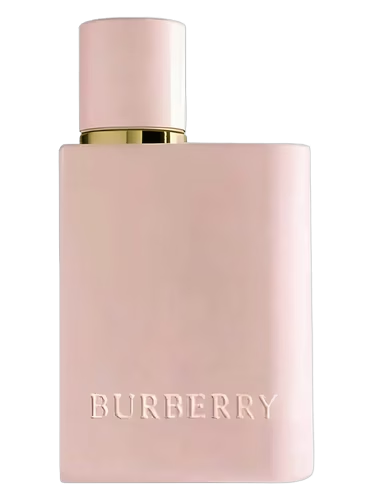
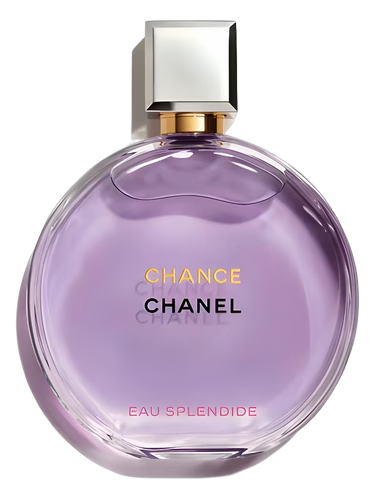
Most Popular Scents Using Bergamot Blossom

What is Bergamot Blossom?
Bergamot Blossom is the delicate, aromatic flower of the Citrus bergamia tree, used in perfumery to provide a nuanced, citrus-floral bridge between sharp fruit zests and traditional white floral hearts.What does Bergamot Blossom smell like?
It features a complex, elegant profile with sparkling citrus top notes, fresh white floral tones similar to neroli, and subtle green and spicy undertones.How is Bergamot Blossom essence extracted?
In modern perfumery, it is primarily obtained through solvent extraction to produce an absolute, though traditional methods like enfleurage and hydro-distillation were used historically.What are some top perfumes featuring Bergamot Blossom?
Notable fragrances include Thomas Kosmala Tonic Blanc, Dolce & Gabbana The One Eau de Toilette, Illuminum Bergamot Blossom, and ArteOlfatto Paropamiso.When is Bergamot Blossom in season?
Blooming typically occurs from midsummer to early fall, with peak flowering most often observed between July and September.