Fragrance Notes Are Layers Of Scent That Are Layered To Form The Final Fragrance. Fragrance Notes Are Categorised Into Three Main Elements Based On How Long They Take To Evaporate, And How Long They Typically Last Following Application: Top Notes, Heart Notes And Base Notes.
Bergamot
Bergamot offers a bright, complex, and highly refined citrus note, prized for its earl grey tea-like quality. It combines zesty, fresh lemon and orange facets with a distinctive bitter, aromatic, and slightly spicy undertone. It is essential in Eaux de Cologne and serves as a luminous, elegant top note, adding lift and sophistication to all fragrance types.

Origin & Extraction Of Bergamot
Bergamot is a citrus fruit primarily cultivated in the Calabria region of Italy. Its essential oil has been used in perfumery since the early 18th century, with the first record dating to 1714. It became a foundational ingredient in the original Eau de Cologne, securing its place in fine perfumery for its light, crisp, and refreshing scent.
Bergamot is recognized as arguably the most essential citrus note in perfumery, acting as the luminous opening for the entire fresh fragrance category. It is most famously associated with the traditional Eau de Cologne structure. Its scent—sparkling, slightly tart, and possessing a floral-tea-like aroma—provides an invigorating lift that is both classic and universally appealing, making it the defining ingredient for light, clean, and refreshing scents.
- In contemporary high-end perfumery, Bergamot's function has evolved to support sophisticated, modern compositions. Fragrances like Le Labo’s Bergamote 22 celebrate the note itself, expertly combining its signature zestiness with green elements and woody bases to create a complex, long-lasting citrus experience. Furthermore, its role extends beyond pure citrus scents; it is utilized to add brightness and dynamism to diverse fragrance genres, including sweet scents like Prada Infusion de Vanille, modern chypres, and orientals, preventing the final composition from becoming heavy.
The enduring popularity of Bergamot stems from its use in classic cultural applications, such as Earl Grey tea blends, and its indispensable historical presence in classic perfume formulas. Today, whether it is used as a clean, fresh component in everyday products like body mists (Salt & Stone Bergamot & Hinoki) or as the vibrant, energetic opening of high-end designer fragrances such as YSL Libre l'Eau Nue Eau de Parfum and Henry Rose Windows Down Eau de Parfum, Bergamot remains a standard ingredient for invoking an aura of expensive, sun-drenched Italian sophistication.
- Blooming typically occurs during the winter months for the bergamot orange tree
- Fruit ripening and harvest are carefully timed to optimize essential oil yield and juice quality
- Wild bergamot flowers primarily from midsummer to early fall, often between July and September
- The plant remains of interest through late summer and early autumn as seed heads develop and mature
- Dormancy occurs in late fall and winter, with new growth appearing in the spring
Sustainability Of Bergamot
Sustainability of Bergamot
- Promoting a circular economy by repurposing waste, such as using juice and remaining peels as fertilizer or for pharmaceutical and nutraceutical products
- Adoption of organic farming practices and underground irrigation to conserve water and resources
- Establishing producer consortia and cooperatives to ensure fair income and socio-economic resilience for smallholder farmers
- Implementation of responsible sourcing policies and third-party audits by major fragrance houses to ensure ethical labor conditions and biodiversity protection
- Research and education initiatives, such as the Adopt-an-Herb program, to support sustainable development and clinical study of bergamot derivatives
Trivia
Bergamot is the signature flavor and aroma of Earl Grey tea, and it was one of the original ingredients in the first Eau de Cologne developed in the early 18th century.
Most Popular Scents Using Bergamot
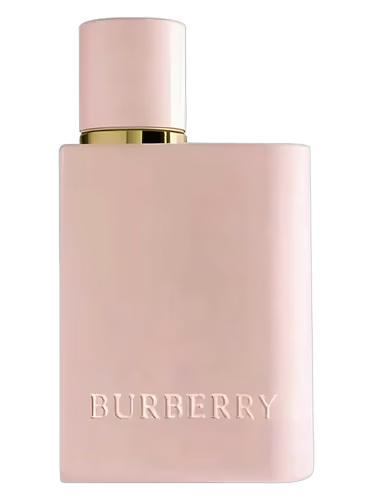
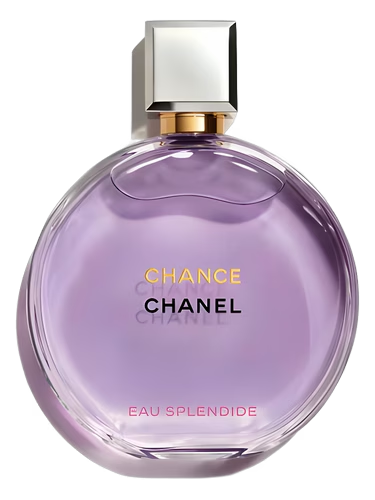
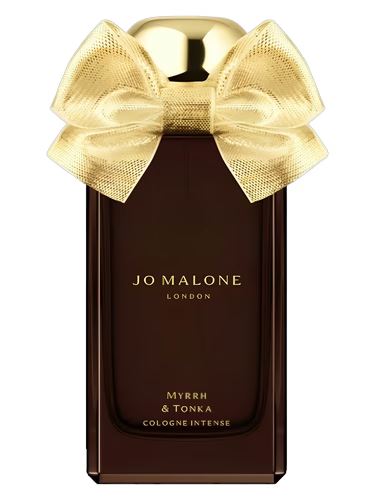
What is Bergamot?
Bergamot is a citrus fruit primarily grown in Calabria, Italy, whose essential oil is a foundational ingredient in traditional Eau de Cologne and fine perfumery.What does Bergamot smell like?
It features a bright, complex citrus aroma with zesty lemon and orange facets, a signature Earl Grey tea-like quality, and a subtle bitter-spicy undertone.How is Bergamot essence extracted?
The oil is primarily obtained through cold pressing (expression) of the fruit's peel, preserving its delicate aromatic compounds.What are some top perfumes featuring Bergamot?
Popular fragrances include Le Labo Bergamote 22, Guerlain Bergamote Fantastico Extrait 11, Dior Sauvage, and Creed Aventus.When is Bergamot in season?
The trees typically bloom in winter, and the fruit is harvested when ripening is optimal to ensure the highest quality of essential oil yield.