Fragrance Notes Are Layers Of Scent That Are Layered To Form The Final Fragrance. Fragrance Notes Are Categorised Into Three Main Elements Based On How Long They Take To Evaporate, And How Long They Typically Last Following Application: Top Notes, Heart Notes And Base Notes.
Bellflower
Bellflower offers a sweet, delicate floral note, often described as fresh, green, and feminine. It is characterized by an ethereal lightness, blending its soft floral heart with bright, sometimes spicy/citrusy, and herbaceous undertones for an uplifting, sophisticated, and naturalistic freshness.

Origin & Extraction Of Bellflower
The Bellflower note, inspired by the Campanula flower family, is a modern and often conceptual note in perfumery. Unlike historically essential ingredients such as rose or jasmine, Bellflower is rarely extracted naturally; its light, fresh, and slightly green scent is primarily created through synthesis to capture its delicate, ephemeral quality. Its rise in popularity is linked to the late 20th and early 21st centuries, coinciding with a trend toward lighter, more transparent, and naturalistic floral compositions that sought to move away from heavy, traditional florals.
Bellflower is now commonly used in contemporary fragrance structures, especially those categorized as sheer florals or aquatic florals. It lends an ethereal lightness and a subtle, dewy freshness, often serving to amplify the natural vibrancy of other notes like lily of the valley or green tea. Its most famous application is arguably in Jo Malone's Wild Bluebell, a scent that showcases the note's delicate, uplifting, and slightly spicy/citrusy facets, establishing it as a key element for refined, clean, and highly sophisticated modern florals.
The primary method for extracting the aromatic and medicinal essence of bellflower, particularly from the species Platycodon grandiflorum, involves the processing of its thick, nutrient-rich roots. Historically, the extraction of bellflower's active compounds, such as saponins and inulin, was achieved through simple infusion and decoction techniques. Traditional methods often involved cleaning and trimming the roots, which were then blanched in boiling water or steamed using medicinal herb extracts to capture their volatile oils and therapeutic properties for use in oriental medicine and herbal teas.
In modern production, extraction methods have become significantly more sophisticated to maximize yield and purity. Recent developments include the use of hot water extraction optimized through response surface methodology (RSM) to precisely control variables such as solvent-to-sample ratios, temperature, and extraction time. Additionally, advanced techniques like solvent extraction using organic alcohols and the creation of concentrated extracts mixed with complementary natural ingredients like pear or quince are now standard. For bellflower species used in perfumery, these extracts are often processed into absolute or essential oil forms to preserve their delicate, green, and floral aromatic profiles.
The Bellflower note, cherished for its light, ethereal, and dewy freshness, found its most iconic expression in Jo Malone’s Wild Bluebell. This fragrance is often cited as the definitive scent utilizing the note, showcasing Bellflower's delicate sweetness blended with green notes and a hint of spiciness. The composition aims for a naturalistic, transparent feeling, establishing the bellflower as a sophisticated alternative to heavier traditional florals.
- Bellflower is particularly valued in modern and niche perfumery for its sheer quality, making it ideal for aquatic and luminous floral compositions.
Another popular application is found in fragrances like Dolce & Gabbana's Dolce, where the Bellflower note is seamlessly integrated into a fresh, white floral heart. It provides an uplifting, green, and slightly sweet lightness that supports notes like Neroli and Daffodil, enhancing the overall innocent and feminine character of the scent without dominating the composition.
- The conceptual nature of Bellflower allows perfumers to evoke a sense of open air and natural beauty, ensuring the final fragrance remains clean and invigorating.
Beyond these, Bellflower (often referred to interchangeably with Bluebell) contributes to the bright opening of scents aiming for a cheerful and casual elegance, such as certain flankers in the Estée Lauder Pleasures collection or other sheer, airy florals. Its delicate presence is crucial for creating the contemporary transparent floral structures favored in today's market, providing lasting freshness and a subtle, sophisticated green nuance.
Sustainability Of Bellflower
Sustainability of Bellflower
- Implementing a Climate Action Plan (CAP) as a roadmap to achieve communitywide energy and greenhouse gas emission reductions
- Adopting the Model Water Efficient Landscape Ordinance (MWELO) to promote water conservation through sustainable landscaping practices
- Securing over $4.4 million in grant funding dedicated to environmental projects and park enhancements
- Partnering with environmental services for citywide waste cart exchanges and specialized recycling programs for hazardous waste, electronics, and used oil
- Developing stormwater capture systems at public parks to improve water quality and manage local water resources effectively
- Supporting social sustainability through community partnerships that provide job training and employment opportunities in local recycling centers
- Utilizing digital eProcurement platforms to reduce paper consumption and minimize the environmental footprint of municipal operations
Trivia
The name Rapunzel from the famous German fairy tale was inspired by the beauty of the bellflower, and the plant's Latin name, Campanula, literally translates to little bell.
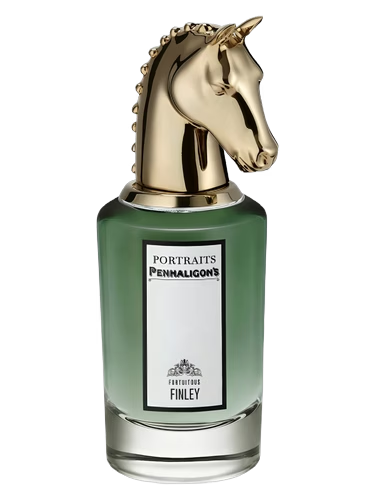
Most Popular Scents Using Bellflower


What is Bellflower?
Bellflower is a fragrance note inspired by the Campanula flower family, primarily used in modern perfumery to create light, transparent, and naturalistic floral compositions.What does Bellflower smell like?
It features a sweet, delicate, and fresh floral aroma with an ethereal lightness, dewy green nuances, and subtle spicy or citrusy facets.How is Bellflower essence extracted?
In perfumery, it is mostly a conceptual note created through synthesis, though aromatic extracts can be obtained from the roots of specific species using distilled or solvent extraction methods.What are some top perfumes featuring Bellflower?
Popular examples include Jo Malone London Wild Bluebell, Korres Bellflower, Dolce & Gabbana Light Blue, and Yardley English Bluebell.When is Bellflower in season?
The plant typically follows a seasonal cycle that peaks in the warmer months, with primary blooming occurring from late spring through the summer.