Fragrance Notes Are Layers Of Scent That Are Layered To Form The Final Fragrance. Fragrance Notes Are Categorised Into Three Main Elements Based On How Long They Take To Evaporate, And How Long They Typically Last Following Application: Top Notes, Heart Notes And Base Notes.
Belladona
Belladonna, or Deadly Nightshade, translates into a deep, intense, and mysterious floral profile in perfumery. It captures a dark, intoxicating sweetness, often conveying a sense of velvety, exotic florals, poison, and rich shadow. The accord is used to create dramatic, heavy, and sensual compositions.

Origin & Extraction Of Belladona
Belladonna, derived from the highly toxic plant Deadly Nightshade (Atropa belladonna), holds a dark and fascinating place in history, largely due to its potent alkaloids. Historically, its primary use was medicinal (as an anesthetic) and cosmetic (women used its extracts to dilate their pupils, hence "bella donna" or beautiful woman). However, due to its poisonous nature, the plant is not used directly in fine perfumery. Instead, the "Belladonna" note is a fantastical, conceptual accord—often a blend of deep, rich florals (like tuberose or orchid), dark berries, and spices—designed to evoke the plant's reputation for mystery, intoxication, and dangerous beauty.
The Belladonna note's relevance in modern perfumery is primarily thematic, aligning with the late 20th and 21st-century trend of creating fragrances inspired by powerful, non-traditional, or forbidden concepts. It became popular in compositions seeking to convey drama, Gothic romance, or a deep, velvety sweetness that contrasts with brighter florals. By evoking the plant's dark glamour rather than its actual scent, perfumers use the Belladonna accord to add complexity and a narrative element, often in heavy, sensual, and intense fragrances.
Extraction Methods of Belladonna
Historically, the extraction of belladonna has been performed through traditional maceration and percolation processes. In maceration, the plant material—typically the roots or leaves of Atropa belladonna—is soaked in a solvent mixture of water and alcohol (menstruum) for extended periods, such as 16 hours or several days, to dissolve the active alkaloids. Percolation involves placing coarse plant powder in a specialized vessel and slowly passing a solvent, such as 35% to 85% ethanol, through the material to collect the extract. These traditional methods often conclude with the evaporation of the percolate under reduced pressure at temperatures below 60°C to create a concentrated liquid or solid extract.
In modern pharmaceutical and laboratory practices, extraction techniques have evolved to become more efficient and precise. One such advancement is ultrasound-assisted extraction (UAE), which utilizes ultrasonic waves to create cavitation in the solvent, significantly reducing extraction time and solvent consumption while improving the yield of alkaloids like atropine. Additionally, dynamic multi-stage countercurrent extraction systems are now employed to save energy and allow for the circular use of organic solvents. For purification, modern methods have transitioned from simple liquid-liquid extraction to solid-phase extraction (SPE) and supercritical CO2 extraction, providing higher reproducibility and cleaner extracts for use in medicine and analytical quality control.
The Belladonna note, an accord representing the dark, mysterious side of florals, has been famously utilized to create fragrances with a sense of danger, intoxication, and dramatic elegance. Since the note is conceptual (the actual Belladonna plant is poisonous), perfumers employ rich, intoxicating blends—often featuring deep orchid, dark fruits, and sultry spices—to capture its velvety, shadowy essence. This approach is key in fragrances that aim for a heavy, sensual, and memorable impact, moving far beyond simple bright floral compositions.
- One of the most notable fragrances to employ the Belladonna concept is **Belladonna** by Lorenzo Villoresi, a composition that captures the dark floral fantasy with rich, intense, and enveloping notes designed to evoke the deadly beauty of the nightshade.
The dark floral theme of Belladonna is frequently embraced by niche and high-end designer houses seeking to build a narrative around forbidden glamour or Gothic romance. These fragrances use the note to signify luxury and intensity, creating a deep, velvety sweetness that provides a compelling contrast to lighter, more traditional floral scents. The note's conceptual darkness allows it to anchor complex compositions, bridging florals with heavier, more tenacious base notes like incense or leather, ensuring remarkable longevity and sillage.
- Another fragrance that utilizes the Belladonna theme, blending it with dark fruit and rich patchouli, is **Poison** by Dior, which set the standard for dramatic, intense scents in the late 20th century.
In modern perfumery, the Belladonna accord remains a symbol of sophisticated complexity and dramatic depth. It often appears in limited edition or highly conceptual collections where the goal is to tell a compelling story rather than just offer a simple scent. By translating a dangerous, historical ingredient into a wearable, intoxicating aroma, perfumers ensure the Belladonna note continues to offer a unique, mysterious, and unforgettable olfactory experience.
Sustainability Of Belladona
Sustainability of Belladonna
- Adopting Life Cycle Assessment (LCA) methodologies to evaluate and manage the environmental impacts of alkaloid extraction processes
- Transitioning to green chemistry and eco-friendly extraction techniques to replace hazardous solvents like chloroform with sustainable alternatives
- Developing high-yield plant varieties through CRISPR/Cas9-based metabolic engineering to increase pharmaceutical efficiency and reduce production costs
- Supporting biodiversity and ecosystem health by maintaining belladonna as a valuable food source for pollinators like bumblebees and butterflies
- Implementing energy-efficient manufacturing standards to reduce the carbon footprint and electrical energy consumption during chemical processing
Trivia
Belladonna's name translates to beautiful woman in Italian because Renaissance women used its toxic juice as eye drops to dilate their pupils, a dangerous practice intended to make them appear more alluring.
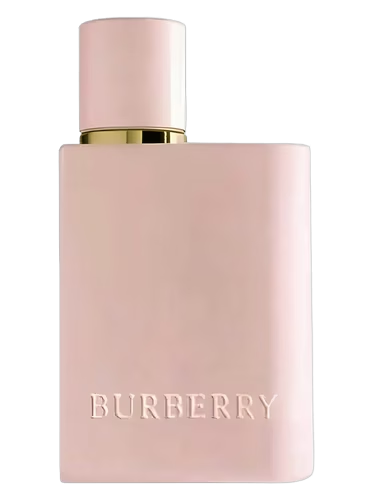
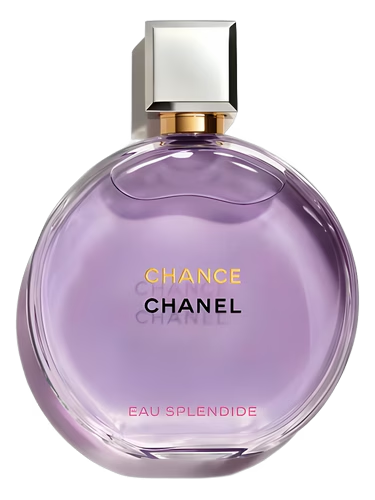
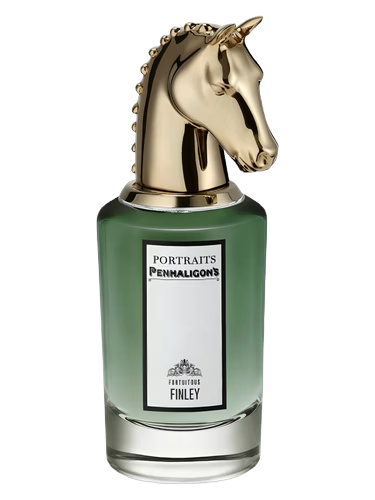
Most Popular Scents Using Belladona
What is Belladonna in perfumery?
Belladonna is a conceptual or "fantasy" fragrance note used to evoke the dark, mysterious, and intoxicating reputation of the Deadly Nightshade plant, as the actual plant is too toxic for direct use in fine fragrances.What does Belladonna smell like?
The accord typically features a deep, velvety, and intense floral profile with dark sweetness, often blending notes of exotic florals like orchid or tuberose with dark berries and spices.Is real Belladonna used in perfumes?
No, the actual Atropa belladonna plant is highly poisonous and is not used directly; instead, perfumers create a safe synthetic or blended accord to capture its mysterious aura.What are some top perfumes featuring the Belladonna note?
Notable fragrances include Shay & Blue Atropa Belladonna, Lorenzo Villoresi Belladonna, Dior Poison, and Lady Gaga Fame.What is the history behind the name Belladonna?
The name means "beautiful woman" in Italian, referring to the Renaissance practice where women used the plant's juice as eye drops to dilate their pupils, making them appear more alluring.