Fragrance Notes Are Layers Of Scent That Are Layered To Form The Final Fragrance. Fragrance Notes Are Categorised Into Three Main Elements Based On How Long They Take To Evaporate, And How Long They Typically Last Following Application: Top Notes, Heart Notes And Base Notes.
Begonia
Begonia in perfumery is typically an abstract floral note, capturing the plant's delicate, fresh, and slightly metallic or watery green character. It conveys a transparent, dewy sweetness, often with nuances of lily-of-the-valley or cyclamen. It is prized for lending a shimmering, humid, and ethereal floral lift to compositions.

Origin & Extraction Of Begonia
Begonia, native to tropical and subtropical regions, is primarily cultivated for its colorful foliage and flowers. Due to the difficulty in extracting a natural essential oil, the "Begonia" note in perfumery is almost entirely an abstract or fantasy floral accord. It does not possess a long history as a traditional ingredient like rose or jasmine. Instead, its use is a modern development, beginning in the late 20th and early 21st centuries, as perfumers increasingly relied on synthesis to capture light, dewy, and unique green-floral characteristics that cannot be naturally distilled. The note aims to evoke a transparent, shimmering, and fresh atmosphere.
The relevance of the Begonia note lies in its ability to lend an ethereal, watery, and slightly metallic freshness to compositions, often bridging green notes with delicate white florals (like lily-of-the-valley or cyclamen). It is commonly found in modern, sheer, and airy floral fragrances, where it supports themes of humid gardens or dewy mornings, offering complexity and luminescence without the heaviness of traditional floral absolutes. Its popularity reflects a contemporary trend towards light, atmospheric, and highly conceptual floral scents.
The extraction of begonia fragrance is a specialized process, as the flowers are delicate and do not yield high amounts of essential oil through traditional means. Historically, the most common method for capturing the scent of such delicate blossoms was enfleurage. This traditional technique involved layering fresh petals onto purified animal or vegetable fat (lard or tallow) spread over glass plates. Over several days, the fat would absorb the flower's aromatic molecules. The exhausted petals were then replaced with fresh ones until the fat reached the desired saturation, after which the scent was extracted from the fat using alcohol to create an absolute.
In modern perfumery, begonia notes are primarily obtained through solvent extraction or the more advanced supercritical CO2 extraction. Solvent extraction involves soaking the plant material in a chemical solvent like hexane to dissolve the aromatic compounds and waxes, resulting in a "concrete" that is later refined into an absolute. More recently, CO2 extraction has become a preferred method because it operates at lower temperatures and uses pressurized carbon dioxide as a solvent. This prevents the heat-induced degradation of the flower's sensitive aromatic molecules, producing a highly pure and authentic extract that more closely resembles the living scent of the begonia flower.
Because Begonia is primarily an abstract or 'fantasy' floral note, its use is modern and intended to lend a dewy, transparent, and slightly metallic freshness rather than a heavy floral scent. It is frequently employed by contemporary houses that focus on creating sheer, high-definition florals. These fragrances often aim to evoke the sensation of a humid garden or fresh morning air, utilizing Begonia to bridge the gap between aqueous notes and delicate white florals.
- A notable fragrance that features the begonia note to achieve this luminous, wet-green effect is **Bvlgari Mon Jasmin Noir L'Eau Exquise**, where it contributes to the overall airy and transparent garden theme.
The abstract Begonia note allows perfumers great flexibility, placing it in various contexts from light, sparkling Eaux de Toilette to more nuanced floral-green compositions. Its subtle sweetness, combined with its distinctive green undertones, ensures the top and heart remain vibrant and energetic, preventing the scent from becoming overly sweet or heavy. This reliance on synthesis reflects a broader trend in the 21st century toward creating highly conceptual and photorealistic (yet non-natural) scent profiles.
- Another fragrance that utilizes this note for its light, dewy quality is said to be **Gucci Flora Gorgeous Gardenia**, where it brightens the central gardenia accord.
Ultimately, the inclusion of Begonia signifies a fragrance designed for luminosity and elegance. It stands apart from traditional, heady florals like Rose or Jasmine, providing a clean, ethereal lift that appeals to wearers seeking subtle complexity and enduring freshness. This makes it a popular choice for light summer flankers or modern office-appropriate scents, underscoring its role as a sophisticated tool for creating contemporary, airy floral bouquets.
Sustainability Of Begonia
Sustainability of Begonia
- Developing climate-resilient and heat-tolerant varieties to reduce the energy and water consumption required for cooling and irrigation in greenhouse production
- Adopting sustainable cultivation standards, such as MPS-GAP certification, to minimize the use of pesticides and plant growth regulators
- Implementing biological pest control methods, including the use of neem oil and insecticidal soaps, to manage infestations without harmful synthetic chemicals
- Reducing the environmental footprint of large-scale horticultural events through circular economy initiatives like single-use plastic bans and composting organic waste at worm farms
- Utilizing life cycle assessments to optimize production efficiency and reduce global warming and photochemical ozone creation potential during the propagation phase
Trivia
The genus Begonia was named in 1690 after Michel Begon, a French governor of Haiti, and while most of its 2,000 species are scentless, some fleshy tubers were historically eaten during famines in South America.
Most Popular Scents Using Begonia
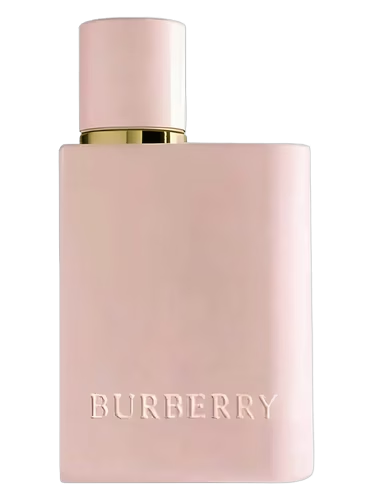
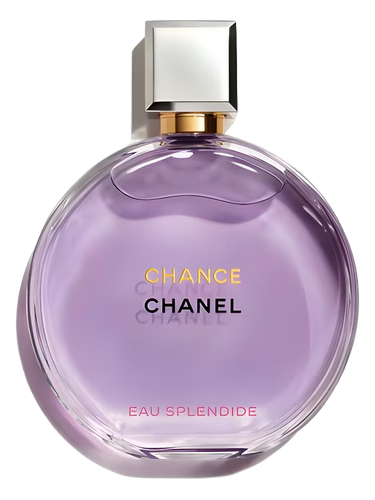
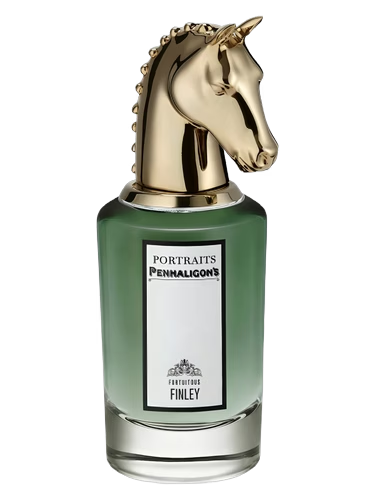
What is Begonia?
Begonia is a tropical and subtropical plant primarily used in perfumery as an abstract or fantasy floral note because natural essential oil is difficult to extract from its delicate flowers.What does Begonia smell like?
It features a delicate, transparent, and dewy floral scent with watery green or slightly metallic nuances, often compared to the freshness of cucumber or melon.How is Begonia essence extracted?
Modern perfumery creates this note through synthetic reconstruction or advanced methods like solvent extraction and supercritical CO2 extraction to capture its ethereal aroma.What are some top perfumes featuring Begonia?
Notable fragrances include Lisa Hoffman Brazilian Begonia, Bvlgari Mon Jasmin Noir L'Eau Exquise, and Gucci Flora Gorgeous Gardenia.When are Begonias in season?
They typically bloom from summer until the first frost in temperate regions, though specific varieties like rhizomatous begonias can produce flowers in late winter.