Fragrance Notes Are Layers Of Scent That Are Layered To Form The Final Fragrance. Fragrance Notes Are Categorised Into Three Main Elements Based On How Long They Take To Evaporate, And How Long They Typically Last Following Application: Top Notes, Heart Notes And Base Notes.
Beetroot
In perfumery, beetroot offers a unique, earthy, and slightly sweet aroma, often described as damp soil or mineralic. It provides a grounding, rooty depth and a touch of vegetable sweetness, sometimes with subtle powdery nuances. It is used to add textural complexity and an unexpected twist to compositions.

Origin & Extraction Of Beetroot
The use of beetroot in perfumery is a relatively modern and avant-garde development. Since it is not a traditional material like classic florals or citruses, fragrances featuring beetroot often position themselves as conceptual or artistic. Perfumers began incorporating this unique note to introduce unexpected earthy, mineralic, and rooty textures to compositions, providing a grounded depth and a subtle, damp sweetness. This choice appeals to those seeking an unconventional twist beyond typical scent profiles and is often featured in niche and experimental fragrance lines.
Beetroot notes are used to evoke the scent of damp soil, cold stone, or raw vegetables, offering a compelling contrast, especially when paired with brighter or sweeter accords. This duality allows the perfume to transition from an unexpected opening to an intriguing heart. The distinctive aroma challenges conventional perfume structures, providing a dense, grounded anchor that prolongs the wear of lighter notes and adds an unmistakable, natural quality to modern compositions like those seen in specialized lines such as Comme des Garçons Series 5.
Extraction Methods of Beetroot
Historically, beetroot extraction was a straightforward process of manual juicing or concentrated decoction. Traditional methods involved washing, peeling, and crushing the fresh roots to release their vibrant red juice, which was then filtered through muslin cloth. Another historical approach was the decoction method, where chopped beetroots were simmered in water for extended periods to create a dense, pigment-rich liquid used for culinary coloring and medicinal purposes.
Modern commercial extraction has evolved into sophisticated industrial processes designed to maximize the yield of bioactive compounds like betalains and nitrates. Current techniques include Soxhlet extraction using aqueous ethanol or methanol, which is highly efficient for recovering phenolic compounds. Advanced "green" technologies such as ultrasound-assisted extraction (UAE) and supercritical fluid extraction (SFE) with CO2 are now employed to improve processing speed and selectivity while avoiding high heat that can degrade delicate pigments. In industrial plants, the extract is often clarified and then spray-dried to create stable, high-value powders for the food and cosmetic industries.
Beetroot is a truly avant-garde note, meaning it is not found in classic perfumery but rather in modern, niche, and experimental compositions designed to evoke specific textures and sensations. Its earthy, mineralic, and slightly sweet character is utilized to ground abstract compositions and add a surprising natural twist. One of the most famous examples featuring this note is **DS & Durga's Beetroot and Vetiver**, which showcases the root's damp soil texture alongside the smoky, woody facets of vetiver, creating a fragrance that is deeply textural and unexpected.
- * * *
Another notable fragrance is **Demeter Fragrance Library's Beetroot**, which is a hyper-realistic, solinote presentation. While Demeter often aims for literal interpretation, this scent highlights the vegetable's unique sweet-earth contrast, appealing to those seeking fragrances that step outside traditional olfactory categories. The note’s mineralic quality, often likened to damp earth or petrichor, provides an intellectual freshness distinct from typical citrus or aquatic notes.
- * * *
In addition to solinote fragrances, beetroot can be blended to achieve a darker, more brooding effect. It contributes a deep, rooty facet when paired with darker notes like patchouli, leather, or incense, lending a velvety earthiness. Although specific mainstream blockbusters have yet to feature it prominently, its use in brands like **Comme des Garçons** or other niche houses demonstrates its potential to add depth, complexity, and a unique, slightly vegetal sweetness that is both intriguing and unsettlingly beautiful.
- Beets are a versatile cool-season crop that thrives during two primary growing windows in the spring and fall
- The peak harvest season generally spans from mid-summer through late fall, typically starting in June or July and lasting until the first hard frost
- In warmer climates, such as USDA Zone 9 and above, beets can be planted in the fall to provide a steady winter harvest
- Due to their hardiness and ability to be cold-stored or heavily mulched in the ground, beetroots remain a staple winter vegetable available through January and February
- The delicate edible greens are best enjoyed when freshly picked during the primary harvest months, as they spoil much faster than the hardy roots
Sustainability Of Beetroot
Sustainability of Beetroot
- Promoting a circular economy by repurposing agricultural by-products, such as skins, pulp, and leaves, into high-value nutraceuticals, cosmetics, and food additives
- Adoption of organic farming practices and natural pest control methods to reduce reliance on synthetic chemicals and enhance soil fertility
- Implementation of precision agriculture and water conservation techniques, like drip irrigation, to optimize resource use and reduce environmental impact
- Supporting soil health and biodiversity through strategic crop rotation with legumes and grains to prevent disease and maintain long-term productivity
- Establishing sustainable supply chains that boost local economies and provide fair opportunities for smallholder farmers and rural communities
Trivia
The distinct earthy aroma of beetroot is primarily caused by geosmin, the same organic compound responsible for the scent of "petrichor" that occurs when rain falls on dry soil.
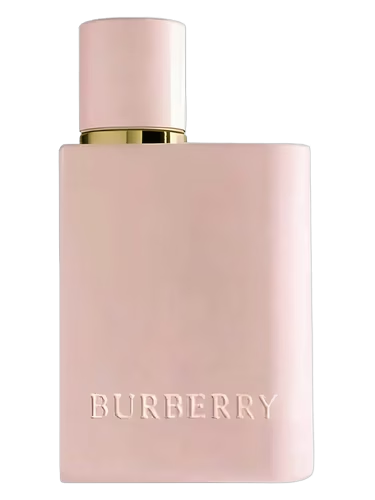
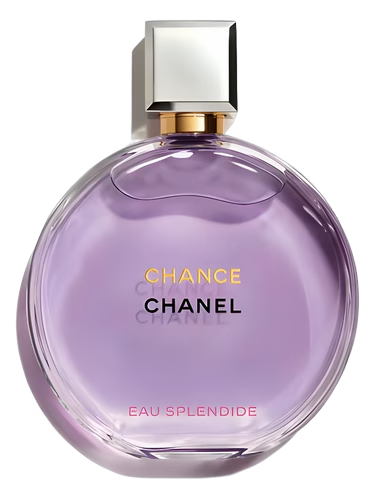
Most Popular Scents Using Beetroot

What is Beetroot?
Beetroot is an avant-garde perfume note used in modern and niche perfumery to provide a unique earthy, mineralic, and rooty depth to fragrance compositions.What does Beetroot smell like?
It offers a damp soil or mineralic aroma with a touch of vegetable sweetness and subtle powdery nuances, often compared to the scent of petrichor or cold stone.How is Beetroot essence extracted?
The essence is typically obtained through maceration, though modern industrial methods include Soxhlet extraction and advanced "green" technologies like supercritical fluid extraction.What are some top perfumes featuring Beetroot?
Notable fragrances include L'Artisan Parfumeur Musc Amarante, Comme des Garçons Rouge, Diptyque Kyoto, and DS & Durga Beetroot and Vetiver.When is Beetroot in season?
Beetroot is a cool-season crop with primary harvest windows in the spring and fall, though its hardiness allows it to be available as a winter staple through February.