Fragrance Notes Are Layers Of Scent That Are Layered To Form The Final Fragrance. Fragrance Notes Are Categorised Into Three Main Elements Based On How Long They Take To Evaporate, And How Long They Typically Last Following Application: Top Notes, Heart Notes And Base Notes.
Barberry
Barberry offers a complex, tart, and fruity aroma often described as simultaneously sour and sweet, reminiscent of cranberries or pomegranates but with a slight woody-green edge. It adds a bright, tangy lift and depth to compositions, particularly in fruity, chypre, and gourmand fragrances.

Origin & Extraction Of Barberry
The use of Barberry in perfumery is a relatively modern trend, reflecting a shift toward utilizing exotic and complex fruity notes that offer both sweetness and tartness. Unlike classic citrus notes (like Bergamot) or traditional florals (like Rose), Barberry does not have a long, established history in foundational European perfumery structures like the Eau de Cologne. Its introduction is tied to the late 20th and early 21st centuries, coinciding with the rise of the fruity-gourmand and modern chypre fragrance families, which demanded more distinctive, sophisticated fruit accents.
In contemporary compositions, Barberry is valued precisely for its complex profile—a tangy, slightly sour note reminiscent of cranberry or pomegranate, balanced by a subtle woody and green edge. This characteristic makes it a powerful counterpoint, often strategically employed to cut through the richness of gourmand notes (like vanilla or caramel) or to add a bright, dynamic lift to deep chypre bases. Its use signifies a modern approach to fruit notes, providing a more refined, adult fruitiness that enhances complexity and wearability.
Extraction Methods of Barberry
Historically, barberry extraction relied on traditional manual methods such as maceration, infusion, and decoction. These processes involved soaking or boiling parts of the plant, such as the dried root bark, stems, or berries, in water or alcohol to release active constituents like berberine. In medicinal and culinary traditions, the berries were often juiced or dried, while the bitter barks and roots were decocted to create therapeutic washes and tinctures.
Modern commercial and scientific extraction has evolved to use more precise and efficient techniques to maximize the yield of sensitive compounds. Current methods frequently employ solvent extraction using ethanol, methanol, or acetone, often assisted by a reflux system or Soxhlet apparatus. Advanced technologies now include ultrasound-assisted solvent extraction (USE), microwave-assisted extraction (MAE), and supercritical fluid extraction (SFE) using carbon dioxide. These latest methods significantly reduce extraction time and use lower temperatures to prevent the degradation of heat-sensitive alkaloids and anthocyanins, ensuring a higher quality and more concentrated extract.
Barberry, with its tart, sweet, and slightly woody profile, is used in modern perfumery to add a sophisticated, tangy lift. One notable example of its use is in **La Petite Robe Noire Ma Robe Hippie-Chic** by Guerlain, where the note complements other fruits and florals to create a bright, contemporary signature. This use of Barberry provides a sharp, uplifting opening that cuts through the composition’s sweetness, lending it energy and refinement.
- Barberry is also prominently featured in the heart of some niche fragrances, often to enhance red berry accords or to provide a fresh contrast to richer, deeper bases.
In compositions like **Barberry & Patchouli** by Jo Malone (a limited edition scent), the barberry note is leveraged for its complexity—its tart fruitiness paired with the earthiness of patchouli creates a surprising and elegant balance. It is valued not just as a simple fruit note, but for its ability to bridge zesty top notes with woody or chypre structures, adding longevity and a distinctive character to the final blend.
- The unique sour-sweet profile of Barberry makes it a favorite for perfumers seeking an exotic alternative to common red fruits like raspberry or cherry.
Although Barberry is not a historical staple like Bergamot, its modern application often appears in "gourmand-fruity" or contemporary chypre compositions. Its subtle green-woody edge, noted in the odor profile, helps it integrate seamlessly into more complex structures, moving beyond the typical volatile citrus opening and providing a nuanced, lasting fruit impression, such as in certain flankers or limited-edition launches from designers focused on bright, sophisticated accords.
Sustainability Of Barberry
Sustainability of Barberry
- Mitigating ecological disruption by controlling invasive spread into native woodlands and protecting biodiversity
- Reducing public health risks through integrated pest management that lowers tick populations associated with Lyme disease
- Promoting land restoration by removing plants that alter soil pH and displace native spring ephemerals
- Utilizing mechanical removal and targeted herbicide applications to minimize non-target damage and soil activity
- Supporting agricultural stability by eradicating varieties that act as alternate hosts for cereal stem rust
Trivia
In the 18th century, the Barberry was so widely believed to be a carrier of wheat rust that it was the subject of the first-ever American legislation against an invasive species, long before it became a prized note for its tart, jewel-red scent in modern perfumery.
Most Popular Scents Using Barberry
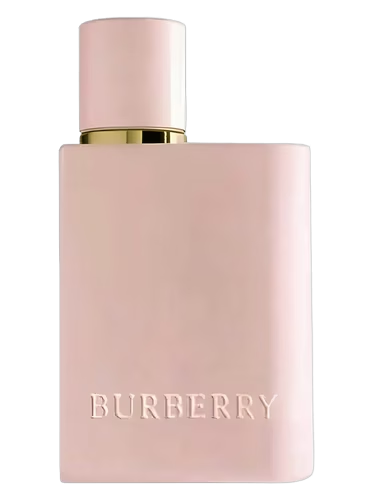
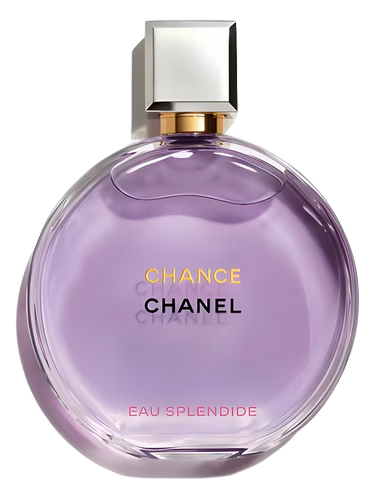
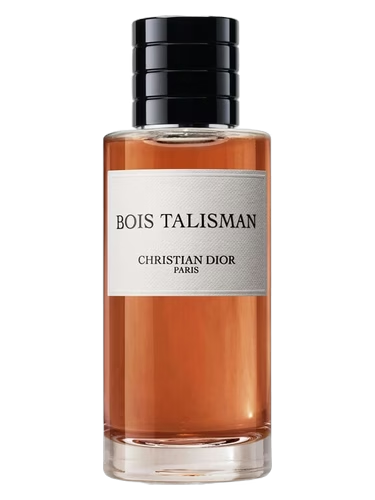
What is Barberry?
Barberry is a modern fragrance note derived from the Berberis genus, known for its tart red berries and use in fruity, chypre, and gourmand compositions.What does Barberry smell like?
It features a complex, tart, and fruity aroma that is simultaneously sour and sweet, similar to cranberries or pomegranates with a subtle woody-green edge.How is Barberry essence extracted?
In modern perfumery, Barberry is typically obtained through solvent extraction methods, such as using ethanol or supercritical CO2, to preserve its sensitive aromatic compounds.What are some top perfumes featuring Barberry?
Notable fragrances include Guerlain La Petite Robe Noire Ma Robe Hippie-Chic, Jo Malone Barberry & Patchouli, L'Artisan Parfumeur Al Oudh, and Memo Paris Siwa.When is Barberry in season?
The shrub blooms with yellow flowers in spring (March to May), while the signature tart red berries ripen in late summer and autumn.