Fragrance Notes Are Layers Of Scent That Are Layered To Form The Final Fragrance. Fragrance Notes Are Categorised Into Three Main Elements Based On How Long They Take To Evaporate, And How Long They Typically Last Following Application: Top Notes, Heart Notes And Base Notes.
Banana Flower
Banana Flower offers a unique, creamy tropical profile. It blends bright, sweet, fruity notes (reminiscent of sharp, ripe banana, passionfruit, and pineapple) with delicate floral and clean green facets. It is often used to create a cheerful, exotic, and subtly creamy texture in compositions.

Origin & Extraction Of Banana Flower
The use of Banana Flower (Musa sapientum) as a dedicated note in fine perfumery is a relatively contemporary development, following a wider trend toward exploring exotic and tropical floral ingredients. Unlike traditional European flowers like Rose or Jasmine, which have centuries of history in classical perfumery, tropical and fruit-related floral notes such as Banana Flower began to gain prominence in the late 20th and early 21st centuries. Perfumers discovered its unique profile—a blend of delicate floral, green, and creamy sharp fruit facets—provided an unusual way to introduce a sunny, exotic texture, moving beyond the standard white floral or green notes.
In modern fragrance compositions, the Banana Flower note is utilized to lend a subtle, creamy sweetness and a fresh, uplifting green accent. It is often employed strategically in niche and designer fragrances aiming for photorealistic tropical atmospheres or cheerful, high-definition floral arrangements. Its role is usually to bridge the bright, fruity top notes with deeper, muskier or amber bases, offering an element of authentic, slightly unconventional, tropical complexity that appeals to contemporary tastes seeking novel exotic accords.
Extraction Methods of Banana Flower
Historically, aromatic extracts from banana flowers and leaves were obtained through traditional hot water extraction and simple maceration. This involved pulverizing washed and dried plant material, followed by boiling in water and concentrating the resulting liquid under reduced pressure. Another traditional technique for delicate blossoms, known as enfleurage, involved placing petals on a layer of odorless fat for several days until the fragrance was absorbed, then extracting the scent using alcohol. In Southeast Asian regions, simple infusion and decoction methods have also been used for centuries to capture the flower's medicinal and aromatic properties.
Modern extraction techniques have become significantly more advanced to improve yield and preserve sensitive compounds. Current methods include ultrasonic-assisted alkaline extraction, which uses high-frequency sound waves and sodium hydroxide to efficiently release proteins and volatile oils at lower temperatures. Steam distillation and hydrodistillation remain standard for producing essential oils, while solvent extraction with hexane is used to create concretes and absolutes. Additionally, innovative supercritical CO2 extraction is increasingly employed, using pressurized carbon dioxide as a safe, tunable solvent that evaporates completely, leaving a pure extract that closely replicates the original scent of the fresh banana flower without heat degradation.
The Banana Flower note is utilized in modern perfumery to introduce a distinct creamy, tropical, and subtly green texture, making it perfect for exotic compositions that seek to move beyond traditional florals. Its unique profile, which hints at ripe banana, passionfruit, and clean green facets, offers an unconventional sweetness that has found favor in niche and contemporary designer fragrances. A prime example of this application is in scents that aim to evoke lush, tropical environments, often pairing the Banana Flower with creamy white florals and solar notes to enhance the feeling of warmth and paradise.
- One notable fragrance that highlights the exotic and slightly creamy side of the Banana Flower note is **Jo Malone London's Tropical Cherimoya Cologne**, where it contributes to a vibrant, fruit-forward opening, enhancing the overall tropical and slightly custard-like texture of the cherimoya. This fragrance demonstrates how the note can support a complex fruity heart, providing lift and an authentic jungle feel.
Beyond strictly tropical perfumes, the Banana Flower note is also valued for its ability to bridge sharp, fruity top notes with deeper, more enduring bases like musks and vanilla. This versatility allows it to add a sophisticated, cheerful brightness without the common volatility of pure citrus. For instance, some artisanal brands integrate Banana Flower into gourmand or sweet floral compositions to inject an unexpected, fresh green dimension, creating a more luminous and airy result than heavy synthetic fruit notes.
- Another fragrance known to feature this element is **Dolce &Gabbana's L’Impératrice 3**, in which the creamy, slightly fruity facets of Banana Flower (or a similar tropical accord) contribute to the vibrant, juicy opening that gives the scent its effervescent, celebratory character.
The contemporary appeal of Banana Flower lies in its specificity; it moves away from generic 'tropical' accords toward a more photorealistic botanical scent. This detailed approach is particularly popular among niche houses that prioritize unique, high-definition natural materials. When included, it signals a deliberate choice to capture a sunnier, slightly unconventional freshness that stands out from the heavily marketed rose or jasmine scents, appealing to consumers seeking novel and exotic aromatic experiences.
Sustainability Of Banana Flower
Sustainability of Banana Flower
- Promoting a circular economy by upcycling banana blossoms, which are typically discarded as agricultural waste, into high-value products like flour, natural dyes, and meat alternatives
- Utilizing sustainable extraction methods, such as accelerated solvent extraction (ASE), to efficiently isolate bioactive compounds while reducing energy consumption and environmental impact
- Supporting regional economies and food security by developing nutritious, plant-based food options and creating additional income streams for smallholder farmers
- Implementing climate-smart agricultural practices, including the use of banana plant residues as organic groundcover and compost to enhance soil biodiversity and moisture retention
- Reducing the environmental footprint of the textile and food industries by replacing synthetic dyes and animal proteins with biodegradable, non-toxic alternatives derived from the inflorescence
- Adopting integrated pest management and biocontrol strategies to minimize the use of harmful chemical herbicides and pesticides in banana cultivation
Trivia
Unlike the sweet, fruity aroma of the banana fruit, the banana flower has a scent profile that is often described as vegetal and starchy, bearing a closer resemblance to the earthy, savory smell of an artichoke heart than to a banana.
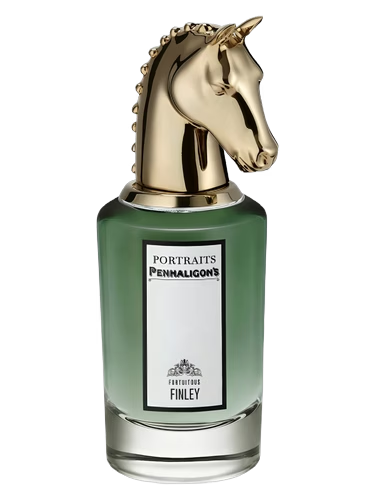
Most Popular Scents Using Banana Flower


What is Banana Flower?
Banana Flower is a tropical floral note from the Musa sapientum plant, used in contemporary perfumery to provide a sunny, exotic texture and bridge fruity top notes with deeper musky or amber bases.What does Banana Flower smell like?
It features a unique, creamy tropical profile that blends bright, sweet fruit notes of ripe banana and passionfruit with delicate floral and clean green facets.How is Banana Flower essence extracted?
The essence is primarily obtained through solvent extraction to create concretes and absolutes, though modern techniques like supercritical CO2 extraction are increasingly used to preserve its fresh scent.What are some top perfumes featuring Banana Flower?
Notable fragrances featuring this note include Marc Jacobs Daisy Wild, Jo Malone London Tropical Cherimoya Cologne, Navitus Parfums Ambrosia Imperiale, and Borntostandout Nanatopia.When is Banana Flower in season?
The flower typically follows a seasonal cycle in tropical climates, with blooming most commonly occurring during the warm, humid months between June and October.