Fragrance Notes Are Layers Of Scent That Are Layered To Form The Final Fragrance. Fragrance Notes Are Categorised Into Three Main Elements Based On How Long They Take To Evaporate, And How Long They Typically Last Following Application: Top Notes, Heart Notes And Base Notes.
Banana
Banana in perfumery offers a sweet, creamy, and slightly green tropical aroma, often evoking a sense of ripe fruit with subtle vanilla and lactonic nuances. It is typically used to enhance fruity and gourmand compositions, adding a smooth, enveloping texture and a bright, comforting sweetness, rarely as a dominant note.

Origin & Extraction Of Banana
The Banana note, while not a classic fixture in historical perfumery, has established a specialized place in modern, gourmand, and avant-garde fragrances. Its profile—sweet, creamy, and subtly green—is employed to introduce a unique, smooth texture and a gentle, enveloping sweetness that distinguishes it from more common notes like vanilla or tonka bean. Perfumers utilize it to amplify the tropical aspect of a composition, particularly when blending with white florals such as tuberose or ylang-ylang, which naturally possess creamy, banana-like nuances, thereby reinforcing the exotic and velvety texture of the flowers.
The note’s most deliberate use is often seen in niche perfumery, where it can provide a playful or complex aroma, as exemplified by Zoologist Bat (Original Formulation), which famously used a prominent banana note. It also appears subtly in modern interpretations of freshness, like in Dior Homme Sport (2017), where it lends a creamy undertone to the citrus. The inclusion of banana signifies a creative choice to offer a subtle, comforting exoticism and novelty, elevating a scent to a uniquely tropical-gourmand category.
Extraction Methods of Banana
Historically, banana essences and aromatic compounds were obtained through manual homogenization of the ripened pulp or labor-intensive separation and extraction of the peel. Traditional techniques involved enzymatic digestion of the white inner fibril layer of the peel to release volatile components, which were then recovered through suction and condensation. For medicinal uses, simple maceration of peels in water or basic spirits was common in various cultures to create topical extracts.
Modern extraction methods have evolved to include sophisticated solvent recovery and thermal processes. Current commercial production often utilizes acid leaching and blanching of banana pulp followed by alcohol extraction using low-carbon alcohols like ethanol or isopropyl alcohol. The resulting extract is then concentrated through vacuum evaporation and spray-dried into a stable powder. For higher purity, supercritical fluid extraction and molecular distillation are employed to capture delicate aromatic molecules without the high heat that can degrade the fruit's complex profile.
In addition to natural extraction, the banana fragrance is frequently produced synthetically through Fischer esterification. This process reacts isopentyl alcohol with acetic acid in the presence of a catalyst, such as sulfuric acid or modern ion-exchange resins, to create isoamyl acetate. Recent advancements in this field include microwave-assisted esterification (MAE), which significantly improves yield and energy efficiency compared to traditional heating or ultrasonic methods.
The Banana note, while subtle, is crucial in certain classic and niche gourmand fragrances, lending a creamy, tropical sweetness and smooth texture. One of the most referenced uses is in **Ylang Ylang Nosy Be** by Perris Monte Carlo, where the banana facet of the ylang-ylang flower is highlighted, creating an enveloping, luxurious sweetness that rounds out the tropical floral composition.
- **Fleur de Bananier** by L'Artisan Parfumeur features the green, waxy, and slightly lactonic scent of the banana flower, rather than the fruit itself.
In contemporary perfumery, the banana note frequently appears in independent and niche releases designed for a distinctive tropical or gourmand effect. For instance, some interpret the note in a more candied or dessert-like manner, blending it with vanilla, rum, or coconut to evoke classic tropical cocktails or baked goods. This approach provides a unique, comforting layer of sweetness that avoids the common citrus or red-fruit clichés.
- **Banana Flambée** (an imaginary or conceptual perfume, as the note is often used conceptually) would perfectly capture the note's ability to transition from green fruitiness to rich, caramelized gourmand depth.
Although it rarely headlines a composition, the sweet, creamy nature of Banana is often seamlessly integrated into white floral accords, particularly Tuberose and Ylang-Ylang, where it enhances their inherent tropical, slightly fruity facets. This gives the floral note a more voluptuous and ripe character, transforming a simple floral into a rich, complex tropical tapestry, making it essential for adding depth and substance to vacation-inspired scents.
Sustainability Of Banana
Sustainability of Banana
- Promoting a circular economy by recycling plastic bunch covers into packaging materials and repurposing plant waste into organic compost to enhance soil fertility
- Adoption of climate-smart farming practices such as intercropping and maintaining ground cover to prevent soil erosion, conserve moisture, and reduce herbicide dependency
- Implementing water-efficient management through filtration systems that clean processing water before returning it to the environment and adopting water-saving irrigation
- Establishing fair trade partnerships and voluntary sustainability standards to ensure living wages, occupational health and safety, and socio-economic resilience for workers
- Transitioning toward integrated pest management and organic production to eliminate hazardous pesticides, protecting both local biodiversity and the health of plantation workers
Trivia
The word banana originates from the Arabic word banan, meaning finger, and the fruit was indirectly responsible for the founding of the French niche perfume house L'Artisan Parfumeur after its founder was challenged to create a scent to match a banana costume.
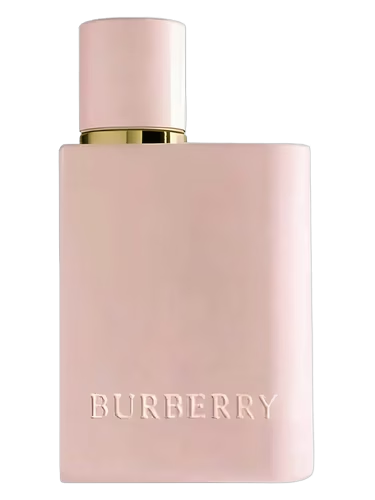
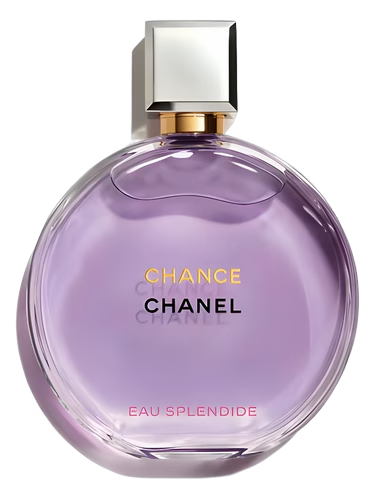
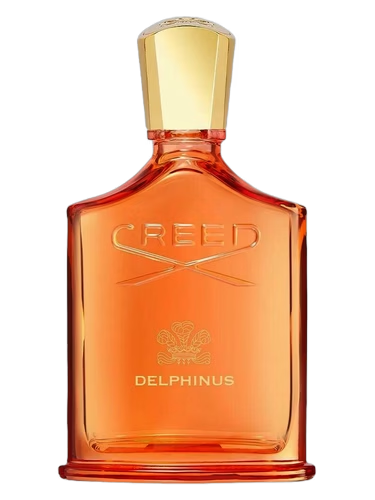
Most Popular Scents Using Banana
What is the Banana note in perfumery?
Banana is a modern fragrance note that offers a sweet, creamy, and slightly green tropical aroma, often used to add a smooth texture and comforting sweetness to gourmand and fruity compositions.What does Banana smell like?
It features a scent profile of ripe fruit with subtle vanilla and lactonic nuances; unripe or green banana notes can add a crisp, starchy, or airy freshness to a fragrance.How is Banana essence extracted?
Because natural extraction from the fruit is difficult, the aroma is typically recreated synthetically using compounds like isoamyl acetate or through sophisticated laboratory processes like molecular distillation.What are some top perfumes featuring Banana?
Popular fragrances include Marc Jacobs Daisy Wild, Kayali Maui in a Bottle Sweet Banana | 37, L'Artisan Parfumeur Bana Banana, and Comptoir Sud Pacifique Vanille Banane.When is Banana in season?
As tropical perennials, bananas can grow year-round in warm, humid climates, though in temperate regions, their active growth is concentrated between late spring and early autumn.