Fragrance Notes Are Layers Of Scent That Are Layered To Form The Final Fragrance. Fragrance Notes Are Categorised Into Three Main Elements Based On How Long They Take To Evaporate, And How Long They Typically Last Following Application: Top Notes, Heart Notes And Base Notes.
Baby’s Breath
Baby's Breath offers a delicate, fresh green, and slightly sweet opening with herbaceous and milky nuances. As it develops, it transforms into a creamy, subtle, and clean woody composition. It provides a soft, uplifting, and sophisticated floral-green touch to fragrances.

Origin & Extraction Of Baby’s Breath
Baby's Breath (Gypsophila) has traditionally been used more for its visual appeal as a filler flower in bouquets than for its scent. As a fragrant material, it is a relatively modern addition to the perfumer's palette. It doesn't yield a traditional essential oil through distillation and its olfactory profile—delicate, green, and subtly milky—is typically recreated using headspace technology or synthetic accords. Its emergence reflects a contemporary trend in perfumery toward capturing the aroma of less obvious natural scents and creating photorealistic floral-green compositions that emphasize softness and subtlety.
The note is primarily valued in modern perfumery for its ability to add a tender, airy, and clean texture to a fragrance, often used to bridge brighter top notes with a creamy, soft heart. It offers a sophisticated alternative to traditional heavy white florals, providing an effect of sheer botanical freshness. Its use is most common in niche and designer fragrances aiming for a light, delicate, and ethereal signature, often supporting compositions categorized as clean florals or subtle greens.
Historically, the aromatic and decorative properties of Baby's Breath (Gypsophila) have been captured through traditional air-drying and pressing techniques. For centuries, practitioners have used simple methods such as hanging bunches upside down in warm, dark, and well-ventilated spaces or placing delicate stems between absorbent paper in flower presses. These traditional techniques focus on slow moisture removal to preserve the flower's bright white color and whimsical shape without the use of complex machinery.
In modern floral processing and commercial applications, advanced hydration and opening techniques are utilized to maximize the plant's aesthetic impact. Recent methods include the use of rapid hydration solutions, commercial floral foods containing fungicides, and "popcorn" opening techniques where stems are placed in hot water (100 °F to 110 °F) mixed with bleach or specialized conditioners to force buds to open quickly. Furthermore, because the plant is highly sensitive to ethylene, modern storage involves precision humidity control and ventilation to prevent wilt and browning, while cutting-edge cellular extraction methods are occasionally explored in specialized botanical research to capture its subtle volatile compounds.
The Baby's Breath (Gypsophila) note is a contemporary addition to perfumery, favored for its ability to convey a delicate, airy, and clean floral-green texture. Unlike historically heavy florals, this note is often utilized in modern compositions to achieve a photorealistic botanical freshness. It doesn't typically form the centerpiece of mass-market fragrances but is instead used as a sophisticated textural element to provide lift and softness, appealing to those who prefer subtle, ethereal scents. This focus on nuance ensures that even when supporting brighter top notes, the Baby's Breath note lends a creamy, non-indolic smoothness to the heart.
- One artisanal example featuring this note is the handmade fragrance, Baby's Breath Eau de Parfum by Modern Skin Alchemy. This composition highlights the note’s delicate nature, blending it with complementing facets like grapefruit, bergamot, tea leaf, and musk.
- Another modern fragrance that incorporates the subtle, green freshness of Baby's Breath in its structure is Green Clary Sage & Basil by COLABO, launched in 2021.
Due to the difficulty in extracting a natural essential oil, the Baby's Breath note is primarily recreated using headspace technology or synthetic accords, which allows perfumers to control its unique profile: a balance of fresh green, slightly sweet, and milky undertones. This technical necessity positions the note mainly within niche and contemporary designer fragrances that prioritize complex, often abstract, clean floral or subtle green categories, offering a refined alternative to traditional white floral bouquets.
Sustainability Of Baby’s Breath
Sustainability of Baby's Breath
- Promoting eco-friendly floral practices by utilizing its drought-tolerant nature, which requires significantly less water than traditional cut flowers
- Reducing the carbon footprint of floral arrangements by encouraging the use of dried stems, which extend product longevity and eliminate the need for frequent replacements
- Supporting domestic and field-grown sourcing to decrease transport-related emissions and fuel consumption compared to imported varieties
- Implementing invasive species management through responsible disposal protocols, such as bagging spent stems for landfills rather than composting to prevent seed dispersal
- Enhancing sustainable garden design by using it as a hardy, pest-resistant perennial that thrives in poor soils without the need for synthetic fertilizers
Trivia
The common name for baby's breath is often attributed to its scent, which many describe as smelling like sour milk or a baby's spit-up.
Most Popular Scents Using Baby’s Breath
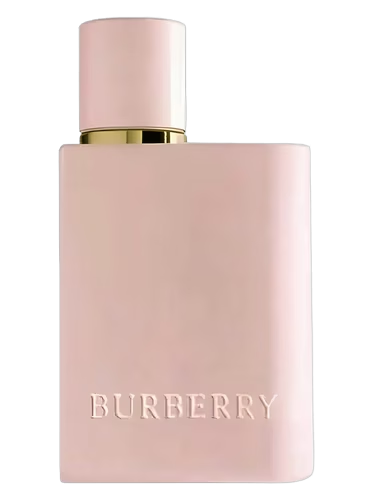
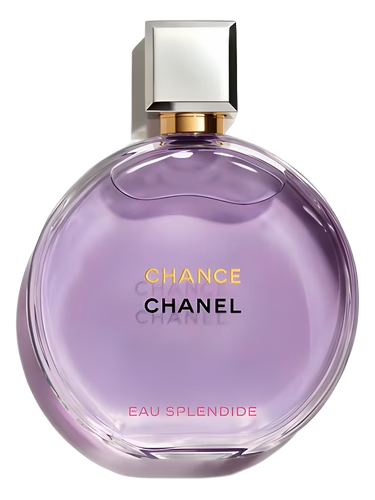
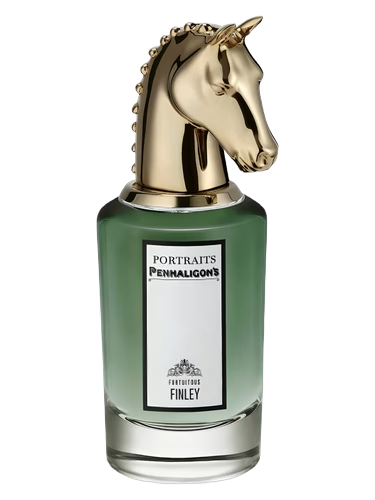
What is Baby's Breath?
Baby's Breath, or Gypsophila, is a delicate flower traditionally used as a floral filler, now valued in modern perfumery as a contemporary note used to create airy, ethereal, and clean botanical textures.What does Baby's Breath smell like?
The note offers a delicate, fresh green, and slightly sweet aroma with milky and herbaceous nuances that transitions into a subtle, creamy, and clean woody finish.How is Baby's Breath essence extracted?
Natural Baby's Breath does not yield a traditional essential oil through distillation; instead, its scent is typically recreated by perfumers using headspace technology or synthetic accords to capture its soft, powdery profile.What are some top perfumes featuring Baby's Breath?
Fragrances featuring this note include Modern Skyn Apothecary Baby's Breath, 1509 Sophia, Modern Skin Alchemy Baby's Breath, and COLABO Green Clary Sage & Basil.What does Baby's Breath symbolize?
In addition to its use in scent, the flower is a powerful symbol of purity, innocence, and everlasting love, making it a staple for weddings and new beginnings.