Fragrance Notes Are Layers Of Scent That Are Layered To Form The Final Fragrance. Fragrance Notes Are Categorised Into Three Main Elements Based On How Long They Take To Evaporate, And How Long They Typically Last Following Application: Top Notes, Heart Notes And Base Notes.
Azteca Lily
Azteca Lily (or Tiger Lily) presents an intensely opulent, tropical white floral scent. It features a bright, green opening followed by a creamy, heady sweetness, often with spicy and slightly indolic undertones. It conveys a rich, exotic character, adding lush depth and narcotic intensity to floral compositions.

Origin & Extraction Of Azteca Lily
The Azteca Lily, often referred to as Tiger Lily (Lilium tigrinum), is native to East Asia, specifically China and Japan, rather than the Aztec regions of Central America, despite one of its common names. Unlike classic white florals such as jasmine or tuberose, which have centuries of history in fine European perfumery, the Tiger Lily note is a relatively modern concept. The plant itself is not easily extracted into a natural oil for commercial perfumery, leading the note to be largely synthesized in a lab to capture its intense, opulent, and slightly spicy/indolic aroma.
The relevance of the Azteca Lily/Tiger Lily note in perfumery grew with the rise of exotic and lush tropical floral compositions, particularly in the late 20th and early 21st centuries. Perfumers utilize this rich, heady synthesized scent to impart a sense of dramatic, creamy sweetness and narcotic intensity, often alongside other tropical white florals. While lacking the foundational history of notes used in traditional Eau de Cologne, the Azteca Lily note is valued for providing a unique, vibrant, and deep floral character to contemporary and opulent fragrances.
Extraction Methods of Aztec Lily
Historically, the extraction of aromatic compounds from the Aztec lily (Sprekelia formosissima) involved traditional solvent extraction and simple maceration techniques. Ancient practices often relied on steeping the fragrant petals in fatty oils or spirits to capture their delicate, orchid-like scent for use in rudimentary perfumes and medicinal preparations. These labor-intensive "folk methods" were the primary means of preservation before the advent of modern industrial technology.
In modern perfumery, advanced methods such as steam distillation and volatile solvent extraction are used to produce essential oils and absolutes from the plant. Furthermore, innovative techniques like supercritical CO2 extraction are increasingly employed to capture a more complete and accurate aromatic profile without the use of high heat or harsh chemicals, ensuring the preservation of the flower's subtle, spicy, and velvet-like nuances. Research also explores orthogonal experimental methods to optimize the extraction of beneficial polysaccharides from related lily species, focusing on variables such as temperature, time, and repetition to maximize yield and therapeutic potential.
The Azteca Lily, often referred to as Tiger Lily, is celebrated in perfumery for its intense, opulent, and slightly spicy white floral character. Because the note is largely synthesized to capture its complex aroma, it lends itself perfectly to dramatic and lush compositions. One of the most recognizable designer fragrances that prominently features this tropical intensity is **Estée Lauder's Beyond Paradise**, where the lily note is blended with other exotic flowers to create a truly vivid and immersive tropical garden scent, emphasizing its creamy and heady sweetness.
- The synthetic nature of the Azteca Lily note allows perfumers to control its rich, slightly indolic facets, making it an excellent component for imparting depth and longevity to otherwise fleeting floral bouquets.
Due to its association with narcotic intensity and tropical warmth, the Azteca Lily note is frequently used in fragrances that aim to evoke sunny, exotic destinations. While not always explicitly named "Azteca Lily," the distinct scent profile contributes to the lushness found in many popular tropical white floral compositions, such as those that blend Tuberose, Gardenia, and other heady flowers. These fragrances rely on the lily's opulent sweetness to maintain a rich, almost edible floral texture throughout the wear time.
- A key example where this rich, dramatic white floral presence is central is in fragrances seeking high impact and sillage, complementing notes like vanilla, coconut, or amber for a powerful, warm effect.
In modern niche perfumery, the Azteca Lily provides a unique, bold alternative to more traditional lilies (like Casablanca or Calla Lily), offering a scent that is both green and creamy. Its dynamic profile is utilized by houses seeking to push the boundaries of conventional floral structures, resulting in fragrances that are highly recognizable and memorable. These contemporary uses leverage the note's slight spiciness and exotic undertones to add complexity, elevating the fragrance beyond a simple soliflore to a deeply layered tropical experience.
Sustainability Of Azteca Lily
Sustainability of Aztec Lily
- Promoting biodiversity conservation by encouraging the use of native ornamental species in urban landscapes and domestic garden designs
- Reducing environmental impact and resource consumption, such as local land and water misuse, by prioritizing endemic plants over imported exotic species
- Improving social and economic sustainability through the development of local markets and sustainable commercialization for Mexican growers and retailers
- Enhancing ecosystem resilience and preventing imbalances by avoiding the introduction of potentially invasive non-native species
- Advocating for the protection of genetic heritage and traditional knowledge associated with native Mexican flora to ensure long-term conservation
Trivia
The Azteca Lily, also known as the Jacobean Lily, is so visually striking that its genus name Sprekelia was named after a German lawyer who was so captivated by the flower's orchid-like, velvet appearance that he made its study his life's passion.
Most Popular Scents Using Azteca Lily

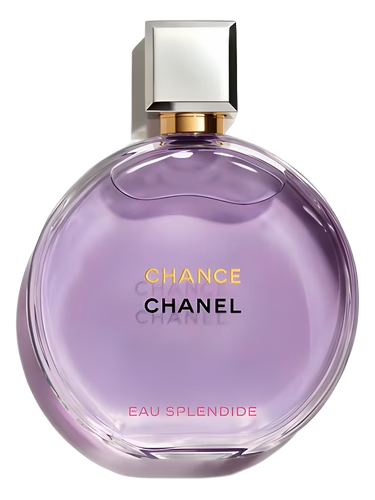

What is Azteca Lily?
Also known as the Tiger Lily, it is a tropical white floral note native to East Asia and valued in modern perfumery for its intense, opulent, and exotic character.What does Azteca Lily smell like?
It features a bright, green opening followed by a creamy, heady sweetness with spicy and slightly indolic undertones.How is Azteca Lily essence extracted?
Because the plant is difficult to extract naturally, the note is largely synthesized in laboratories or captured through advanced methods like steam distillation and supercritical CO2 extraction.What are some top perfumes featuring Azteca Lily?
Notable fragrances include Estée Lauder Beyond Paradise, Première Peau Azteca Lily, and O Boticário Lily Gardenia.When is Azteca Lily in season?
The plant typically blooms in late spring to early summer, often triggered by the first rains of the season in its native tropical habitats.