Fragrance Notes Are Layers Of Scent That Are Layered To Form The Final Fragrance. Fragrance Notes Are Categorised Into Three Main Elements Based On How Long They Take To Evaporate, And How Long They Typically Last Following Application: Top Notes, Heart Notes And Base Notes.
Azalea
Azalea offers a delicate, inviting floral note that is light, sweet, and airy. It is appreciated for its subtle, fresh character, often featuring gentle herbaceous undertones. Deciduous varieties can exhibit nuances of cinnamon or clove, providing a calming and natural charm without being intensely perfumed.

Origin & Extraction Of Azalea
The Azalea note, derived from the flowering shrub belonging to the Rhododendron genus, is a modern and challenging addition to the perfumer's palette. Historically, Azaleas were primarily valued for their ornamental beauty and vibrant colors rather than for their aromatic yield, as the extraction of a natural essential oil is generally impractical or impossible. As a result, the note relies on headspace technology and synthesis to recreate its delicate, sweet, and slightly green floral aroma. Its emergence in fine perfumery reflects a contemporary movement towards capturing the subtle, fleeting scents of nature—often referred to as 'silent florals'—which lack a traditional history in distillation.
In contemporary perfumery, the Azalea note is employed strategically to add a light, airy, and nuanced transparency to floral compositions, often serving to lighten heavier bouquets or provide a unique, fresh counterpoint to green or aquatic accords. Because of its synthetic nature, it lacks the centuries-old legacy of classics like Rose or Jasmine. Instead, its relevance lies in niche and modern designer fragrances where the perfumer aims to evoke a natural garden setting or a specific, delicate spring bloom, contributing a calming, fresh, and subtly herbaceous charm without overpowering the overall composition.
Extraction Methods of Azalea
Historically, the delicate aromatic compounds of azalea were often captured through enfleurage, an ancient and labor-intensive method where fresh flowers are placed on layers of purified animal or vegetable fat. Over several days, the fat absorbs the essential oils, which are then separated using alcohol to create an absolute. This cold process was essential because the heat from traditional steam distillation would irreparably damage the plant's fragile olfactory profile.
In modern perfumery, azalea notes are primarily obtained through volatile solvent extraction or advanced CO2 extraction. Solvent extraction involves washing the blossoms with a solvent like hexane to produce a concrete, which is then refined into an absolute. More recently, supercritical CO2 extraction has become a preferred latest method, as it uses pressurized carbon dioxide at low temperatures to act as a solvent. This technique is highly efficient and leaves no chemical residue, resulting in a pure, high-fidelity scent that remains truer to the living flower than traditional methods.
The Azalea note, valued for its delicate, airy, and slightly herbaceous floral profile, is frequently employed in modern perfumery to create light and nuanced compositions. Given that natural extraction is difficult, the note relies on synthetic technology to capture its subtle sweetness, making it a favorite for contemporary designer and niche houses seeking a fresh, subtle transparency. This lightness is ideal for spring and summer scents, often contributing to compositions that feel natural and calming rather than intensely heady.
- The note has been featured in fragrances such as Dolce&Gabbana's L'Imperatrice Royale, where its subtle floral character enhances a blend of cranberry and other florals, contributing to a modern, majestic fruity-floral scent. Another fragrance that utilizes Azalea's delicate nature is AZALÉE, EAU DE PARFUM by Lalique, which uses the note to capture the joyful spirit of a blooming garden, resulting in a radiant and feminine composition.
Azalea's subtle complexity is also used by niche brands to achieve unique and evocative scents. For instance, it can lend a delicate green facet to compositions, pairing well with aquatic or green accords, differentiating the fragrance from traditional "white floral" dominance. This versatility ensures that even though it is a 'silent floral,' it plays a strategic role in supporting other elements while adding a distinct, tender charm.
- More specialized fragrances, often found in artisanal lines, also highlight the Azalea note. Examples include Cashmere Crush by Ulta Beauty and Never Leave by Tokyo Milk Parfumerie Curiosite, suggesting its appeal across various market segments looking for a delicate, modern, and comforting floral touch.
Ultimately, while Azalea does not possess the historical weight of notes like Rose or Jasmine, its successful implementation in perfumes demonstrates a contemporary shift towards subtlety and natural realism. It serves as an excellent bridging note, capable of adding a refined floral layer and airiness without overwhelming the fragrance, securing its place in sophisticated modern bouquets.
- Primary blooming occurs during the spring, with early varieties starting in late February and late-season cultivars extending the display into June
- Reblooming varieties, such as the Encore series, provide additional floral displays throughout the summer and fall, often culminating in a significant autumn crescendo
- Flower bud initiation follows spring growth and continues through late summer, requiring a period of winter dormancy with temperatures below 50 degrees Fahrenheit to trigger the next year's blooms
- Deciduous varieties offer vibrant leaf color changes in the autumn, while evergreen types maintain their foliage to provide landscape interest during the winter months
- Planting and transplanting are ideally performed during the mild temperatures of fall or early spring to allow root establishment before seasonal extremes
Sustainability Of Azalea
Sustainability of Azalea
- Adopting specific soil management practices such as using organic-rich amendments and acidic mulches like pine straw and bark to maintain soil health and simulate native habitats
- Implementing water conservation techniques including morning watering at the base of plants to minimize evaporation and reduce the risk of foliage diseases
- Promoting biodiversity by planting diverse varieties with staggered blooming cycles and incorporating organic matter like leaf mold to support beneficial mycorrhizal fungi
- Utilizing natural and gentle acidifying agents such as coffee grounds and pine needle mulch to manage soil pH without heavy reliance on synthetic chemicals
- Employing protective maintenance strategies like precise pruning windows and targeted mulching to deter pests and ensure long-term plant resilience
Trivia
The name azalea is derived from the Greek word azaleos, meaning dry, and honey produced from their nectar is known as mad honey, which was famously used to defeat an invading army in ancient Turkey.
Most Popular Scents Using Azalea
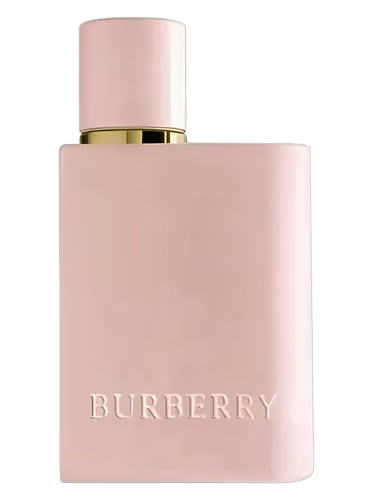
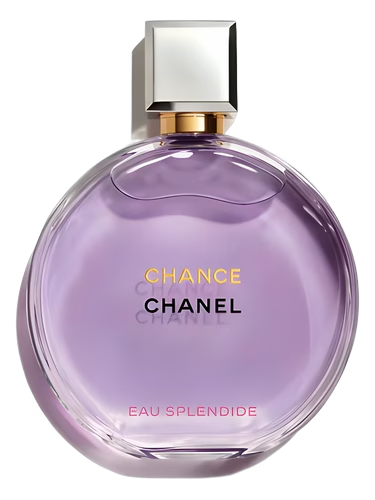
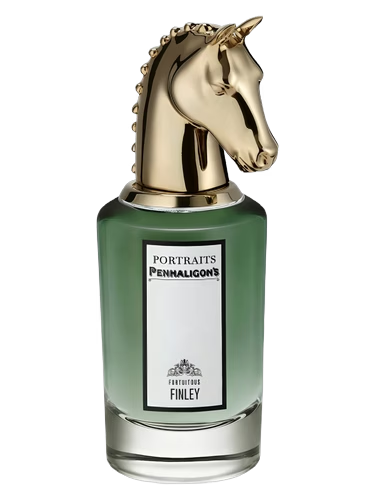
What is the Azalea note in perfumery?
Azalea is considered a 'silent floral' because the natural flowers do not yield a viable essential oil, requiring perfumers to recreate its delicate, sweet, and airy scent using synthetic molecules and headspace technology.What does Azalea smell like?
It offers a light, fresh, and slightly green floral aroma with subtle herbaceous undertones, often described as more transparent than rose and less heavy or indolic than jasmine.How is the scent of Azalea extracted?
While historically attempted via enfleurage, modern Azalea notes are primarily synthetic reconstructions or captured using advanced CO2 extraction and headspace technology to preserve the fragile olfactory profile of the living flower.What are some top perfumes featuring Azalea?
Notable fragrances including this note are Lalique Azalée, Dolce&Gabbana L'Imperatrice Royale, Attar Collection Azalea, and Bond No. 9 Greenwich Village.When is Azalea in season?
Azaleas primarily bloom in the spring, typically from late February through June, though reblooming varieties like the Encore series can provide additional floral displays in the summer and autumn.