Fragrance Notes Are Layers Of Scent That Are Layered To Form The Final Fragrance. Fragrance Notes Are Categorised Into Three Main Elements Based On How Long They Take To Evaporate, And How Long They Typically Last Following Application: Top Notes, Heart Notes And Base Notes.
Ashberry
The Ashberry note presents a complex profile, often described as a syrupy gourmand with a molasses-like sweetness balanced by a hint of bitterness. It features facets of juicy apricot and peach, layered with subtle white florals, vanilla, coconut, and an earthy, sometimes smoky undertone.

Origin & Extraction Of Ashberry
Ashberry, derived from the Mountain Ash tree, is not a traditional cornerstone of classical perfumery like notes sourced from ancient ingredients such as rose or frankincense. Historically, these berries were primarily utilized in folk medicine, cooking (often made into preserves or liquor to balance their natural bitterness), and regional traditions across Europe and Asia. The modern application of Ashberry in fine fragrance is relatively niche, emerging as contemporary perfumers seek unusual, evocative fruit profiles that offer complexity beyond standard orchard or tropical fruits. It is valued for its distinctive aroma, which incorporates both sweet, syrupy gourmand facets and a necessary hint of bitterness.
In modern perfumery, Ashberry serves as a creative element, particularly within the artisan and experimental fragrance sectors, where it is used to construct elevated gourmand, wild fruit, or forest-themed compositions. The complexity of its profile—blending molasses-like sweetness, fruity nuances of apricot and peach, and subtle earthy undertones—makes it excellent for bridging sparkling top notes with warmer, spicier heart and base notes like woods, vanilla, and patchouli. Its unique character ensures that fragrances featuring Ashberry achieve a sophisticated depth, offering a comforting and slightly nostalgic sweetness that stands apart from more common fruit notes like blackberry or raspberry.
Historically, ashberry (rowanberry) aromatic and bioactive compounds were obtained through simple manual processes, such as harvesting whole clusters after the first frost to reduce bitterness, followed by cleaning and crushing the berries. Traditional extraction often involved maceration in water or alcohol to capture the fruit's natural acids, particularly sorbic acid, which was historically used for its preservative and medicinal qualities during long voyages and for food storage.
Modern commercial extraction has evolved to utilize more efficient and selective techniques, such as solvent extraction using ethanol or aqueous solutions to produce high-purity extracts for the food and fragrance industries. Recent advancements include the application of subcritical and supercritical CO2 extraction, as well as ultrasound-assisted extraction, which allow for the capture of delicate volatile compounds and antioxidants without the use of high heat, ensuring a more potent and stable aromatic profile.
As a complex, sweet gourmand note that balances molasses-like richness with fruity facets of apricot and peach, Ashberry (Rowan fruit) is primarily found in niche and artisanal perfumery. While not a classic mainstream ingredient, it offers a distinctive profile perfect for adding unique complexity to modern oriental and fruity gourmand fragrances. The presence of its subtle earthy and smoky undertone allows it to bridge sweet top notes with deeper, resinous bases.
One notable example featuring this sophisticated profile is Guerlain L’Homme Idéal Eau de Parfum, where the Ashberry note contributes to the fragrance’s signature bittersweet fruitiness. It often works in conjunction with other notes like amaretto, leather, and vanilla to create a warm, slightly boozy, and intriguing texture that moves beyond simple sweetness, highlighting the fruit's complex bitterness.
Another area where Ashberry shines is in conceptual or indie creations. Due to its unique flavor profile—sweet, bitter, and slightly smoky—it is leveraged in fragrances designed to evoke memories or specific natural settings. It can be utilized to impart an autumnal quality, suggesting cooked fruit or jams, providing a dense, comforting sweetness that lasts well into the dry down, often paired with woody or resinous elements.
Sustainability Of Ashberry
Sustainability of Ashberry
- Promoting a circular economy by repurposing wood from harvested or fallen ash trees for high-quality furniture and board meeting tables
- Supporting biodiversity and ecosystem health through large-scale community initiatives to plant thousands of native tree seeds like acorns and buckeyes
- Implementing ecological management practices, including annual controlled burns, to eliminate invasive species and encourage the growth of native flora
- Reducing environmental impact by phasing in battery-powered maintenance equipment such as leaf blowers, chainsaws, and weed whips
- Integrating water conservation and protection through sewer separation projects and reducing the use of salt and chemical herbicides in landscape management
Trivia
The ashberry, also known as the rowan berry, was historically planted near homes and churchyards across Europe as a powerful protective charm believed to ward off enchantment and malevolent spirits.
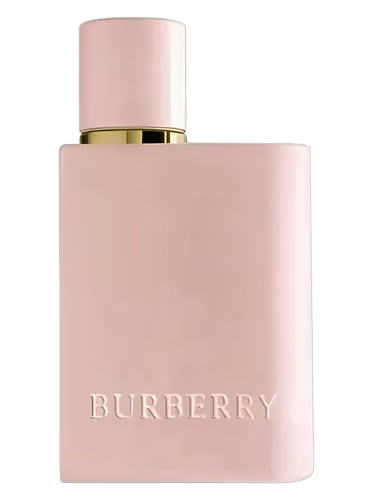
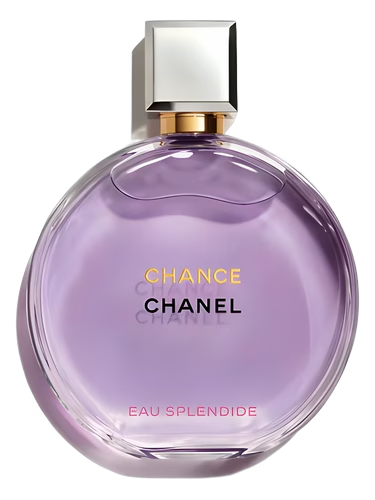
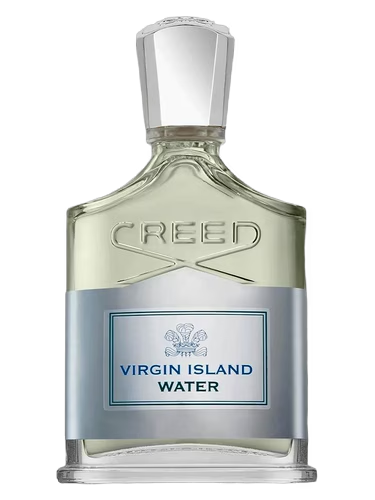
Most Popular Scents Using Ashberry
What is Ashberry?
Ashberry, also known as the rowan berry, is the fruit of the Mountain Ash tree, used in niche perfumery to create complex gourmand and forest-themed compositions.What does Ashberry smell like?
It offers a syrupy gourmand profile with molasses-like sweetness, juicy facets of apricot and peach, subtle white florals, and a balanced hint of bitterness with earthy, smoky undertones.How is Ashberry essence extracted?
Modern extraction uses advanced methods like supercritical CO2 and ultrasound-assisted extraction to capture delicate aromatic compounds, while historical methods involved maceration in water or alcohol.What are some top perfumes featuring Ashberry?
One notable fragrance featuring this note is Guerlain L’Homme Idéal Eau de Parfum, where it contributes to a signature bittersweet fruitiness.When is Ashberry in season?
The tree blooms with creamy white flowers in late spring, and the berries reach peak ripeness and aromatic intensity between August and October.