Fragrance Notes Are Layers Of Scent That Are Layered To Form The Final Fragrance. Fragrance Notes Are Categorised Into Three Main Elements Based On How Long They Take To Evaporate, And How Long They Typically Last Following Application: Top Notes, Heart Notes And Base Notes.
Apple Pulp
Apple Pulp in perfumery presents a fresh, crisp, and slightly tart fruity note, capturing the essence of the apple's inner flesh. It provides a dewy, juicy sweetness that is less concentrated than ripe apple juice, often used to inject a bright, watery, and naturalistic lift to top and middle notes in fruity-floral and gourmand compositions.

Origin & Extraction Of Apple Pulp
The use of apple notes in perfumery gained significant mainstream traction with the rise of fruity-floral and gourmand categories in the late 20th and early 21st centuries. While synthetic apple compounds have existed for decades, the specific "Apple Pulp" note is a modern development, designed to capture a more authentic, watery, and naturalistic freshness distinct from the sweeter, candied, or sharper green apple scents (like Granny Smith). This note is highly associated with the era of mass-market "fresh" fragrances, where ingredients that evoke clarity and vitality, often paired with green or watery accords, became popular.
Apple Pulp is frequently utilized to provide a dewy and invigorating lift to a fragrance's opening or heart, ensuring the fruity aspect remains light and less cloying. It is an essential component in creating compositions that suggest innocence, youthful energy, and natural cleanliness, such as the widely celebrated DKNY Be Delicious (2004) and many of its contemporary counterparts. Its subtle, slightly tart nature allows it to bridge sparkling top notes with deeper floral or woody bases without adding significant weight, solidifying its role as a key enhancer of modern fruity freshness.
Extraction Methods of Apple Pulp
Historically, apple pulp was primarily a byproduct of juice extraction, created by crushing or "smashing" washed and chopped apples using manual tools like wooden fence posts in buckets or mechanical devices such as apple mills, scratters, and grinders. This "mash" was then pressed—often using traditional hydraulic or manual presses—to separate the liquid from the solid residue, known as pomace. Traditional preservation involved soaking this pomace in sugar or honey syrups, or using simple dehydration techniques to extend its shelf life for culinary or medicinal use.
Modern commercial extraction has evolved into highly specialized processes designed to maximize yield and preserve nutritional value. High-speed mechanical pulpers and turbo-type cold extraction equipment use beating rotors and coaxial screens to separate the pulp from the skin, stems, and seeds at normal temperatures, preventing the oxidation and enzymatic browning typical of thermal methods. Advanced enzymatic treatments, utilizing pectinases and cellulases, are now employed to break down cell walls and reduce viscosity, while non-conventional techniques like ultrasound-assisted extraction (UAE) and supercritical CO2 extraction are used to isolate specific biochemical compounds, such as polyphenols and antioxidants, from the pulp for pharmaceutical and cosmetic applications.
The Apple Pulp note gained significant commercial fame primarily through the fruity-floral category, with one scent dominating the conversation: DKNY Be Delicious. Launched in 2004, this fragrance is arguably the most famous proponent of the crisp, juicy apple scent, using a green apple accord that closely mimics the watery, slightly tart essence of the pulp. Its success cemented the apple note as a major player in modern mainstream perfumery, particularly for cheerful, youthful, and fresh compositions.
- *
Beyond the mainstream, the fresh and naturalistic quality of Apple Pulp is utilized by designers and niche houses to provide a contemporary edge to classic structures. For instance, in perfumes like Boss Bottled, a clear, crisp apple note (often including the pulp and skin facets) provides a vitalizing top-note contrast to the warm, spicy, and woody base, elevating the traditional men's structure with a modern, juicy freshness that prevents it from becoming too heavy.
- *
In more abstract compositions, the watery, slightly acidic sweetness of Apple Pulp is essential for creating depth in fruit-dominant gourmand or floral scents without resorting to heavy caramel or sugar notes. While not strictly "pulp," fragrances like Nina Ricci Nina employ a candied apple effect that starts with a similar crisp, juicy core, creating a sparkling, mouth-watering impression that lifts the entire composition and showcases the note’s versatility across various fragrance families.
Sustainability Of Apple Pulp
Sustainability of Apple Pulp
- Promoting a circular economy by upcycling byproduct waste from juice and cider production into high-value fragrance ingredients and essential oils
- Reducing environmental impact by diverting nutrient-rich pulp from landfills to prevent soil and water pollution caused by microbial fermentation
- Implementing zero-waste initiatives by repurposing solid residues as animal feed, bio-fertilizers, or renewable biofuels like biogas and bioethanol
- Utilizing green extraction techniques to recover bioactive compounds such as antioxidants, polyphenols, and pectins for cosmetic and pharmaceutical applications
- Developing biodegradable and compostable packaging solutions, including molded pulp fragrance boxes, to replace traditional plastics and reduce carbon footprints
Trivia
Although thousands of varieties of the domesticated apple tree exist today, its origin can be traced back to a single ancestor, the wild Malus sieversii native to the mountains of Central Asia.
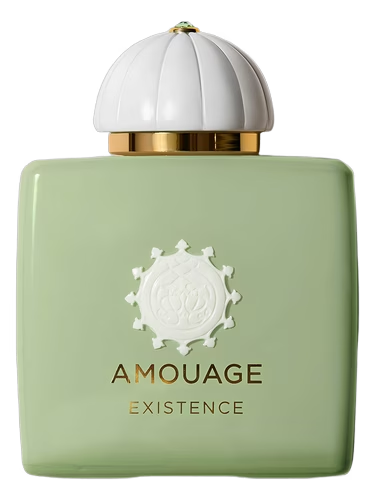
Most Popular Scents Using Apple Pulp


What is Apple Pulp?
Apple Pulp is a fragrance note that captures the fresh, crisp, and slightly tart essence of the apple's inner flesh, providing a naturalistic and watery lift to compositions.What does Apple Pulp smell like?
It offers a dewy, juicy sweetness that is less concentrated than ripe apple juice, characterized by a bright, watery, and refreshing fruity profile.How is Apple Pulp extracted?
Modern commercial extraction utilizes high-speed mechanical pulpers and cold extraction equipment to separate the pulp from the skin and seeds while preventing oxidation.What are some top perfumes featuring Apple Pulp?
Popular fragrances featuring this note include DKNY Be Delicious, Byredo Pulp, Kayali Eden Juicy Apple 01, and Nina Ricci Nina.When is Apple Pulp in season?
The harvest typically spans from early summer through late autumn, with peak production occurring between September and mid-November depending on the variety.