Fragrance Notes Are Layers Of Scent That Are Layered To Form The Final Fragrance. Fragrance Notes Are Categorised Into Three Main Elements Based On How Long They Take To Evaporate, And How Long They Typically Last Following Application: Top Notes, Heart Notes And Base Notes.
Angel's Trumpet
Angel's Trumpet offers a complex, heady white floral aroma, intensely narcotic and intoxicating. It blends rich, sweet tuberose-like notes with waxy, green, and slightly spicy facets. Its powerful diffusion creates a creamy, yet slightly sharp, elegant night-blooming profile, adding dramatic depth.

Origin & Extraction Of Angel's Trumpet
Angel's Trumpet, derived from the highly fragrant flowers of the Brugmansia genus, does not have a long, documented history as a traditional natural extract in classical perfumery due to the challenges and dangers associated with extracting its oils, as the plant is known to be toxic. Historically, the note remained largely conceptual, used to evoke a lush, night-blooming white floral profile, similar to tuberose or datura, that was typically built using synthetic accords or imaginative blending.
In modern perfumery, the Angel's Trumpet note has gained prominence, particularly since the late 20th century, as perfumers developed safer and more sophisticated methods (like head-space technology) to recreate its narcotic, heady, and complex scent profile. It is prized today for its dramatic depth, lending an intoxicating, waxy, and slightly green elegance to white floral compositions, often serving as a focal point in opulent, high-diffusion evening fragrances.
Historically, the extraction of aromatic and medicinal compounds from Angel's trumpet (Brugmansia species) has relied on traditional methods such as maceration and infusion. Indigenous cultures in the Andes and Amazon basin have long prepared dilute decoctions by steeping fresh petals or leaves in hot water to create teas, or by crushing plant material into poultices for topical application. Traditional "folk methods" also involved soaking plant parts in solvents like alcohol (tinctures) or vegetable glycerin for several weeks to capture the potent tropane alkaloids, such as scopolamine and atropine, which are highly soluble in ethanol.
In modern practice and research, more precise chemical extraction techniques are employed. Current methods often involve grinding fresh or dried flowers and leaves and extracting the alkaloids using methanol or acidified water. Advanced analytical processes like High-Pressure Liquid Chromatography (HPLC) and Gas Chromatography-Mass Spectrometry (GC-MS) are then used to identify and quantify the specific compounds. Recent innovations include refined aqueous-alkaline extraction processes that minimize unwanted plant ingredients and "direct extraction" methods from undried plant parts, which avoid the degradation often caused by traditional drying. Furthermore, experimental approaches utilize fractional distillation and solvent-based partitioning (using hexane or dichloromethane) to isolate specific secondary metabolites for pharmaceutical and agrochemical research.
The Angel's Trumpet note, prized for its dramatic, narcotic, and heady white floral profile, is often used to create opulent, high-diffusion evening fragrances. Its powerful scent is frequently compared to tuberose or datura, lending an intoxicating and slightly waxy elegance to compositions. Due to the plant's toxicity, the note is typically replicated via sophisticated synthetic accords, allowing perfumers to safely capture its complex beauty and dramatic depth.
- * * *
One of the most celebrated fragrances to feature this intoxicating floral is **Datura Noir** by Serge Lutens. While the fragrance is named after Datura (a related night-blooming flower often sharing a similar olfactory profile), the inclusion of the heady, sweet, and slightly green characteristics synonymous with Angel's Trumpet contributes significantly to its dark, mysterious, and creamy character. This scent perfectly showcases the note's ability to blend intense sweetness with a waxy, almost venomous edge, creating a truly unforgettable white floral experience.
- * * *
In contemporary perfumery, Angel's Trumpet is utilized to inject a sense of tropical drama and rich floralcy. Another notable usage can be found in fragrances that emphasize lush, gardenia-like accords, drawing on the flower's natural tendency toward sweetness and diffusion. Its complex nature ensures that when used, it instantly elevates a composition beyond a simple floral into a sophisticated, night-blooming statement scent, providing depth and lasting power that define modern opulent perfumes.
Sustainability Of Angel's Trumpet
Sustainability of Angel's Trumpet
- Integrating Brugmansia species into sustainable forestry and agroforestry systems to enhance field biodiversity and create multilayered habitats for birds and night-flying insects
- Utilizing the plant's natural toxicity as a deterrent for herbivores and insects, supporting integrated pest management (IPM) strategies without the use of synthetic chemicals
- Promoting soil stabilization and conservation by strategically placing plants in landscape buffers to limit soil compaction and reinforce soil matrices through root systems
- Adopting eco-friendly gardening practices such as using peat-free potting soils to protect wetland ecosystems and reduce carbon dioxide emissions associated with peat mining
- Implementing organic fertilization methods like top-dressing with rich compost to improve soil health and long-term plant vitality naturally
- Utilizing advanced satellite monitoring and digital resource management tools to verify the positive impact of plantings on soil carbon and regional sustainability accreditation
Trivia
Despite its heavenly name and divine scent, every part of the Angel's Trumpet is highly toxic and can be fatal if ingested, a fact that led Aztec shamans to use the plant in rituals to "bridge the realms of the living and the dead."
Most Popular Scents Using Angel's Trumpet
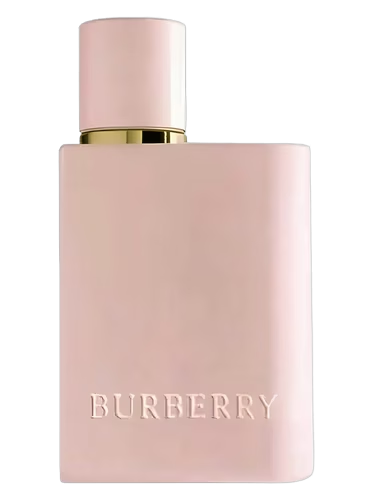
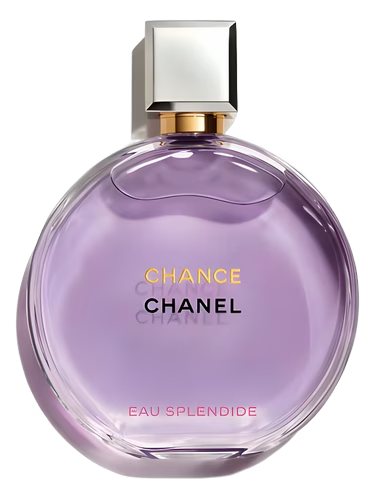
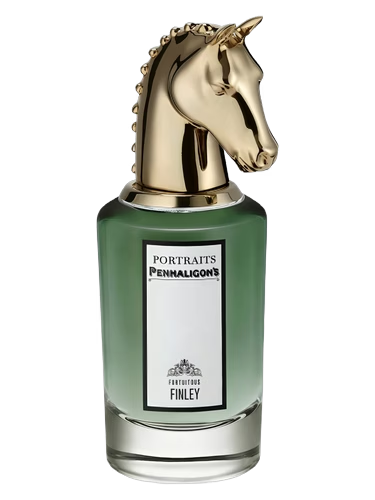
What is Angel's Trumpet?
Angel's Trumpet is a highly fragrant note derived from the Brugmansia genus, known for its intoxicating white floral profile and its historical use in spiritual rituals.What does Angel's Trumpet smell like?
It offers a complex, heady aroma that blends rich, tuberose-like sweetness with waxy, green, and slightly spicy facets for a creamy and narcotic effect.How is Angel's Trumpet essence extracted?
In modern perfumery, its scent is often recreated using headspace technology or synthetic accords, while traditional methods involved maceration or solvent extraction.Is Angel's Trumpet toxic?
Yes, every part of the plant is highly toxic and can be fatal if ingested, which is why the fragrance note is typically replicated safely via sophisticated synthetic accords.What are some top perfumes featuring Angel's Trumpet?
Notable fragrances include Heretic Parfum Angel's Trumpet, Olympic Orchids Lil, and Black Phoenix Alchemy Lab's The Harlot's House.When is Angel's Trumpet in season?
The plant primarily blooms from mid-summer through fall, though it can flower year-round in tropical or controlled indoor environments.