Fragrance Notes Are Layers Of Scent That Are Layered To Form The Final Fragrance. Fragrance Notes Are Categorised Into Three Main Elements Based On How Long They Take To Evaporate, And How Long They Typically Last Following Application: Top Notes, Heart Notes And Base Notes.
Anemone
Anemone offers a fantasy floral profile, blending bright, juicy fruit notes (plum) and pink lotus with an effervescent champagne lift. This is anchored by warm, sensual depth from honey and rich resins (styrax, labdanum, amber), resulting in a complex, sweet, and sophisticated floral-fruity scent.

Origin & Extraction Of Anemone
Anemone is considered a "fantasy note" in modern perfumery, as the delicate flower does not yield a usable essential oil through traditional extraction methods. Therefore, its use in fragrance is entirely conceptual, built around its visual and symbolic qualities. Historically, the anemone flower is linked to Greek mythology, where it is said to have sprung from the tears of Aphrodite, symbolizing fragile beauty, anticipation, or eternal love, which laid the groundwork for its romantic and ethereal interpretations in scent.
The "Anemone" note, as interpreted in contemporary fragrances, often serves as a complex, sophisticated floral accord rather than a literal botanical scent. Perfumers construct this fantasy profile by blending diverse elements—such as bright fruit notes (plum), aquatic or sweet florals (pink lotus), and sometimes an effervescent quality (champagne)—which are then anchored by warm bases (amber, styrax, honey) to give the light flower a substantial, lasting presence. This artistic approach allows the note to bridge traditionally light floral elements with richer, more sensual depths in niche and modern designer compositions.
The extraction of bioactive compounds from sea anemones, particularly their potent venoms and genomic material, has evolved from traditional whole-organism processing to highly specialized biochemical techniques. Historically, simple homogenization (grinding) of the entire animal was the standard approach to isolate crude toxins, though this often resulted in high levels of mucosal contamination and a complex mixture of non-venom proteins. For DNA extraction, traditional methods utilized liquid nitrogen to grind tissues into powder followed by standard phenol-chloroform protocols, though these were frequently hampered by the anemone's dense mucosal polysaccharides.
Recent advancements have introduced more targeted and refined methodologies to improve purity and functional potency. Modern venom extraction now frequently employs electrical stimulation (electrostimulation) or "milking" (physical manipulation), which triggers the discharge of nematocysts to yield a more representative "true" venom with higher specific bioactivity. In genomic research, modified Phenol-Chloroform/Isoamyl alcohol (PCI) methods have been developed to specifically overcome mucosal interference, while the isolation of specialized components now utilizes advanced techniques such as Triton X-114 phase separation for membrane-bound proteins and supercritical CO2 extraction for delicate aromatic or medicinal molecules.
Because Anemone is a fantasy note—meaning its scent is created conceptually rather than extracted directly from the delicate flower—it is often featured in unique and complex modern compositions. These fragrances often use the note to bridge bright, fruity florals with warmer, deeper bases, reflecting the note's symbolic history of fragile beauty anchored by sensual depth. One key example of this artistic interpretation is in fragrances from niche houses, where the anemone accord is used to create a distinct, sophisticated signature.
- The conceptual nature of Anemone makes it a compelling choice for contemporary perfumery, especially in scents that aim for an ethereal or aquatic floral profile. A fragrance such as **MAC Turquatic** utilizes this type of synthetic floral/aquatic blend, offering a clean, refreshing, and unisex interpretation that embodies the 'fantasy' aspect of the note.
Another notable fragrance utilizing the Anemone note to capture its complex profile of fruit, flower, and depth is the evocative **BLACKBIRD Anemone Eau de Parfum**. This scent explicitly leans into the fantasy aspect, describing itself as "a fantasy undersea garden," marrying bright notes (plum, champagne) with deep, resinous elements (amber, styrax, honey, tobacco) to give the delicate pink flower a rich, lasting, and sophisticated presence, offering an alternative to traditional light florals.
- Blooming periods for anemones vary significantly by species, with many varieties marking the end of winter and the arrival of early to mid-spring from March to May
- Poppy anemones (Anemone coronaria) typically flower from mid-spring into early summer, often coinciding with the bloom times of tulips and daffodils
- Japanese anemones and other hybrid varieties extend the season as classic fall flowers, blooming from late summer through autumn, often between August and October
- The plants generally enter dormancy after their respective flowering cycles, with foliage yellowing and dying back during the summer for spring bloomers or early winter for fall varieties
- Precise timing is influenced by planting schedules and local climate, as autumn-planted corms favor early spring displays while spring-planted tubers in colder zones flower during the summer months
Sustainability Of Anemone
Sustainability of Anemone
- Promoting biodiversity and ecosystem health by serving as a vital food source for bees, butterflies, and other beneficial pollinators in cottage and woodland gardens
- Encouraging the use of natural pest management strategies, such as supporting ladybeetles and using organic slug baits, to reduce reliance on broad-spectrum chemical insecticides
- Advocating for water conservation through the use of drip irrigation systems and mulching to maintain soil moisture while preventing unnecessary water waste
- Supporting regenerative gardening practices by utilizing organic amendments like compost and leaf mold to improve soil fertility and structure without synthetic fertilizers
- Enhancing landscape resilience by planting hardy, deer-resistant perennial varieties that naturalize easily and require minimal long-term intervention
- Reducing environmental impact in the floral industry through the application of ethylene inhibitors and proper cold chain management to extend vase life and minimize waste
Trivia
The anemone note is a complete olfactory fiction because the flower itself is essentially scentless; perfumers use sheer musks and aqueous molecules to "invent" a fragrance that mimics the translucent, papery look of its petals.
Most Popular Scents Using Anemone
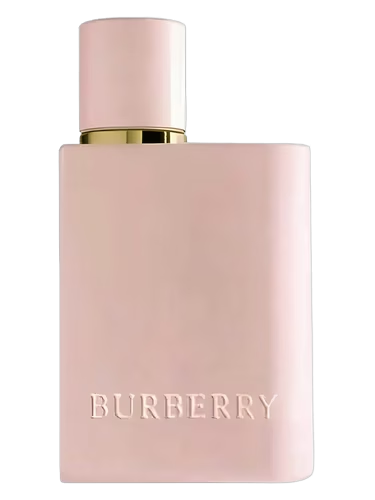
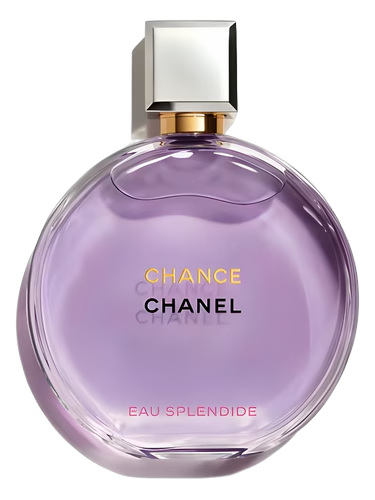
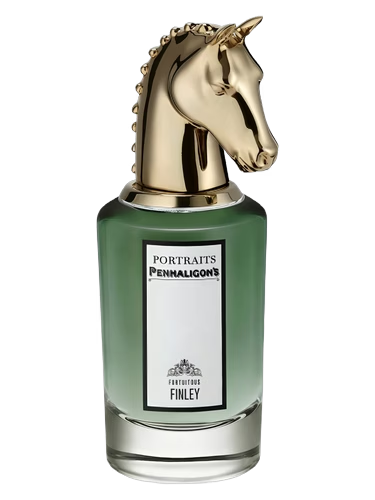
What is the Anemone note in perfumery?
Anemone is a "fantasy note" because the flower itself is essentially scentless and does not yield a natural essential oil; perfumers must "invent" the scent using synthetic accords.What does Anemone smell like?
The note offers a complex, sophisticated profile that typically blends bright fruitiness like plum with aquatic florals and effervescent champagne, anchored by warm resins and honey.How is the Anemone scent created?
Since no extract exists, perfumers use building blocks such as sheer white musks, aqueous molecules like Hedione, and green-stem elements to evoke the visual, translucent quality of the flower.What are some top perfumes featuring Anemone?
Notable fragrances include Blackbird Anemone, Chloé Atelier des Fleurs Anemone, and MAC Turquatic, which utilize various fantasy interpretations of the flower.When is Anemone in season?
Blooming periods vary by species, with many varieties appearing in early to mid-spring (March to May), while Japanese anemones bloom in late summer and autumn (August to October).