Fragrance Notes Are Layers Of Scent That Are Layered To Form The Final Fragrance. Fragrance Notes Are Categorised Into Three Main Elements Based On How Long They Take To Evaporate, And How Long They Typically Last Following Application: Top Notes, Heart Notes And Base Notes.
Amethyst Flower
Amethyst Flower offers a pleasant, exotic floral scent, likened to a blend of jasmine and gardenia, with bright white floral and subtle green nuances. In perfumery, it is often paired with notes like citrus, cardamom, patchouli, and vanilla to create a complex, glamorous, and slightly spicy-aromatic profile.

Origin & Extraction Of Amethyst Flower
The Amethyst Flower (Browallia speciosa) is not a historically traditional perfumery note like rose or jasmine. Its use represents a modern trend towards utilizing unique, exotic, and often synthesized notes to achieve complex floral profiles. Historically, perfumers relied on large quantities of natural oils, but the unique scent of Amethyst Flower—a blend of jasmine and gardenia with green and subtle spicy undertones—is generally recreated through headspace technology and molecular synthesis.
As a result, the Amethyst Flower note gained relevance in contemporary perfumery for its ability to lend a glamorous, exotic, and slightly spicy-aromatic complexity to compositions. It serves as a sophisticated alternative to common white florals, typically appearing in niche or designer fragrances from the late 20th and early 21st centuries that aim for a mysterious or nocturnal floral signature.
Extraction Methods of Amethyst Flower
The extraction of Amethyst Flower (or Purple Orchid) essence in perfumery is primarily achieved through steam distillation or solvent extraction. Historically, floral scents were often captured through maceration or enfleurage, where flowers were steeped in fats or oils to absorb their volatile components. In contemporary fragrance production, steam distillation remains a standard for obtaining essential oils, while solvent extraction is used to create concretes and absolutes that better preserve the delicate, ethereal character of the flower.
Modern laboratory techniques have also introduced advanced methods for botanical extraction, such as supercritical CO2 extraction, which allows for the isolation of aromatic molecules at lower temperatures to prevent heat degradation. Additionally, in the context of creating Amethyst Extract for cosmetic or medicinal use, the process often begins with finely grinding the gemstone or plant material and subjecting it to solvents like methanol, n-hexane, or ethyl acetate to isolate bioactive compounds such as alkaloids and flavonoids.
The Amethyst Flower note, a modern and often synthesized accord offering an exotic blend of jasmine and gardenia with spicy-green nuances, is primarily found in contemporary fragrances designed for complexity and glamour. While the note itself is not associated with historical classics, its unique profile makes it a sophisticated alternative to traditional white florals, providing a mysterious, nocturnal signature. Fragrances utilizing this note aim to create an enveloping and complex aura, often pairing it with rich base notes like patchouli and vanilla.
- A significant contemporary example that showcases a note with "Amethyst" in its name and a rich, complex profile is **Lattafa Badee Al Oud Amethyst**. This fragrance uses the sophisticated, exotic floral facets alongside deep, warm ingredients to deliver a luxurious and intense aromatic experience. Such compositions leverage the Amethyst Flower accord to provide a vibrant, slightly aromatic floral lift that bridges spicy openings and powerful woody-amber bases.
In modern niche and high-end perfumery, the Amethyst Flower note, or similar stylized exotic floral concepts, functions to introduce a glamorous element that is both sweet and slightly green. The intent is often to move beyond simple white floral structures, offering a more multifaceted bouquet. By integrating green nuances and subtle spiciness, this note ensures the floral heart has enduring longevity and a distinctive character that stands out in the contemporary market.
Sustainability Of Amethyst Flower
Sustainability of Amethyst Flower
- Promoting biodiversity by using amethyst flowers in gardens to attract essential pollinators
- Adopting eco-friendly cultivation practices that eliminate the use of synthetic pesticides and fertilizers
- Supporting local farming and sustainable land connection through family-run floral businesses and farm stands
- Implementing water-conserving gardening techniques, such as proper drainage and regular monitoring, to ensure plant health without waste
- Advancing industry-wide environmental consciousness by aligning floral trends with nature-inspired, sustainable palettes and earth-centric storytelling
Trivia
The amethyst flower is not a single botanical species but a perfumer's "fantasy note" created to evoke the cool, powdery, and mineral impression of the amethyst gemstone through a blend of violet, iris, and floral-woody synthetics.
Most Popular Scents Using Amethyst Flower
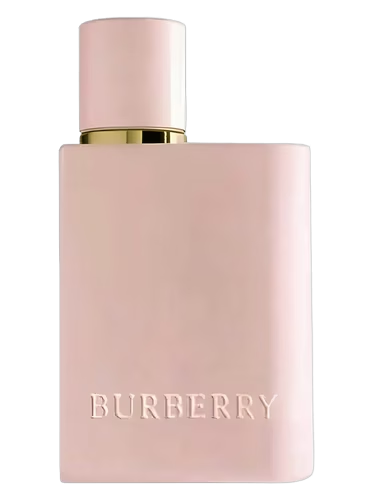
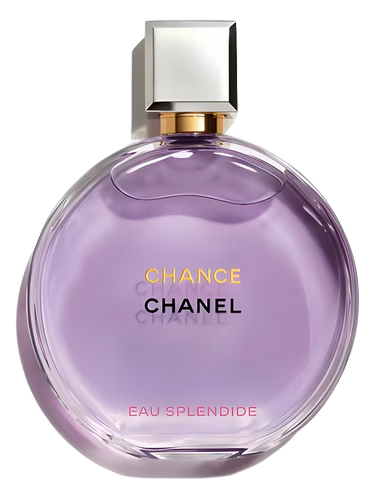
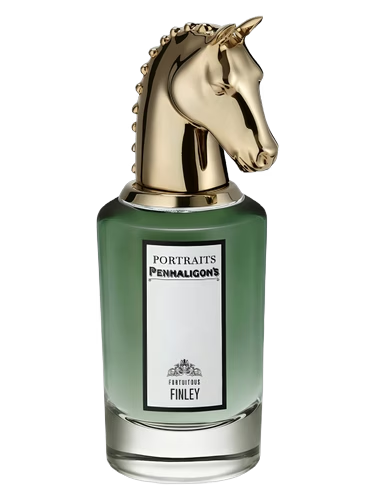
What is Amethyst Flower?
Amethyst Flower, or Browallia speciosa, is an exotic floral note in perfumery often used to create modern, glamorous, and mysterious fragrance profiles.What does Amethyst Flower smell like?
It offers a pleasant, exotic scent likened to a blend of jasmine and gardenia, featuring bright white floral facets with subtle green and spicy-aromatic nuances.Is Amethyst Flower a natural or synthetic note?
While derived from a real plant, its scent in perfumery is often a "fantasy note" recreated through headspace technology and molecular synthesis to evoke a cool, powdery, and mineral impression.What are some top perfumes featuring Amethyst Flower?
Notable fragrances include Lalique Amethyst, Bvlgari Omnia Amethyste, Sage Amethyst, and Lattafa Badee Al Oud Amethyst.When is the Amethyst Flower in season?
The plant typically blooms from late spring through the first frost in autumn, with peak flowering occurring during the summer months.