Fragrance Notes Are Layers Of Scent That Are Layered To Form The Final Fragrance. Fragrance Notes Are Categorised Into Three Main Elements Based On How Long They Take To Evaporate, And How Long They Typically Last Following Application: Top Notes, Heart Notes And Base Notes.
Amarillys
Amarillys presents a delicate and radiant floral note, characterized by lush, subtle sweetness. Its profile sits uniquely between the fresh, velvety scent of rose petals and the juicy, slightly honeyed nuances of nectarine, lending it a sophisticated, fruity undertone and an overall soft, uplifting freshness in a composition.

Origin & Extraction Of Amarillys
The Amaryllis flower, commonly known for its large, dramatic blooms, does not yield a natural essential oil that can be extracted for use in perfumery. Therefore, the "Amarillys note" is a reconstructed accord, created by perfumers using a blend of synthetic and natural materials to capture its specific aroma. Historically, the flower was admired more for its visual beauty and was not a common component of classical Western perfumery, which relied on notes with readily extractable essences like Rose or Jasmine.
The modern use of the Amarillys accord has grown as perfumers seek out unique, photorealistic, and sophisticated floral notes. Because its profile is described as a hybrid of fresh rose and fruity, honeyed nectarine, this synthetic note allows for creative transitions, lending a delicate, radiant sweetness and soft, fruity undertones to contemporary floral and fruity-floral compositions, offering a distinctive nuance that moves beyond traditional floral bouquets.
Extraction Methods of Amaryllis
Historically, amaryllis and other delicate flowers were processed using enfleurage, a labor-intensive technique where fresh petals were placed on layers of purified animal or vegetable fat. Over several days, the fat would absorb the flower's fragrant essential oils. Once saturated, the fat (known as a pomade) was washed with alcohol to separate the aromatic molecules, which were then concentrated into an absolute after the alcohol evaporated. Maceration in hot oils was also a traditional "folk method" used to rupture cell membranes and capture the floral essence.
In modern commercial production, solvent extraction has largely replaced enfleurage due to its efficiency and lower cost. This process involves soaking the flowers in a hydrocarbon solvent like hexane to create a waxy "concrete," which is then further refined with ethanol to produce the final absolute. Additionally, advanced techniques such as supercritical CO2 extraction are increasingly utilized; this method uses pressurized carbon dioxide at low temperatures to capture a broader, more accurate profile of the flower's delicate aromatic compounds without the risk of heat degradation or chemical residue.
The Amaryllis note, being a sophisticated and reconstructed accord, is often utilized by contemporary perfume houses looking for a delicate floral note with a fruity-sweet nuance. Its ability to bridge the velvety scent of rose petals with the juicy lightness of nectarine makes it ideal for modern, radiant floral compositions. While not a classic historical note like Jasmine or Rose, Amaryllis lends a distinctive, uplifting freshness to fragrances that aim for a gentle yet memorable sweetness, perfect for spring and summer wear.
- A notable fragrance that features this unique note is PANAMA AMARYLLIS by Panama 1924, which pairs Amaryllis with orange blossom, grapefruit, and musk, crafting a sophisticated and multi-layered fresh floral scent.
- Another modern example is BEEKMAN 1802 EAU DE TOILETTE SPRAY - AMARYLLIS BOUQUET, where the note is celebrated in a bouquet structure to capture its lush, sweet character.
The use of the Amaryllis accord allows perfumers to achieve a 'photorealistic' floral experience that moves beyond traditional floral archetypes. Since the natural flower does not yield an extractable oil, the synthesized note is crucial in creating an aura of delicate, slightly honeyed sweetness, providing complexity without the sharpness of traditional top notes. This ensures the fragrance maintains a soft, refined floral heart that is both tender and enduring.
The note is also found in fragrances like those from the DILIS collection, demonstrating its versatility in supporting various scent structures, often being blended with other fresh and sheer elements like water lily, marine notes, white tea, and clementine to enhance its airy, clean quality. These contemporary applications highlight Amaryllis's role in lending a radiant and subtle depth to fresh and aquatic compositions.
Sustainability Of Amarillys
Sustainability of Amaryllis
- Adopting organic and certified farming practices, such as GlobalG.A.P. and MPS, to minimize pesticide use and ensure resource efficiency
- Implementing water conservation through hydroponic closed-loop systems, rainwater harvesting, and drip irrigation to reduce waste and runoff
- Promoting a circular economy by eliminating plastic covers, using recyclable packaging, and repurposing waste for soil health
- Reducing carbon footprints by utilizing solar energy, electric vehicles, and efficient greenhouse management to shorten cultivation cycles
- Supporting biodiversity and ecosystem health through Integrated Pest Management (IPM), protecting pollinators, and maintaining healthy soil biology
- Ensuring social responsibility and ethical labor standards through certifications like GRASP to support fair working conditions for farming communities
Trivia
In Greek mythology, the Amaryllis flower is said to have sprung from the blood of a nymph named Amaryllis, who pierced her heart with a golden arrow for 30 days to win the love of a shepherd.
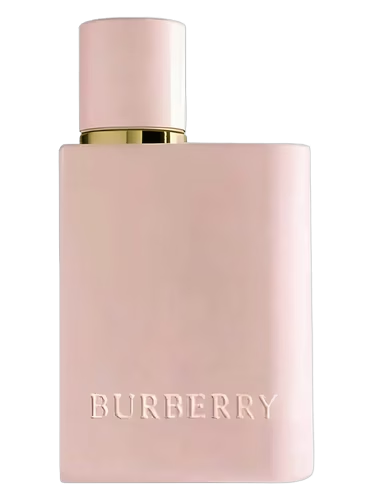
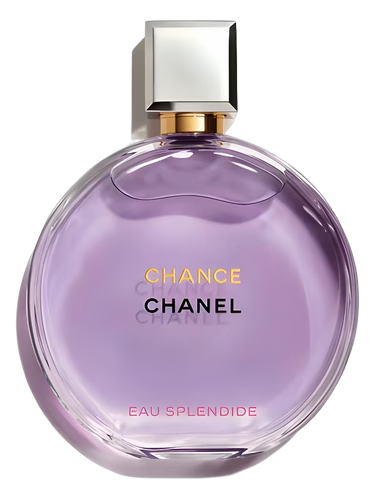
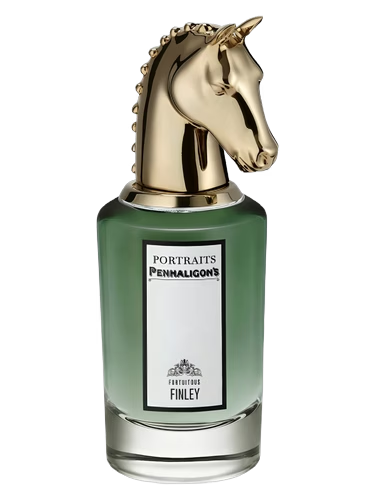
Most Popular Scents Using Amarillys
What is Amarillys?
Amarillys is a delicate and radiant floral note in perfumery, typically created as a reconstructed accord because the natural flower does not yield an essential oil for direct extraction.What does Amarillys smell like?
It features a lush, subtle sweetness with a profile that sits between the velvety scent of rose petals and the juicy, honeyed nuances of nectarine.How is the Amarillys scent captured?
Since it does not produce a natural oil, the note is synthesized by perfumers using natural and synthetic materials to achieve a photorealistic floral experience.What are some top perfumes featuring Amarillys?
Popular fragrances include Floris Amaryllis, Dolce&Gabbana Dolce, Yves Saint Laurent Cinema, and Panama 1924 Amaryllis Bianco.When is Amarillys in season?
The amaryllis naturally blooms from late winter through mid-spring, usually between February and April, and is frequently celebrated as a seasonal indoor plant during the December holidays.