Fragrance Notes Are Layers Of Scent That Are Layered To Form The Final Fragrance. Fragrance Notes Are Categorised Into Three Main Elements Based On How Long They Take To Evaporate, And How Long They Typically Last Following Application: Top Notes, Heart Notes And Base Notes.
Alyssum
A complex, multi-layered profile often composed of bright, volatile top notes (citrus, fresh herbs) that provide immediate lift. The heart reveals the structure with dominant floral (rose, jasmine), spicy, or aromatic accords, grounded by long-lasting base notes (woods, amber, musk, vanilla) that provide warmth, depth, and longevity.

Origin & Extraction Of Alyssum
Alyssum, specifically Sweet Alyssum (Lobularia maritima), is a flowering plant cherished for its dense clusters of tiny, highly fragrant flowers. While the plant itself has been utilized historically in gardening and traditional medicine for its easy cultivation and pleasant scent, it is not a cornerstone of classical perfumery in the way that notes like Rose or Neroli are. The fragrance of Alyssum is often described as honeyed, sweet, and slightly powdery, with a soft, diffusive quality that evokes the scent of an English garden in bloom. Due to the challenge of extracting a commercially viable essential oil, the note's use in fine fragrance typically relies on reconstitution through synthetic molecules and accords to capture its delicate, sweet essence.
In modern perfumery, the Alyssum note is primarily utilized to impart a sense of bright, airy sweetness and a naturalistic floral freshness, often complementing white florals or lighter compositions. It is not associated with a specific historical period or defining fragrance, but rather belongs to the contemporary trend of incorporating photorealistic garden and soft-focus floral notes. Perfumers use the reconstructed Alyssum accord to add a subtle layer of complexity and texture, usually appearing in the heart or mid-notes of a fragrance where its honeyed, powdery sweetness can blend seamlessly with other components, giving an overall impression of delicate, sun-drenched flora.
Extraction Methods of Alyssum
The extraction of components from the Alyssum genus primarily focuses on two distinct areas: the mechanical harvest of seeds for mucilage and the industrial process of phytomining to extract metals. Historically, mucilage extraction from species like Alyssum homolocarpum (Qodume Shirazi) has utilized traditional aqueous methods, where seeds are soaked in water to release their high polysaccharide content. Recent advancements have optimized this through Response Surface Methodology (RSM), identifying precise conditions—such as a temperature of 36.3°C and a pH of 4—to maximize yield and viscosity while minimizing protein impurities.
In the field of environmental technology, Alyssum species are renowned for their role in phytoextraction, particularly for nickel. The traditional method, developed in the late 19th century and refined in the 2000s, involves growing these hyperaccumulator plants on metal-rich soils, harvesting the mature biomass, and burning it to produce energy and metal-rich ashes. These ashes then undergo chemical treatments to extract industrial-grade nickel salts. Contemporary research has evolved toward genetic engineering and in vitro micropropagation, seeking to transfer Alyssum's metal-storing genes to faster-growing crops to improve the efficiency and sustainability of this circular economy model.
The Alyssum note, characterized by its delicate, honeyed, and slightly powdery sweetness, is not typically found in the historical canon of classical perfumery like notes such as Bergamot or Rose. Instead, it flourishes in modern, often niche and artisanal compositions where perfumers aim for soft-focus, photorealistic garden scents. Because the essential oil is difficult to extract commercially, the note is usually reconstructed, allowing it to convey a gentle, airy sweetness that complements more dominant florals.
- While Alyssum may not be the central note in major designer releases, it lends vital support to compositions that emphasize tenderness and light. Its use is often subtle, blending seamlessly with white florals, solar notes, or light musks to enhance the overall impression of delicate, sun-drenched flora without overpowering the fragrance's core structure.
In contemporary fragrance, Alyssum's unique profile—often blending sweet floral facets with a hint of green freshness—is highly valued for creating uplifting, clean, and bright openings. While a definitive list of blockbuster perfumes starring Alyssum is scarce, certain niche lines focused on garden florals or delicate sweet scents are known to incorporate this accord. Fragrances aiming for a fresh, slightly nostalgic sweetness, reminiscent of a cottage garden in bloom, often leverage Alyssum to achieve this effect, as seen in smaller, specialized creations like **Sweet Alyssum Perfume** by Red Flower.
- The note’s delicate nature means it rarely serves as a foundational base, but rather as an ethereal heart note. It frequently appears alongside notes like Neroli, Petitgrain, or soft Rose, contributing to the lift and transparency of light, feminine, and unisex compositions that prioritize naturalistic freshness and subtle elegance.
Perfumes that employ the Alyssum accord seek to offer a comforting and inviting aromatic texture. The honeyed, powdery nuance ensures that the fragrance remains sweet without becoming cloying, providing a sophisticated layer of complexity. This sophisticated blending is key in the modern trend toward 'transparent' scents, allowing the wearer to experience a delicate floral aroma that feels both authentic to the garden and uniquely refined, elevating simple light florals into textured, lasting experiences.
- Blooming primarily occurs from spring through the first frost, with peak displays in the cooler temperatures of early spring and autumn
- In hot summer climates, flowering may decline or cease during peak heat, though plants often rejuvenate and burst into bloom again as temperatures cool in the fall
- In USDA hardiness zones 9-11, the plant acts as a tender perennial and can maintain active growth and flowering throughout the winter months
- The lifecycle typically includes a winter dormancy or death in colder zones, with new growth appearing in spring from self-sown seeds
- Certain modern hybrid varieties have been developed for enhanced heat tolerance, allowing for continuous blooming through the summer season
Sustainability Of Alyssum
Sustainability of Alyssum
- Utilizing synthetic reconstructions in perfumery as no commercially viable essential oil or absolute exists, which prevents the over-harvesting of biomass
- Promoting biodiversity and ecosystem health by planting sweet alyssum to attract beneficial pollinators and deter pests naturally
- Adopting zero-waste and circular economy principles through programs like the Good Karma Bottle Exchange for sterilization and reuse of packaging
- Sourcing ingredients that are 100% palm-free, vegan, and cruelty-free to protect endangered species and their natural habitats
- Prioritizing local socio-economic sustainability by partnering with indigenous communities for hand-harvesting and sourcing materials within Australia
- Reducing environmental impact through the use of 100% recyclable violet glass and recycled shipping materials to minimize carbon footprints
Trivia
The name Alyssum comes from the Greek word alysson, meaning without madness, because the plant was historically believed to be a powerful cure for rabies.
Most Popular Scents Using Alyssum
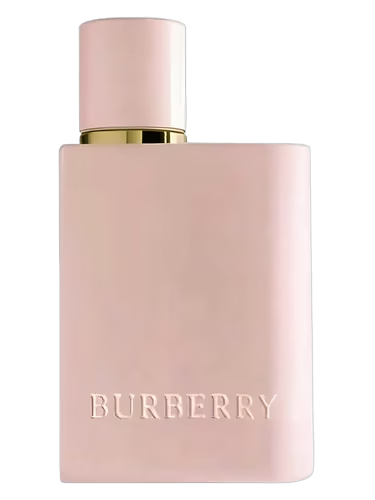
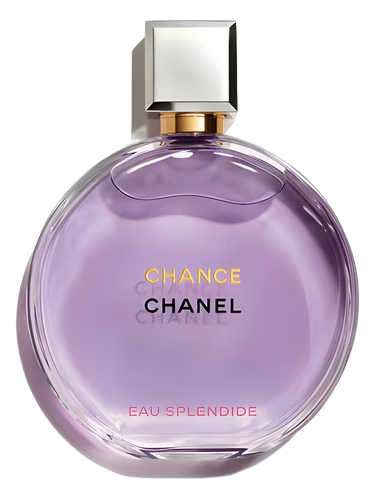
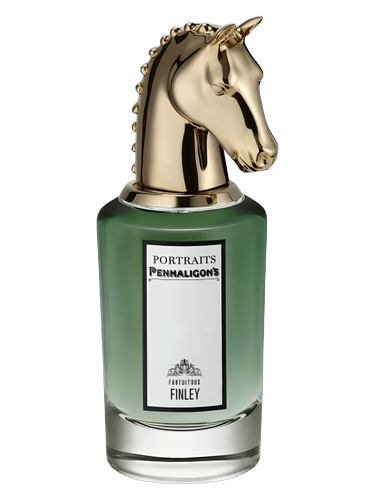
What is Alyssum?
Alyssum, particularly Sweet Alyssum (Lobularia maritima), is a flowering plant in the Mediterranean region known for its dense clusters of tiny, highly fragrant flowers used in modern perfumery to create delicate floral scents.What does Alyssum smell like?
It features a honeyed, sweet, and slightly powdery aroma with a soft, diffusive quality and hints of green freshness, reminiscent of an English cottage garden in bloom.How is Alyssum essence extracted?
Because a commercially viable essential oil is difficult to extract from the flowers, the note is typically reconstructed in laboratories using synthetic molecules and accords to capture its delicate essence.What are some top perfumes featuring Alyssum?
Notable fragrances include Red Flower Sweet Alyssum, Deconstructing Eden Alyssum House, BPAL Sweet Alyssum, and L'Instant de Guerlain.When is Alyssum in season?
Alyssum primarily blooms from spring through the first frost, with peak fragrance displays occurring during the cooler temperatures of early spring and autumn.