Fragrance Notes Are Layers Of Scent That Are Layered To Form The Final Fragrance. Fragrance Notes Are Categorised Into Three Main Elements Based On How Long They Take To Evaporate, And How Long They Typically Last Following Application: Top Notes, Heart Notes And Base Notes.
Alumroot
Alumroot (Heuchera) is a niche perfumery note, sometimes presenting an unexpected, bright, and intensely fruity aroma, often likened to ripe pineapple. It offers an uplifting, slightly sweet and tropical zest, moving away from traditional floral or green profiles to add a unique, cheerful, and succulent sparkle to compositions.

Origin & Extraction Of Alumroot
Alumroot (Heuchera) is considered a very modern and niche note in perfumery, lacking the centuries-old history of foundational ingredients like rose, frankincense, or classic citruses. Historically, the Heuchera plant was valued more for its ornamental foliage in gardens and its medicinal properties, rather than its scent profile. Its incorporation into fine fragrance compositions is tied to contemporary perfumery's increasing desire to explore unique, non-traditional, and photorealistic aromas, especially those offering unexpected fruity or tropical facets.
The relevance of Alumroot in modern perfumery stems from its distinctive, intensely fruity aroma, which is often compared to ripe pineapple. Perfumers utilize this unusual profile to add a cheerful, uplifting, and succulent sparkle to compositions, typically in the top and heart notes. It serves as a creative alternative to conventional fruit or citrus notes, lending a sophisticated complexity to fragrances that aim for an exotic or bright, tropical-gourmand feel.
Historically, alumroot has been valued primarily for its medicinal and industrial properties, where the thick, astringent rhizomes were harvested, cleaned, and either dried for powdered use or simmered to create concentrated infusions. These traditional methods aimed to extract the plant's high tannic acid content, which served as a powerful styptic for wounds and an alum substitute for fixing natural dyes. Because the roots contain intense astringent compounds, early processing involved manual cleaning of the knotty, horizontal rhizomes after at least one year of growth to ensure maximum potency.
Modern extraction for horticultural and botanical purposes focuses on vegetative propagation and seed processing to preserve genetic integrity. The latest commercial methods utilize precise mechanical cleaning and hammermill processing for seeds, followed by controlled cold stratification to overcome physiological dormancy. For concentrated botanical extracts used in contemporary herbalism, advanced solvent extraction or maceration techniques are employed to isolate specific tannins and minerals from the roots and leaves, ensuring a standardized level of astringency for topical and therapeutic applications.
Alumroot (Heuchera), with its unexpected, bright, and intensely fruity aroma often likened to ripe pineapple, is a contemporary note predominantly utilized by niche and artisanal perfumers exploring exotic and tropical themes. Since it is not a classic, historically documented ingredient, its use signals a modern approach, aiming for a distinctive, succulent sparkle rather than traditional floral or citrus freshness. Its presence helps shift a fragrance composition toward a bright, tropical-gourmand territory, adding an unusual complexity that prevents the scent from being overly sweet or conventional.
- While specific large-scale designer releases featuring Alumroot as a dominant, officially listed note are rare, its pineapple-like facet means it often contributes to the bright, fruity accord found in fragrances where a tropical lift is desired. This tropical fruit profile is highly sought after in scents designed to evoke exotic locations or high-end summer cocktails.
The spirit of Alumroot's profile—intensely fruity, sweet, and tropical—is often echoed in well-known fragrances that feature prominent pineapple notes, such as the legendary **Aventus** by Creed, or the tropical fruit burst in **Virgin Island Water**. Though these fragrances may use different chemical compounds to achieve the pineapple effect, Alumroot is a sophisticated natural analogue niche brands turn to when seeking a similar cheerful and uplifting succulence with better longevity and a refined, slightly green edge.
Sustainability Of Alumroot
Sustainability of Alumroot
- Promoting biodiversity and ecological restoration by serving as a vital nectar source for native pollinators, including hummingbirds, bees, and specialist insects
- Supporting sustainable landscaping as a low-maintenance, drought-tolerant perennial that requires minimal water and no synthetic fertilizers once established
- Contributing to soil health and stabilization in forested and rocky areas by forming dense mats that suppress weeds and prevent erosion
- Reducing urban environmental impact through use in rain gardens to manage stormwater runoff and mitigate urban heat island effects
- Encouraging ethical gardening practices by promoting true native species over artificially-bred hybrids to maintain local ecosystem integrity
- Utilizing non-GMO and neonicotinoid-free cultivation methods to ensure a healthy habitat for beneficial insects and wildlife
Trivia
Alumroot gets its name from its roots' intense astringency, which contains high tannin levels and the mineral substance alum, historically used as a powerful medicinal treatment for wounds and as a substitute for fixing natural dyes.
Most Popular Scents Using Alumroot
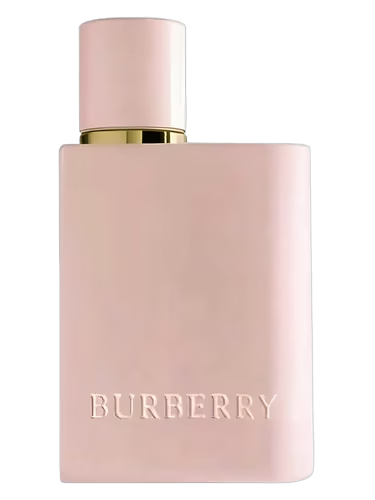
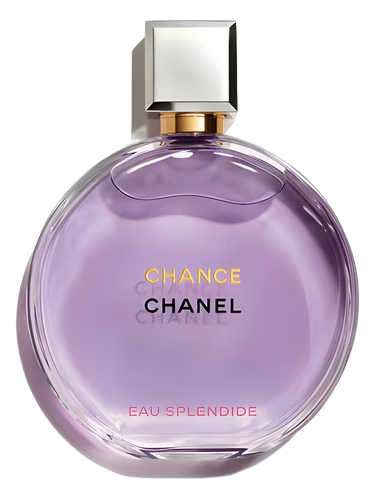
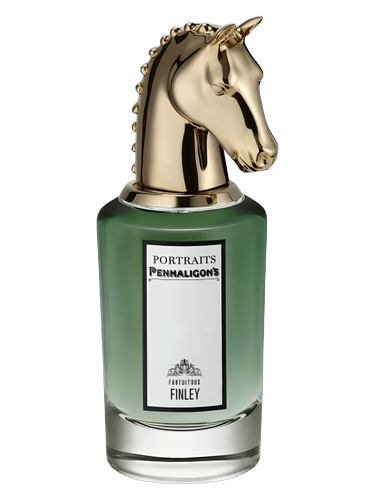
What is Alumroot?
Alumroot, or Heuchera, is a modern and niche perfumery note valued for its unique, intensely fruity aroma and its history as a medicinal and ornamental plant native to North America.What does Alumroot smell like?
It possesses an unexpected, bright, and succulent profile often compared to ripe pineapple, offering a cheerful, tropical-gourmand zest with a refined, slightly green edge.How is Alumroot essence extracted?
While traditional methods focused on simmering roots for medicinal tannins, modern botanical extracts are obtained through advanced solvent extraction or maceration of the roots and leaves.What are some top perfumes featuring Alumroot?
Notable fragrances that incorporate the alumroot note include Byredo Reine de Nuit, Amordad VIP 69, Rochas Aquawoman, and Sweet Essentials Warm Vanilla Nutmeg.When is Alumroot in season?
The plant begins its growth cycle in early spring, with its primary blooming period occurring from late spring through midsummer, typically between May and August.