Fragrance Notes Are Layers Of Scent That Are Layered To Form The Final Fragrance. Fragrance Notes Are Categorised Into Three Main Elements Based On How Long They Take To Evaporate, And How Long They Typically Last Following Application: Top Notes, Heart Notes And Base Notes.
Almond Blossom
Almond Blossom offers a delicate, soft floral scent that is slightly sweet, airy, and milky, often carrying a subtle, powdery, and creamy cherry-almond nuance. It creates a gentle, tender, and subtly gourmand impression, adding an elegant, spring-like freshness and a clean, comforting softness to compositions.

Origin & Extraction Of Almond Blossom
The history of almond in perfumery dates back to classic compositions, most famously with Heliotrope Blanc by Pivert, released in 1850, which utilized notes of icing sugar and almond powder. These early uses focused on the sweet, powdery, and sometimes cherry-like facets derived from the almond seed. However, the specific note of Almond Blossom—capturing the delicate, airy, and slightly milky floral scent rather than the gourmand nut—is a relatively modern concept in fine fragrance.
Almond Blossom gained traction as perfumers began seeking softer, more abstract floral interpretations and gentle gourmand nuances, reflecting a trend towards lighter, cleaner, and more comforting compositions in the late 20th and 21st centuries. Since the blossom itself is difficult to extract, the note is often created synthetically to convey an elegant, spring-like freshness and a clean, subtle creamy sweetness, making it popular in contemporary delicate floral and tender gourmand fragrances.
Extraction Methods of Almond Blossom
Historically, almond blossom essence was captured through artisanal distillation and maceration techniques by Mediterranean families to create traditional floral waters and perfumes. One of the oldest methods involves the maceration of delicate blossoms in alcohol and sugar to create aromatic liqueurs or steeping them in a secret preparation of solvents. Another traditional technique used for centuries is the production of almond blossom water through the distillation of fresh, hand-picked flowers, often used in culinary applications for flavoring desserts.
In modern perfumery and aromatherapy, the primary method for extracting oil from almond blossoms is steam distillation. During this process, pressurized steam is passed through the fresh blossoms to release their volatile aromatic compounds, which are then condensed and separated from the water. While solvent extraction is also used for delicate floral materials to produce a more concentrated absolute, distillation remains a favored method for producing high-quality almond blossom water and essential oils. Advanced industrial processes now ensure the flowers are harvested early in the morning and processed immediately to maintain their peak aromatic profile.
The delicate, sweet, and slightly milky aroma of Almond Blossom has been embraced by several major houses to create gentle, comforting floral compositions. A prominent example is the use of this note in fragrances like **L'Homme Ideal Eau de Parfum** by Guerlain, where the almond facet is amplified and blended with tonka bean to create a rich, enveloping signature, although the blossom provides a lighter, more sophisticated nuance than the pure nut.
- Another noteworthy use of the Almond Blossom accord is found in lighter, more overtly floral-gourmand creations, where it contributes an airy sweetness. This subtle sweetness provides a backdrop for other spring-like white florals.
For a fragrance that directly highlights the innocent, spring-like quality of the blossom, designers often pair it with clean musks and soft woods, such as in certain flankers of the **Mon Guerlain** line or compositions aiming for a clean, powdery softness. This allows the creamy, cherry-almond nuance to shine through without becoming too heavy or strictly gourmand.
- The versatility of Almond Blossom also allows it to feature in modern interpretations of classic compositions, adding a contemporary, gentle creaminess. It acts as a bridge between light floral hearts and soft, powdery bases.
Finally, the note is famously utilized in designer fragrances such as **Prada Candy Gloss**, where its delicate sweetness contributes to the overall bright, cheerful, and slightly powdery aesthetic. In these perfumes, Almond Blossom ensures the scent remains tender and light, providing an elegant and comforting impression that appeals to contemporary tastes for soft and subtle gourmand florals.
- Blooming typically occurs from late January through March, marking the transition from winter to early spring
- Peak bloom is famously brief, often lasting only two to three weeks with the most vibrant display occurring over just five to ten days
- The cycle begins with dormant periods in December and January, followed by bud swell in late January and early February
- Fruit development continues through the spring until the hulls crack open in the summer heat
- Harvest typically spans from mid-August to October, after which the trees return to dormancy for the winter months
Sustainability Of Almond Blossom
Sustainability of Almond Blossom
- Achieving zero waste by repurposing almond co-products, such as using hulls for livestock feed and shells for bedding or biomass energy
- Implementing advanced micro-irrigation and soil moisture sensors to reduce water usage per almond by 33% since the 1990s
- Protecting pollinator health by planting wildflower habitats and cover crops that provide essential nutrients for honeybees during bloom
- Practicing Whole Orchard Recycling, where old trees are chipped and integrated back into the soil to sequester carbon and improve soil health
- Reducing greenhouse gas emissions through solar power installations at processing facilities and the use of carbon-capturing almond orchards
- Supporting local socio-economic resilience by providing over 100,000 jobs and incentivizing growers to participate in formal stewardship programs
Trivia
In ancient times, almond was a key ingredient in the world's oldest known perfumes, discovered on the island of Cyprus and dating back over 3,500 years to 1850 B.C.
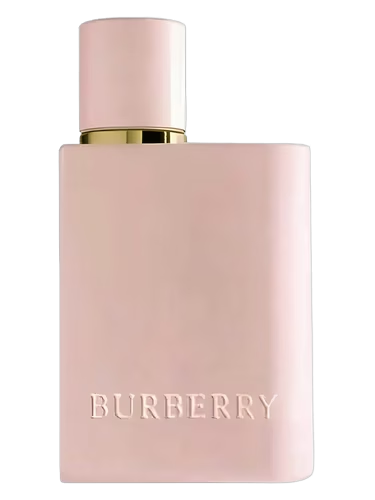
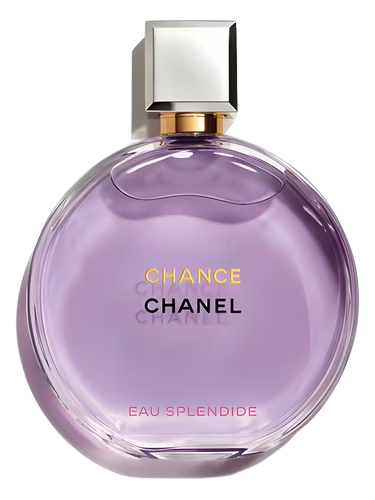
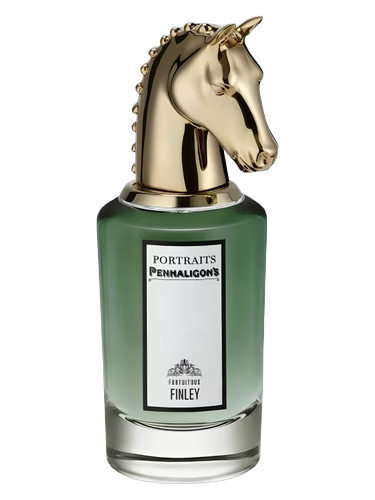
Most Popular Scents Using Almond Blossom
What is Almond Blossom?
Almond Blossom is a delicate floral note in perfumery that captures the soft, airy, and slightly milky scent of the flower rather than the gourmand nut.What does Almond Blossom smell like?
It offers a soft floral aroma that is slightly sweet and milky, often featuring subtle powdery and creamy cherry-almond nuances.How is Almond Blossom essence extracted?
In modern perfumery, it is primarily extracted through steam distillation of fresh blossoms, though the note is often recreated synthetically to maintain its delicate profile.What are some top perfumes featuring Almond Blossom?
Popular fragrances include Floral Street Sweet Almond Blossom, Guerlain Champs Elysees, and Armani Terra di Gioia.When is Almond Blossom in season?
The blossoms typically bloom from late January through March, marking the transition from winter to early spring.