Fragrance Notes Are Layers Of Scent That Are Layered To Form The Final Fragrance. Fragrance Notes Are Categorised Into Three Main Elements Based On How Long They Take To Evaporate, And How Long They Typically Last Following Application: Top Notes, Heart Notes And Base Notes.
Almond
Almond notes in perfumery are often sweet, creamy, and nutty, evoking the scent of marzipan or amaretto. It can range from a soft, milky aroma to a more intense, slightly bitter, or toasted scent, often achieved using synthetic materials like benzaldehyde or coumarin, providing a comforting and rich dimension to fragrances.

Origin & Extraction Of Almond
The use of almond in perfumery traces its history primarily through the incorporation of its essential aromatic components, rather than the raw nut itself. Historically, the distinct aroma associated with almond, particularly its slightly bitter facet, often comes from benzaldehyde—a chemical compound also found in other kernels like apricot and cherry. This aroma was utilized in early European fragrances, often integrated into rich, warm oriental or heliotrope-based compositions to provide a sweet, powdery depth.
In modern perfumery, almond has gained prominence, especially with the rise of the gourmand fragrance family in the late 20th and early 21st centuries. The note is highly prized for its versatility, offering a spectrum from the sweet, creamy scent of marzipan (a hallmark of iconic fragrances like Dior's Hypnotic Poison) to a more subtle, milky nuttiness. It functions brilliantly in both comforting, dessert-like scents and as a sophisticated, creamy backdrop for white florals and ambers, establishing it as a foundational element for rich, contemporary scents.
The extraction of almond oil primarily involves mechanical pathways to produce virgin-grade oils. Historically, the most traditional methods include hydraulic pressing and simple manual expression. In hydraulic pressing, raw or blanched almonds are subjected to pressure in batches to release their oils. While labor-intensive, this method is still valued for producing high-quality oil with minimal solid impurities and superior sensory characteristics, often used in gourmet culinary and luxury cosmetic applications.
Modern commercial production typically utilizes continuous screw pressing (expeller pressing). In this process, almonds are cleaned, dehulled, and often gently preheated before being fed into a screw press that mechanically rasps and squeezes the material to release the oil. While internal friction can raise temperatures, modern systems manage heat to ensure the product remains within cold-pressed standards. For bitter almond essential oil specifically, a unique process involves crushing defatted almonds, followed by enzymatic hydrolysis and steam distillation to isolate the volatile aromatic compounds.
Recent developments focus on enhancing purity, yield, and sustainability through advanced technologies. Supercritical carbon dioxide (scCO2) extraction is increasingly used to capture delicate aromatic molecules and bioactive compounds without heat damage or chemical residues. Other innovative techniques include multi-stage low-frequency ultrasound, enzymatic extraction to break down cell walls biologically, and cold percolation methods. These latest advancements aim to preserve sensitive nutrients like Vitamin E while reducing waste and environmental impact.
The almond note is highly versatile, lending a sweet, creamy, or sometimes slightly bitter gourmand quality to fragrances. Several famous perfumes use it to create cozy, comforting, and rich scents. For example, XERJOFF Casamorati Italica Eau De Parfum is noted for its nutty, musky, and slightly boozy quality, pairing almond with saffron for a complex experience. Another celebrated scent is TOM FORD Lost Cherry Eau de Parfum, which combines the almond note with black cherry and rose for a deep, intoxicating aroma.
- Liis Celestial Object offers a lighter, airier take on almond, opening with fruity quince before drying down to a familiar warmth.
- For a sophisticated twist, Louis Vuitton Fantasmagory utilizes almond to underscore the complexity of its vanilla note, providing depth to the formula.
Almond also frequently appears in body care products that are popular for their comforting scent, demonstrating its appeal beyond traditional perfume. The widely loved L'Occitane Almond collection, including the Almond Hair & Body Fragrance Mist, captures a soft, sweet, and creamy almond scent. Similarly, for a pure gourmand experience, perfumes like Shaghaf Oud Tonka are straight-up sophisticated almond cookies, beloved by those seeking rich, delectable fragrances.
Sustainability Of Almond
Sustainability of Almond
- Increasing use of synthetic molecules such as benzaldehyde and coumarin to replicate almond scents, which reduces the reliance on land-intensive almond farming and avoids the high costs of natural extraction
- Adoption of upcycling practices by extracting natural almond-like compounds from the pits of apricots, plums, and peaches, effectively repurposing agricultural by-products
- Implementation of responsible sourcing and ethical supply chain audits through partnerships with world-renowned perfume houses like Robertet to ensure fair labor and environmental standards
- Shift toward eco-conscious formulations by eliminating harmful chemicals like phthalates and choosing vegan, cruelty-free lab-created alternatives to animal-derived musks
- Commitment to circular packaging solutions, including the use of 100% recycled plastic bottles, FSC-certified recyclable boxes, and metal-free pumps to facilitate easier household recycling
Trivia
In ancient Rome, newlyweds were traditionally showered with almonds as a symbolic gesture to ensure fertility and a prosperous life together.
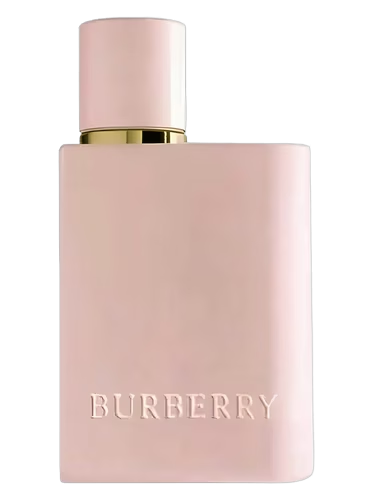
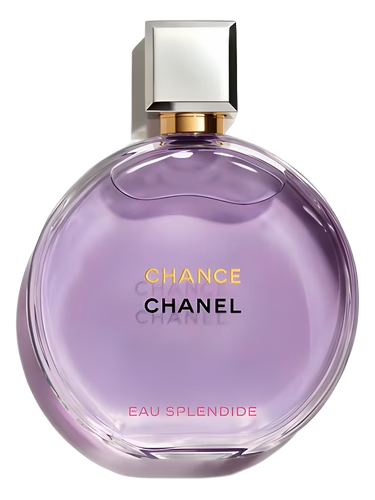
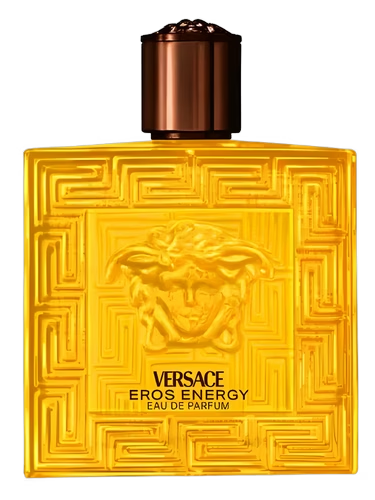
Most Popular Scents Using Almond
What is the Almond perfume note?
In perfumery, the almond note is a versatile ingredient used to create sweet, creamy, or bitter nutty aromas often reminiscent of marzipan, amaretto, or toasted nuts.What does Almond smell like in fragrances?
It typically possesses a sweet, nutty, and comforting scent profile with milky or powdery facets, ranging from a sharp bitter-almond attack to a rich, gourmand warmth.How is Almond essence extracted?
While sweet almond oil is a scentless carrier, the aromatic "almond" note is often recreated using benzaldehyde derived from bitter almonds or fruit pits, or through synthetic molecules like coumarin and heliotropin.What are some top perfumes featuring Almond?
Famous fragrances showcasing this note include Dior Hypnotic Poison, Xerjoff Casamorati Italica, Tom Ford Lost Cherry, and Guerlain L'Homme Ideal.What is the historical significance of Almond in culture?
Almonds have been valued since ancient times; in ancient Rome, they were showered on newlyweds to symbolize fertility and prosperity, and they have been used in beauty rituals for centuries.